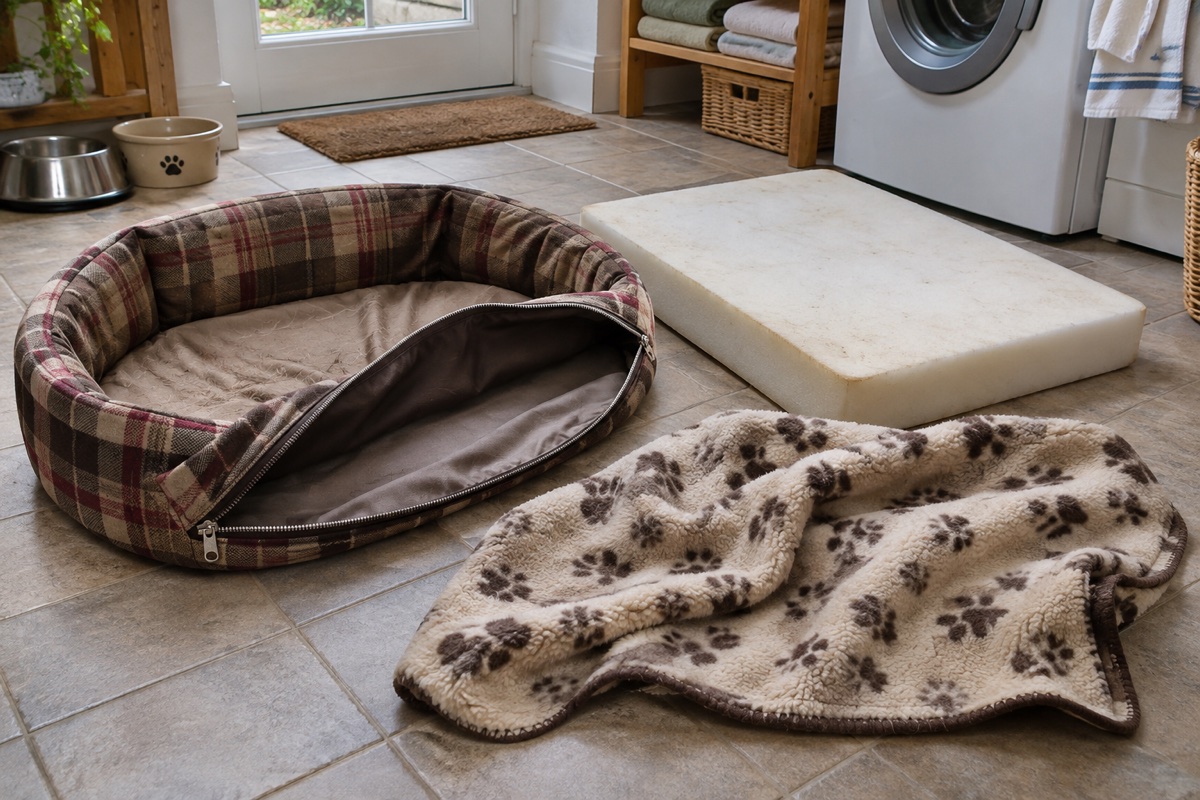
When you find fleas near your pet’s bed, check what can be washed before you put the whole thing in the machine. Some beds have a washable cover over a foam insert that needs different care. The bed, the floor beneath it and the other places your pet sleeps all matter because flea eggs can fall from its coat.
Identify the parts of the bed you can wash
Look for the care instructions on the bed and any removable cover. A zipper lets you separate the parts, but the cover, fill and insert may have different instructions. Take out loose blankets and check their labels too. Write down which pieces can be washed, which need a different method and which are too worn to clean properly. If the bed has an electrical heating element, follow the manufacturer’s instructions for disconnecting it and for which pieces can be cleaned.
If you’ve found an insect on the bed, take a close-up or save it before washing if you can. Record where you found it, such as a seam where the pet usually rests. If you only see dark specks, a comb check on the pet can give you a better idea of what you’re dealing with. Dirt and lint can resemble flea debris. See the guide to investigating flea dirt.
One bed can have more layers than you expect. For example, a washable outer cover might enclose a waterproof liner with a separate label and a foam insert that needs surface cleaning. Take a photo while the bed is still assembled so you can tell which side of each piece faces out. If you’ve lost the care instructions, look for the model number on a tag and ask the maker about the exact part you’re trying to clean.
Handle the cover, insert and floor separately
Take washable items to the machine in a bag or hamper you can clean. Avoid shaking a cover over the floor while you remove it. Use detergent and a wash and drying cycle the care labels allow. In a shared laundry, keep used textiles contained until the washer is available. When the load is done, put the clean pieces in a clean container while you finish cleaning the area where the bed sits. A clean cover can collect debris again if it goes back onto a floor you’ve yet to vacuum.
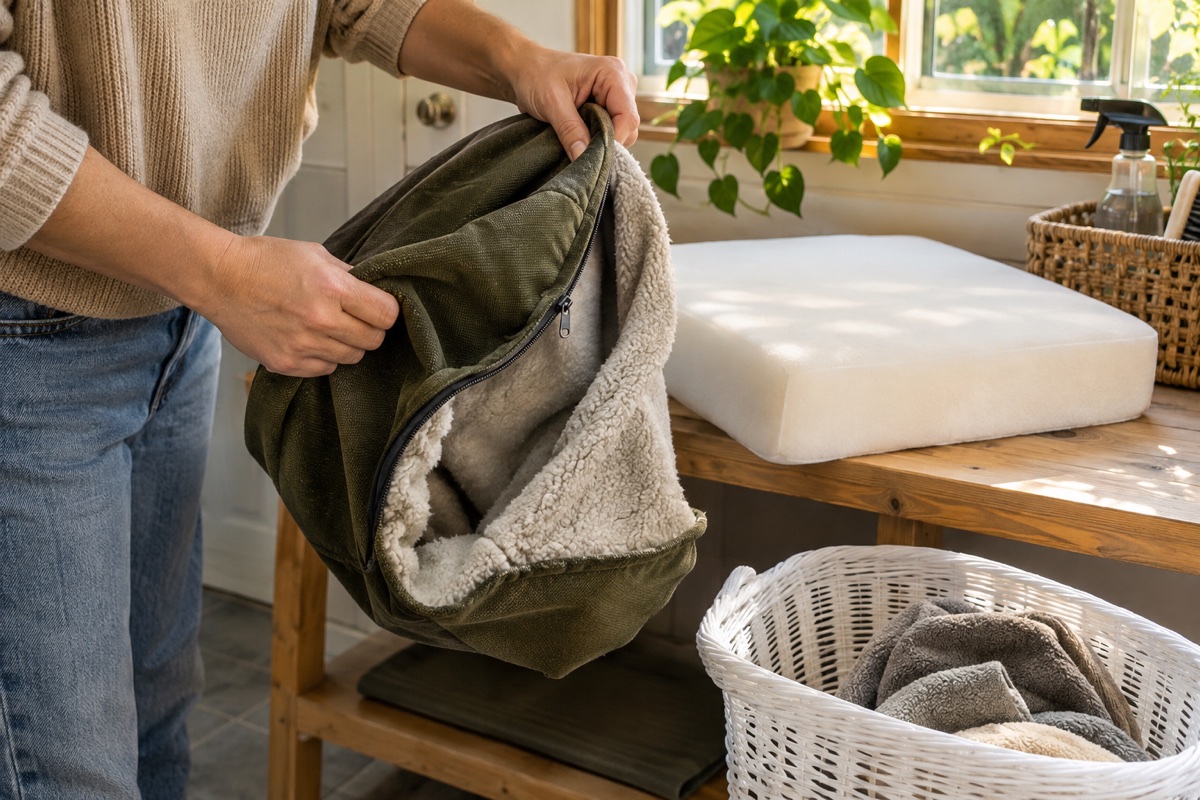
If the insert is nonwashable, use the manufacturer’s recommended cleaning method. Where appropriate, vacuum the surface and accessible seams, then check whether you can reach beneath the edges. Take extra care with torn beds or exposed stuffing that a pet might chew. If the bed is damaged and can’t be cleaned safely, replacing it may be practical. If you decide to discard it, contain the old bed before carrying it through other rooms and dispose of it according to local waste instructions.
Move the bed so you can vacuum underneath. Check the nearby baseboard, rug edge and furniture where hair gathers. If the bed sits inside a crate, check the base and corners of the crate and clean them according to its instructions. Empty or dispose of the vacuum contents as the machine directs. If a professional has already treated the floor or nearby surfaces, check when you can resume vacuuming or put the bed back.
Products labeled for an animal or for use on carpet may have different instructions for bedding. If a pesticide label doesn’t allow use on your pet’s bed, choose a cleaning method or ask a pest professional about alternatives.
If the bed has a raised frame and a removable fabric sling, inspect the corners where the sling folds around the frame. Remove it only if the instructions allow. Pay attention to the floor under the frame and any mat underneath it. A washable cloth used as a temporary sleeping surface can give the pet a familiar place to settle while the sling dries. Wait until the pieces are ready for use before putting them back together.
Follow the pet’s routine

Once the bed is clean, think about where the pet spends the rest of the day. If your dog naps on a bath mat and your cat sleeps on a chair, those spots may need attention too. Check blankets in the crate or carrier and washable throws on the couch. Work through one set of bedding at a time so clean and unwashed items stay separate. If you have several pets, mark which cover belongs where so you can record which areas you’ve already checked. Tell other caregivers which temporary blanket or mat the pet is using so it is included in the next cleaning round.
Ask your veterinarian about flea control for every pet in the home. Cleaning the bed is part of the household plan because the adult fleas may be on an animal and the developing stages may be nearby. Here’s how to coordinate flea control in the house.
Keep cleaning and checking the bed
During an active infestation, wash suitable pet bedding at least weekly, following its fabric-care instructions and any cleaning restrictions in the treatment plan. Do not wait to see another flea before cleaning it again. When you inspect the bed, look at the same seam and the same spot underneath. Record any live insects, where you saw them and when you last cleaned the bed. If the cover needs another wash, follow its care instructions. A spare washable cover or blanket can make follow-up easier, especially for a bed with a nonwashable insert. Choose something that fits safely and that your pet tolerates.
Seeing fleas again after cleaning can happen as adults emerge from cocoons in surrounding areas. Keep an eye on the trend in the bed, the room and the pet. If sightings continue at the same rate, look for another resting spot that may have been missed and discuss what you’ve found with a pest professional. Note whether activity is in the cleaned bed or at a nearby floor edge; that distinction helps target the next inspection. If your pet is still scratching or seems uncomfortable, ask the vet to check it. See the guide to fleas after treatment for an example of how to compare sightings.
Sources
- CDC guidance on getting rid of fleas
- UC Integrated Pest Management guide to fleas
- EPA household flea-control guidance
- EPA introduction to pesticide labels

