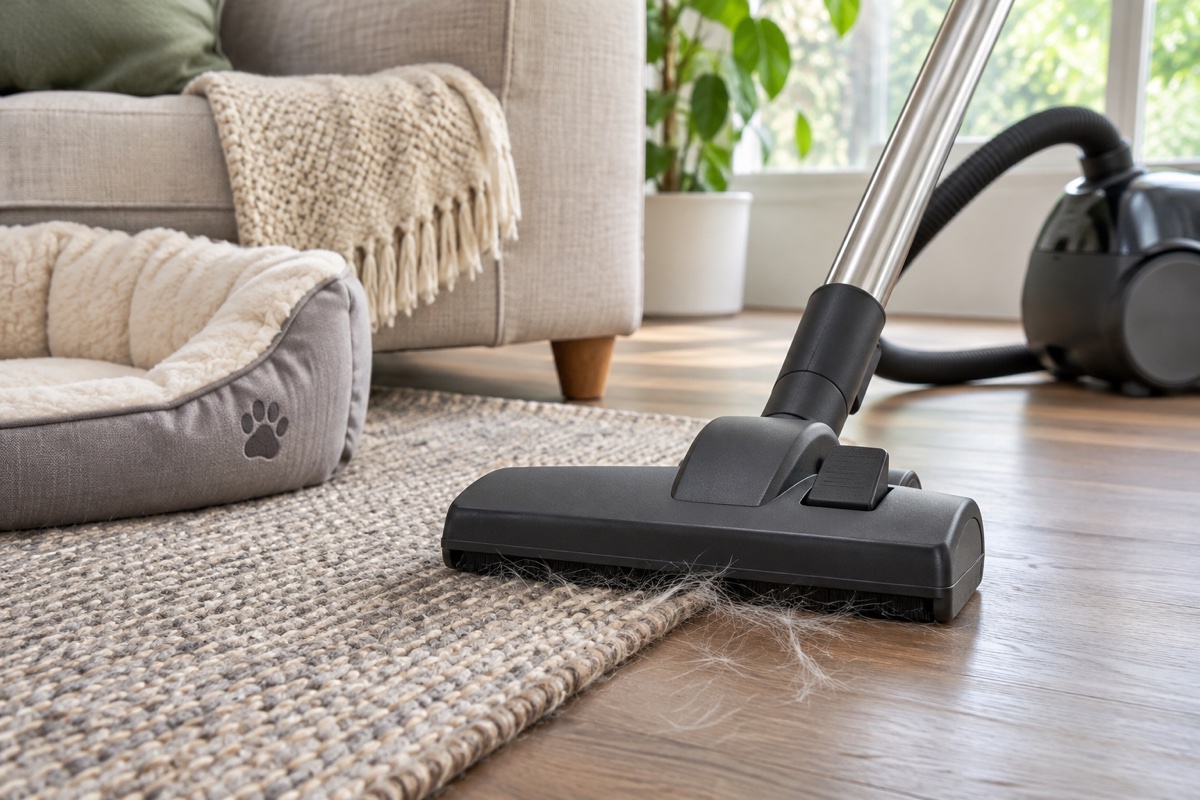
You’ve treated your pet, washed the bedding and vacuumed the house. Then another flea jumps onto your sock. It’s frustrating, but fleas can still emerge from cocoons that were already in the home when you started. Where you find them and whether sightings are becoming less frequent can help you decide what to do next.
Why fleas can show up after treatment
Flea eggs can fall off your pet wherever it rests. The larvae that hatch can develop in places like carpet fibers and the cracks around floor edges. Once a flea reaches the pupal stage, its cocoon helps protect it from many treatments. An adult can emerge later, even if you’ve already killed the fleas that were on your pet. Movement can prompt adults to emerge, which is one reason you might spot a flea after walking through or vacuuming a room.
How long can you keep seeing fleas?
UC Integrated Pest Management notes that adult fleas may keep emerging for about two weeks after an indoor spray because pupae can survive the treatment. The time it takes to get the whole infestation under control is longer in some homes. A moderate or severe infestation can take several months, especially if fleas were already established in several rooms. The interval for any repeat application comes from the product label or your pest professional’s plan.
If you treated your dog or cat and still find a flea on its coat, check the product instructions for how quickly it works. A flea that has just jumped onto your pet may still be alive when you see it. Check the same pet and resting spots again as you continue treatment and cleaning. A drop in sightings over several checks tells you more than a single afternoon without a flea.
What to check before treating again
1. Check what you’re actually finding
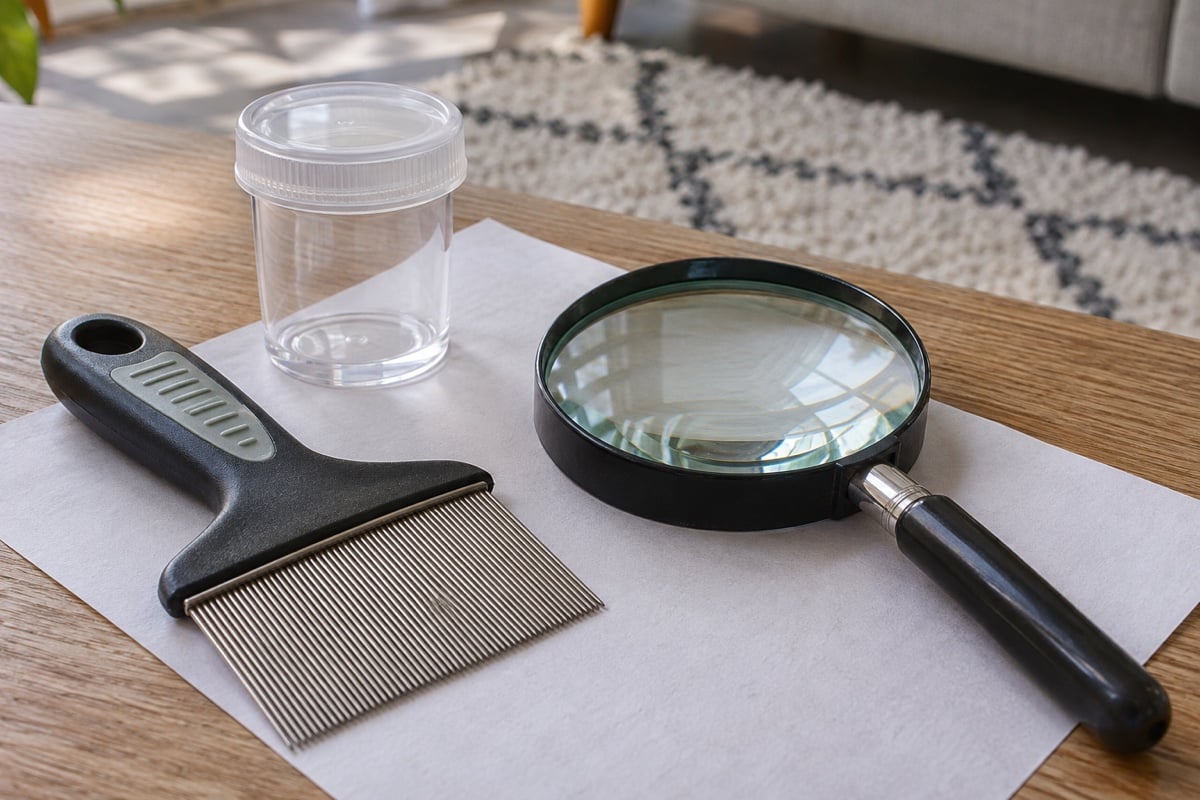
Comb your dog or cat over white paper so you can see what comes out. Pay attention to the base of the tail and around the neck. If you find dark specks, put a few on damp white paper. Flea dirt contains digested blood and may leave a reddish-brown stain as it gets wet. That’s a clue to look closer. Keep any live fleas you see separate in your notes from dark specks or dead insects. Here’s how to use a flea comb.
If all you’re finding is itchy marks, look for an insect before deciding you need another flea treatment. Several insects and skin conditions can leave similar marks. A specimen in a sealed container or a clear close-up gives a pest professional something to identify. If the marks persist or worsen, speak with a healthcare professional.
2. Check the treatment for every pet
Write down each pet’s product, the date you gave it and when the next dose is due. Include indoor pets that rarely scratch. Did a pet miss a dose? Did it spit out a chew? Did you bathe it around the time you applied a spot-on? Check the exact instructions and tell your vet what happened. If you’re unsure how much of a dose your pet got, ask your vet before giving any more.
Use the interval on the label or the one your vet prescribed. Ask before combining treatments, including shampoos and collars. Choose products for the animal’s species, age and weight. If you live with a dog and a cat, keep their treatments separate and check the dog product’s directions about contact with cats after application.
3. Follow your pet around the house
Think about where your pet spends the day. The dog bed may be clean, but what about the couch where your dog naps in the afternoon or the rug under the window where the cat sleeps? Use the vacuum nozzle along seams, under cushions, around baseboards and under furniture near those spots. Wash removable bedding and covers according to their care instructions. Check where the pet goes between rooms as well, especially if your log points to one area.
If you’ve used a household pesticide, check its directions before moving furniture back, letting pets into the room or cleaning treated surfaces. If a professional treated the home, ask when to resume vacuuming and what to expect before the next visit. For a room-by-room plan, see my guide to getting rid of fleas in the house.
4. Look for a source if sightings rise again
If fleas turn up again after sightings had been falling, start with the place or pet where you found them. Think through what changed. Did your dog start using a blanket in the car again? Has a visiting pet been lying on the same couch? Is there a shaded resting spot outside that you overlooked? In a shared building, tell the property manager where you’re finding fleas and ask whether nearby areas should be inspected. If there are signs of rodents or wildlife, a pest professional can help trace the source. Read more about finding fleas in a home without pets.
Keep a simple flea log
Use a notebook or your phone to record the date, where you checked, how you checked and how many live fleas you found. Include checks where you found zero. Keep a separate line for each pet and each room. Use a similar length of time and the same areas for each comb check; a brief check one day and a much longer search the next can make the counts misleading. If you use a trap, leave it in the same place and compare catches over equal periods. Keep checking the pet and its resting areas too. Here’s more on using flea traps to monitor a room.
Here’s what three checks on the same dog might look like.
- First Monday. Four live fleas on the comb. Washed the dog’s bedding and vacuumed around its bed.
- Second Monday. One live flea on the comb. Vacuumed the same area and under the couch cushions.
- Third Monday. No live fleas on the comb. Checked the dog’s next treatment date and kept monitoring its resting spots.
These weekly entries summarize the trend; keep up the cleaning and prescribed treatment between checks. In this example, the decline is encouraging. The next check helps you see whether it holds. If the counts level off or rise over repeated checks, the notes can help you pinpoint which pet or room needs a closer look.
When to ask for help
If you’re still finding live fleas at about the same rate despite following the plan, or they’re turning up in more rooms, a licensed pest professional can confirm what you’re seeing and inspect places you might have missed. Bring your log and any product labels or treatment paperwork. For a pet that keeps scratching, loses hair or develops sores, contact your vet even if you rarely find fleas on the comb. If your pet seems unwell after a flea product, call your vet promptly and have the packaging to hand.
Use the flea-control guide and printable checklist to keep track of what you’ve done for your pets and what’s left to do around the house.
Sources
- CDC flea life cycle
- CDC guide to getting rid of fleas
- UC Integrated Pest Management flea guide
- Companion Animal Parasite Council flea guidelines
- FDA guide to using flea and tick products safely
- EPA guidance on flea products for pets

