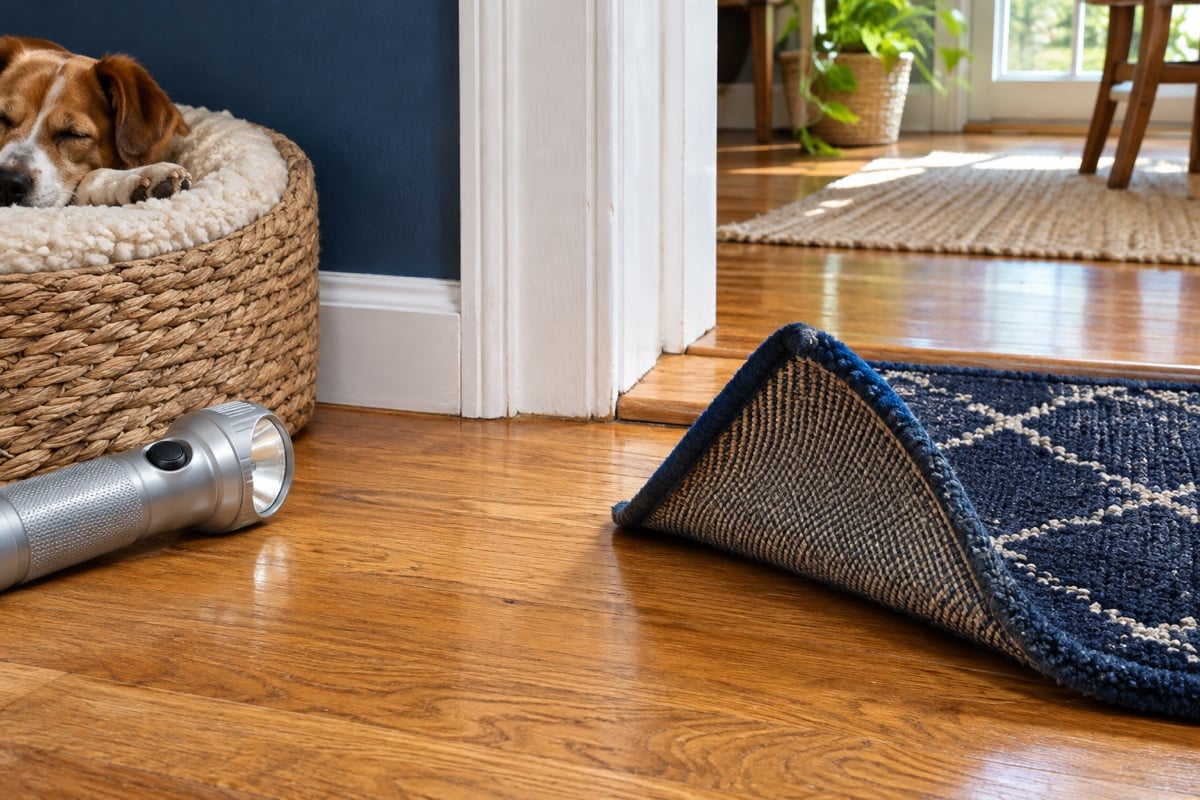
Yes, you can find fleas in a home with hardwood floors. The middle of a smooth, bare room usually gives developing fleas less shelter than the edge of a rug or the space under a pet bed. If you’ve seen a flea jump near the floor, look first at where the pet sleeps and where hair and dust collect.
Start at the places that offer cover
Walk through the room and mark where you saw the insect. Look at the nearest pet bed, throw rug, floor transition and baseboard. A cat that naps under a radiator or a dog that lies against a sofa can tell you where to start, even if their official beds are in another room. An adult flea may jump onto your sock in the open after emerging nearby. That sighting points to an area worth inspecting.
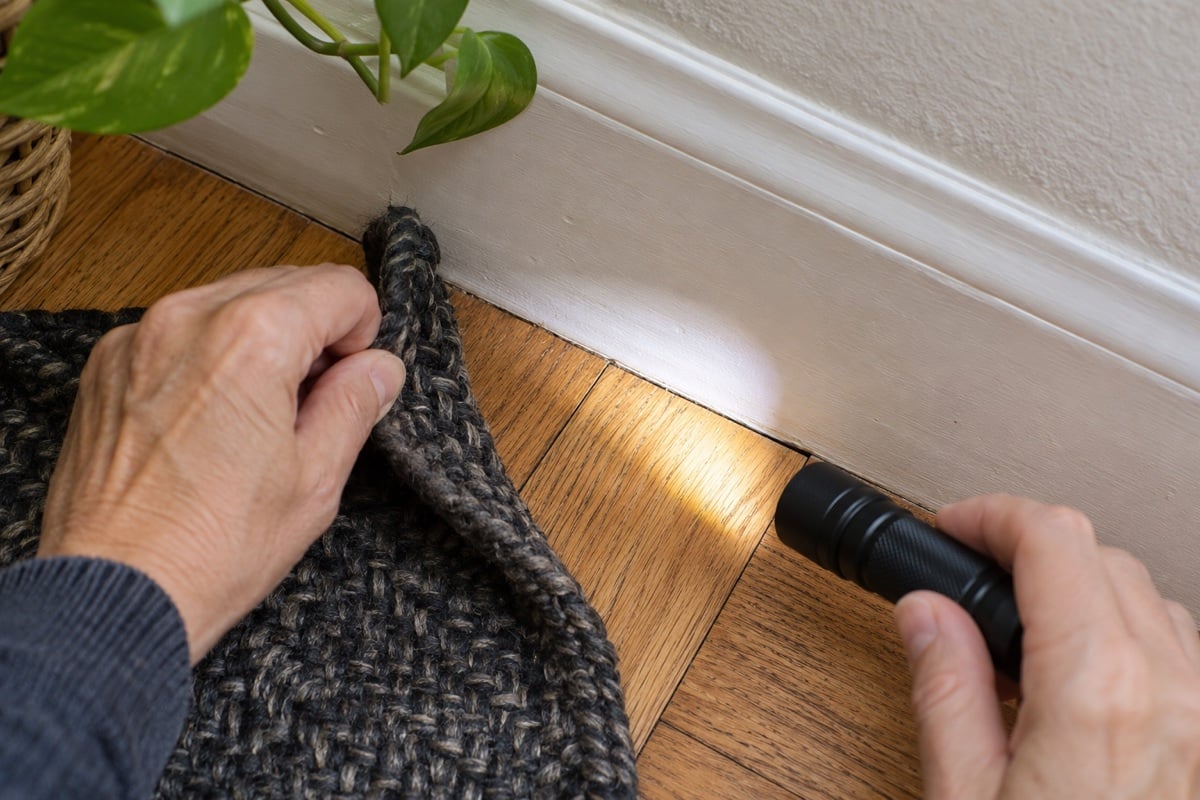
Lift the edge of a loose rug and check the underside and any pad beneath it. Use a light to inspect where the floor meets the wall, especially behind furniture where the vacuum rarely reaches. Look for live insects rather than trying to identify tiny pale flecks in a floor gap. Flea eggs and larvae are small, and dust, lint and shed skin can be easy to mistake for evidence. If you catch a live insect, take a clear photo or save a specimen in a closed container.
If you have a dog or cat, do a separate comb check. An adult cat flea often spends its time on the animal, while eggs can fall from the coat into the places it rests. A few live fleas on a comb and repeated sightings around a pet bed make a stronger case than a single speck in a crack. If you have no pets, note any visiting animals, prior occupants’ pets or signs of rodents nearby. The guide to fleas in a home without pets explains how to look for those sources.
Take care when lifting textiles on older wood. A thick rug pad can leave a pattern of marks or crumbs from the material itself. Record whether you actually see a live insect and take a separate picture of any material you want a professional to identify. If there’s a gap behind a built-in cabinet or under a fixed transition strip, note where it is. A flashlight is enough for an initial look.
Clean the edges and textiles as well as the floor
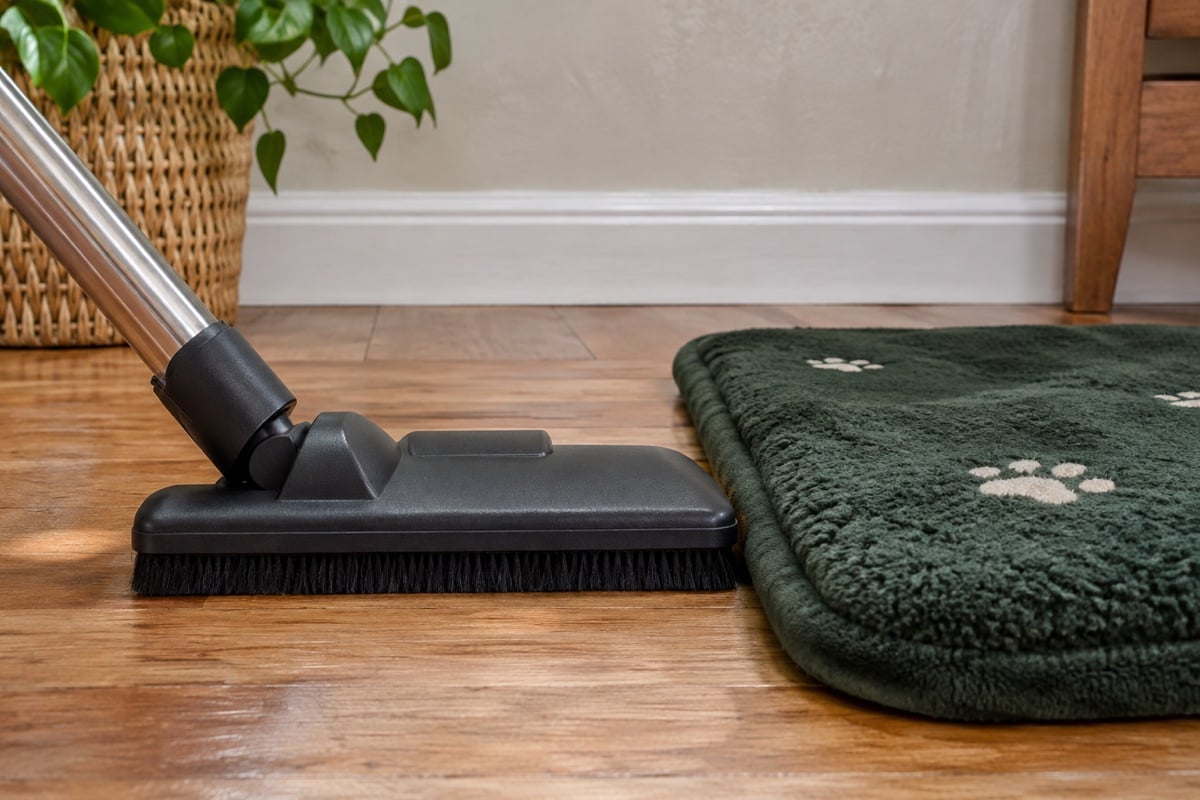
Work in the area where you saw activity and around the pet’s resting spots. Use a vacuum attachment compatible with your floor finish and check it for grit that could scratch the surface. A narrow tool can reach accessible edges and thresholds. Pick up washable pet blankets and check their care labels before laundering. Clean the area below the bed, the lower edge of the nearby couch and any rug the pet also uses. If you carry bedding to another room, use a bag or hamper you can clean and keep it separate from clean laundry.
The open floor still needs normal cleaning. A vacuum can collect debris and some flea stages from reachable areas. Empty the vacuum or dispose of the bag according to its instructions. Mopping can remove dirt on the surface, but it can’t reach under a rug or inside upholstery. Follow the flooring manufacturer’s cleaning directions, especially for older boards, seams and unfinished wood. Use the carpet flea guide for the rugs or carpeted rooms where your pet rests.
If you are considering a household flea pesticide, read its label for the exact surfaces and areas it covers. A product labeled for carpet may have different directions or limits for bare flooring. Follow the label and the applicator’s instructions about re-entry and when you can resume cleaning. If the finish is delicate or the label is unclear, ask a licensed pest professional.
A rug over finished boards and a rubber-backed mat at the entrance may need different care. Read both labels and make room to inspect beneath them separately. If something is heavy enough that you need help to move it safely, inspect the accessible edges first. If people share the work, record which areas are done and which textiles still need washing. Tell the technician which area you haven’t been able to reach if you arrange a visit.
Judge progress by repeat checks
Check the same spots each time. A useful note might say “Bedroom, rug edge beside cat bed, one live flea seen after lifting rug.” Record the pet-comb results separately. That makes it easier to see whether fleas are declining in the room even if the numbers on the pet follow a different pattern. Keep up the cleaning and the plan your veterinarian recommends for each pet. Fleas can still emerge from protected cocoons after you’ve cleaned, so watch the trend over repeated checks.
If the sightings move from one threshold to another, look on both sides of the doorway. The adjoining room may contain the pet’s second bed or a carpet that needs attention. If the sightings stay at the same level despite follow-up, or if you’re still unsure what the insect is, a pest professional can inspect the area. Show them the spots where you actually saw activity, any photos or specimens, and your cleaning and treatment notes. See the guide to checking for fleas after treatment for a simple example log.
Sources
- UC Integrated Pest Management guide to fleas
- CDC guidance on getting rid of fleas
- EPA household flea-control guidance
- EPA introduction to pesticide labels

