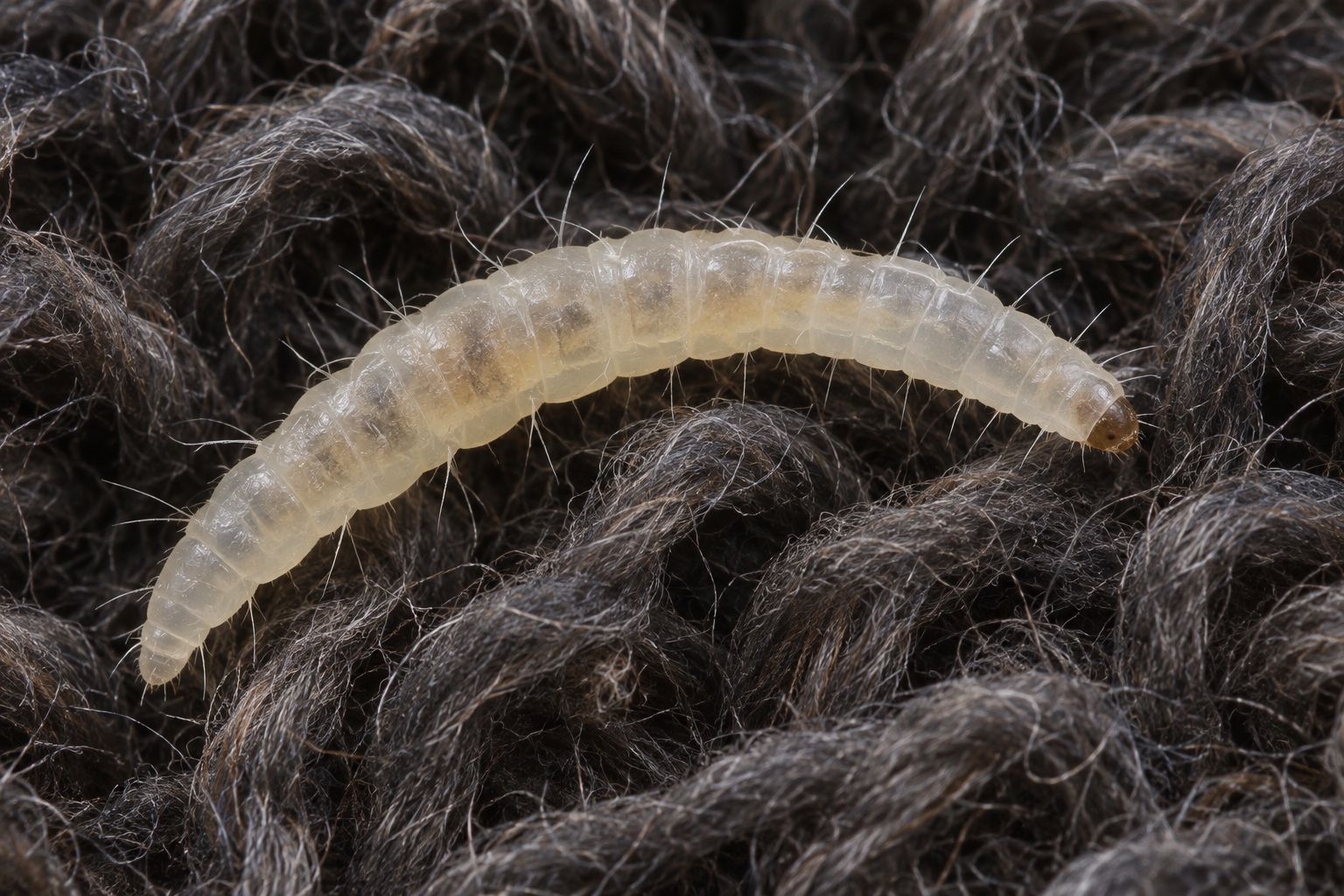
Flea larvae develop in sheltered places away from the animal, often around bedding and resting areas where eggs have fallen. Cat flea larvae are tiny, wormlike and pale or almost transparent, with small body hairs and a darker gut that may look reddish because of blood-containing flea dirt in their food. They grow to roughly 5 mm; newly hatched larvae are smaller. They pass through three growth stages, called instars, before spinning a cocoon and pupating. The instars look similar and are difficult to distinguish without close examination.
Larvae eat organic material, including blood-rich droppings from adult fleas; they do not take blood meals from people or pets. Controlling larvae helps prevent the next generation of adults, which feed directly on a host and can cause itchy bites.
How to get rid of flea larvae

Don’t stop at your pet’s coat. Larvae hide in the material around resting spots, so vacuum suitable carpets, furniture seams, floor edges and reachable spaces under furniture. Aim to vacuum these areas daily or every other day during active control, allowing for any cleaning restrictions after treatment. Wash pet bedding where its care label allows. You’ll remove debris and some developing fleas, but remember to treat your pet appropriately too, or new eggs can keep falling into those freshly cleaned areas.
Some flea-treatment products act on developing stages. A household flea spray may contain an insect growth regulator, an ingredient that kills adults or both. Check which stages and surfaces yours is meant for, how to prepare the area and when people and pets can return. One spray’s instructions won’t necessarily fit another.
Do not rely on flea bombs to reach every hidden larva or cocoon. Targeted treatment, suitable care for each affected pet and regular cleaning need to work together. If you’re unsure which insect you’ve found, can’t find the source or keep seeing activity, a qualified professional can help.
Keep up flea prevention even after you start seeing fewer fleas. A quick check of your animals and their resting places is much easier than waiting for the next large infestation to take hold.
Sources
- CDC DPDx: Fleas
- University of Minnesota Extension: Fleas
- CDC: Getting rid of fleas
- FDA: Safe use of flea and tick products in pets
- University of Florida IFAS: Flea larval stages
- UC IPM: Larval habitat and flea control

