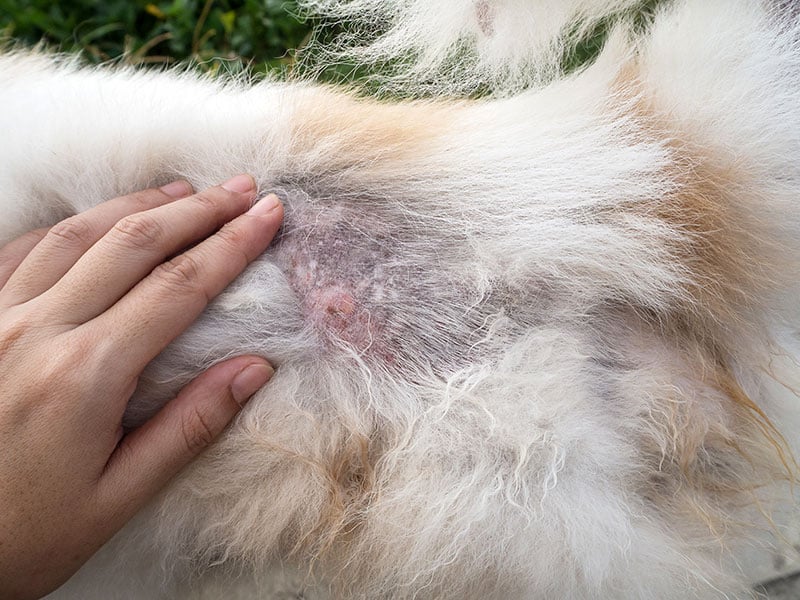
A flea bite can make any pet itch, but flea allergy dermatitis is a stronger reaction to proteins in flea saliva. If your dog or cat is allergic, just a few bites can set off intense scratching, licking or chewing. Before long, you may notice hair loss, wounds or an infection. Small red marks alone won’t tell you the cause. Your vet can examine the skin and see how your pet responds to suitable flea control to help work out what’s going on.
Flea allergies in cats and dogs
Cats can groom away fleas before you see them, so the absence of visible adults doesn’t rule out flea exposure. Use a flea comb gently and look for adults or flea dirt. Don’t expect the cat to solve an infestation by eating fleas. A swallowed infected flea can also transmit the common flea-associated tapeworm.
Flea eggs fall off your pet into the surroundings, where the larvae grow and spin cocoons. Conditions affect how quickly they develop and when the adults emerge. Some protected stages will still be there when treatment starts, so keep cleaning and following your pet’s prevention plan. You can’t set your watch by a ten-day or one-year estimate; each home is different.
The cat flea is common on dogs as well as cats. The adults you find in the coat are only part of an established problem: bedding, carpets and other resting spots may hold developing fleas too. There’s no fixed percentage you can use to calculate how many are in the house from the few you’ve seen on your pet.
Treat flea allergy and control fleas together
To get the allergy under control, you need to reduce further bites. Start coordinated flea control for your animals and the places they rest, and ask your vet to help with the skin too. Your pet may need relief from the itch or treatment for an infection while flea control takes effect. You don’t have to wait until every flea is gone before getting help for painful or damaged skin. Vacuum affected resting areas daily or every other day and wash suitable pet blankets and bedding at least weekly during an infestation. Follow fabric-care labels and any cleaning restrictions after a household pesticide treatment.
A suitable spot-on, oral treatment or other preventive can reduce new exposure, but the correct choice and interval depend on the exact product and animal. Check age, weight, health and species restrictions and follow the labelled application sites. Coverage of ticks as well as fleas varies. Don’t assume every product protects against both or works for precisely four weeks.
Relieving flea allergy in dogs

Before trying creams or tablets, let your vet check whether flea allergy is really the problem. Photos can give you clues, but mites, other allergies and infections can look similar. The comfort measures below give you some options to discuss alongside flea control, especially if your dog’s skin is painful.
When bathing may help your dog
If the vet recommends bathing, use a dog-appropriate soothing or medicated shampoo and follow its instructions. Keep water comfortable, avoid scrubbing sore areas and dry the coat carefully. An oatmeal formulation may be useful for some dogs, but a human product or a long soak isn’t automatically suitable. Check how bathing fits with any topical flea medicine; don’t apply an extra collar or spot-on immediately afterwards by default.
Ask about suitable topical care
Ask about a suitable topical product if the dog has local irritation. Avoid repeatedly putting aloe, calendula, coconut oil or human hydrocortisone on chewed or open skin without advice. The animal may lick the product, and steroids can be unsuitable for an infection. A veterinarian can choose a treatment and duration for the actual lesion. Increasing soreness, discharge, odour or spreading skin damage needs assessment rather than more home cream.
Ask about antihistamines
Antihistamines aren’t a guaranteed instant treatment for flea allergy. The appropriate medicine, formulation and dose depend on the dog and other health factors. Don’t copy a broad Benadryl dose or use a multi-ingredient cold medicine. A veterinarian may choose a different anti-itch treatment, especially when the skin is severely inflamed.
Seek urgent veterinary care for breathing difficulty or collapse rather than trying an oral antihistamine at home.
Ask whether a skin supplement would help
A complete diet helps keep skin healthy. Your vet may suggest fatty-acid supplements for some animals, but they won’t remove fleas or reliably calm a sudden flare-up. Ask whether a supplement would help your dog and how it fits with their food and medicines. Extra vitamins or special foods won’t make the blood unappealing to fleas.
How to soothe flea allergy dermatitis in cats

With cats, you might notice overgrooming, hair loss, tiny crusts or sores around the head, neck, back or base of the tail. Cats can groom away the evidence, making fleas and flea dirt hard to find. Your vet can check for other causes and decide whether a trial of flea treatment or further tests would help. A photo or a few dark specks won’t settle the question on their own. Both the itch relief and the preventive need to be suitable for your cat.
Prevent your cat from being bitten
Ask about an effective cat-specific preventive and coordinate care for other animals in the household. Some products kill adults while others affect development, and their roles differ. Never use a dog-only permethrin product on a cat, and follow contact restrictions if a dog in the home has been treated.
When a cat may need a prescribed wash
Cats don’t need a bath as an automatic response to itching. If the veterinarian recommends a shampoo or topical wash, ask how to apply it with minimal stress and how it interacts with the flea treatment. Don’t force a distressed cat into a soak or substitute a human shampoo.
Stop the itching cycle
The veterinarian may prescribe anti-inflammatory or other itch-relieving care and address any infection. The choice for a cat may differ from that for a dog, and doses can’t be transferred between species. Follow the prescribed duration and review plan, and report adverse effects or failure to improve.
Over the longer term, keep up suitable flea prevention, cleaning around resting spots and care for the skin. Note treatment dates and flare-ups so you and your vet can spot a pattern. Preventing further flea exposure is especially important for an allergic pet, but it doesn’t mean using every shampoo, spray, collar and tablet together. Seek follow-up if itching persists despite a consistent plan.
Sources
- Merck Veterinary Manual: Flea allergy dermatitis
- FDA: Safe use of flea and tick products in pets
- CDC: Getting rid of fleas
- ASPCA: Essential oils around pets
- Merck Veterinary Manual: antihistamine limitations
- VCA: feline flea allergy
- UC IPM: household flea cleaning
- University of Guam Extension: flea control and bedding care

