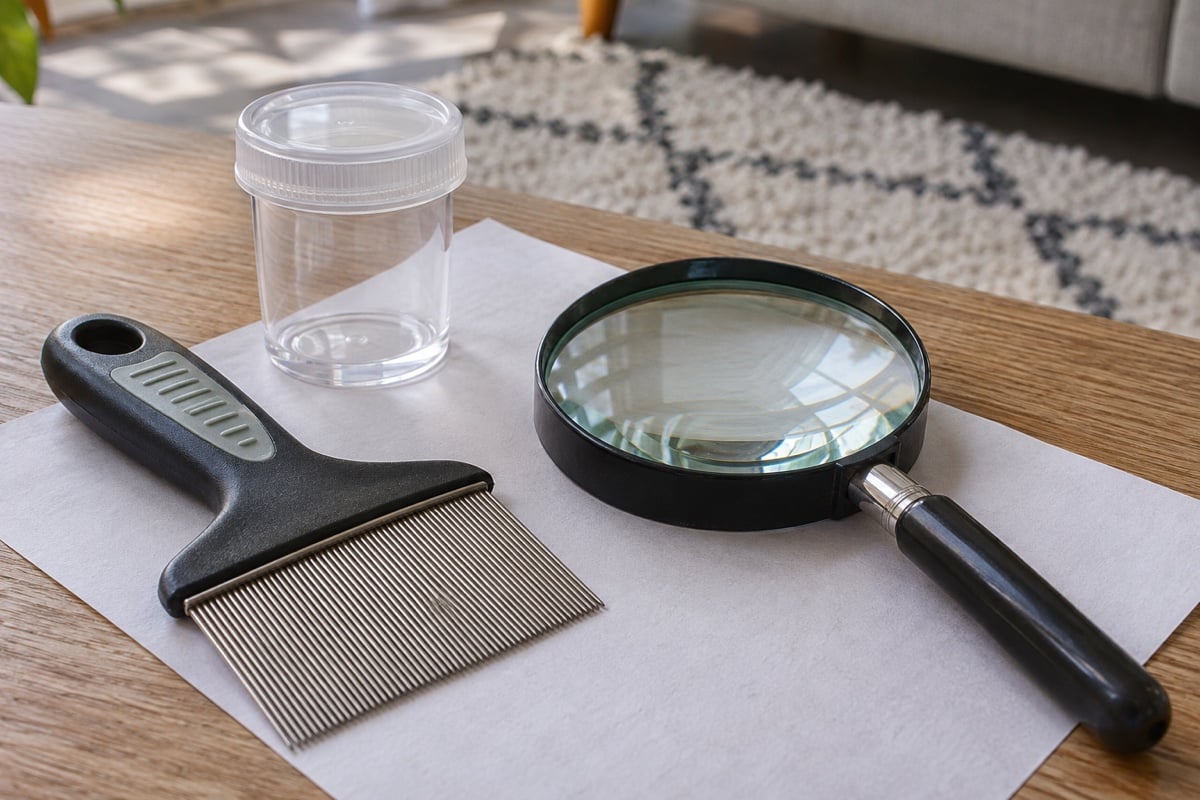
These eight common flea myths can lead to missed infestations or unsuitable treatment. Here is what flea biology and product guidance mean for caring for your pet and home.
Flea Myth 1 – A few fleas are okay to have
A few fleas might not look like a big problem, but it’s much easier to act before their numbers grow. Female cat fleas can lay about 20–50 eggs a day after feeding, and the eggs fall into your pet’s resting areas. How quickly the problem grows depends on the conditions. And if your pet has a flea allergy, even very few bites can make life miserable. People can be bitten too, so begin with a flea-comb check, appropriate pet treatment and cleaning.
Flea Myth 2 – Fleas can fly
Fleas can’t fly because they don’t have wings. They get around by jumping with their powerful hind legs, and their narrow, sideways-flattened bodies help them move through fur. A flea can jump roughly 7–8 inches vertically and 14–15 inches horizontally—enough to reach a nearby host. If the insect you’re watching flies, try to collect it or take a clear photo for identification before treating it as a flea.
Flea Myth 3 – A flea infestation is easy to deal with
Wouldn’t it be nice if one treatment made every flea disappear overnight? An established infestation usually takes more work. Adults feed and reproduce on the animal, while most eggs, larvae and pupae are in the surroundings. New adults can emerge from protected cocoons after you’ve started treatment. Keep track of doses, flea-comb findings and trap catches, and keep vacuuming resting areas and washing bedding. Look for numbers to fall gradually rather than expecting a completely flea-free home on day one.
Flea Myth 4 – We should use preventive flea measures only in the warmer months
Warm, humid conditions favor fleas, but a heated home can support them throughout the year. Outdoor exposure varies with climate and the animal’s routine. Ask your veterinarian to choose a prevention schedule for those risks, and follow it consistently rather than stopping automatically when summer ends.
Flea Myth 5 – After the flea treatment is over, pet owners can rest assured
Stopping a preventive as soon as you stop seeing fleas can allow newly emerging adults to restart the cycle. Continue for the duration advised by your veterinarian and the product label. Flea allergy dermatitis is a reaction to proteins in flea saliva, rather than to flea eggs themselves; a sensitive animal can remain itchy after most fleas have gone. Persistent hair loss, sores or discomfort deserve a veterinary check instead of simply applying extra doses.
Flea Myth 6 – Spraying the home and yard with flea control products is all you need to do
Environmental control alone leaves adults feeding and laying eggs on untreated pets. Coordinate suitable treatment for the household animals with cleaning their resting areas; not every home or yard needs a pesticide spray.
Flea Myth 7 – The more flea products the better
Combining a shampoo, dip, collar or other flea medicine can increase exposure or create an unsuitable combination. Check with your veterinarian before adding a product, and report everything already used. Check each exact formulation, species indication and weight pack separately: some products are labelled for both dogs and cats, but a dog-only product must never be transferred to a cat.
Flea Myth 8 – Approved flea products have no risks
Flea products have different ingredients, benefits and possible adverse effects. In the United States, some are FDA-approved animal drugs and others are EPA-registered pesticides; neither status guarantees that every animal will tolerate a product or that misuse is harmless. Choose the correct species, age and weight range, check the exact formulation and discuss seizure history, illness or previous reactions with your vet. Our flea-control comparison will help you compare what the products do and what precautions they need. Don’t assume they’re all interchangeable.
For more on flea identification, development and control, see the frequently asked questions.
Sources
- UC IPM: flea reproduction
- CDC: flea jumping distances
- CDC DPDx: Fleas
- University of Minnesota Extension: Fleas
- CDC: Getting rid of fleas
- FDA: Safe use of flea and tick products in pets
- FDA: animal-drug approval and pesticide registration

