These ten common questions explain how fleas live, what signs to look for and why pets and their resting places need attention together. Use the answers to decide what to inspect and when to seek help.
Can fleas live on humans?
People who have experienced flea bites often wonder whether fleas can live on them. The cat flea, Ctenocephalides felis, is common on cats and dogs. It doesn’t normally settle into a lasting infestation on human skin or in the scalp, but it can jump onto you and bite. Other flea species prefer different hosts, so it isn’t quite right to say fleas never use humans. If you keep getting bitten, look for the animal or household source rather than putting pet flea medicine on yourself.
Do fleas have wings?
No—fleas are insects, but they don’t have wings. Adults use powerful back legs to jump from the floor, bedding or an outdoor resting spot onto a passing animal or person. They can move between animals too, though a feeding adult often stays with its chosen pet. If you’ve found something with wings, you’ll need to identify it and choose a different control plan.
What do fleas look like?
Like most insects, the body of a flea is also divided into three parts: head, thorax and abdomen. Flea bodies are generally thin and flat and this enables them to move quickly and easily through the animal’s hair. Fleas are also covered with tiny spiky hair that helps attach them to their host’s fur. As explained above, fleas are wingless but they use their strong back legs to jump high from host to host.
What do fleas eat?
Adults feed on blood, using mouthparts that pierce the skin. Females need a blood meal before they can produce eggs. Larvae have a different menu: they live in sheltered places around the animal and eat organic debris, especially the blood-rich droppings left by adults. That’s why cleaning the places your pet rests matters alongside removing the fleas you can see.
Where do fleas come from?
Often, a newly emerged adult jumps onto your pet from an infested spot indoors or out. Wildlife, a stray animal or a previous resident’s pet may have supplied the eggs in the first place. Fleas can sometimes hitch a ride on clothes or objects, but finding them doesn’t prove someone carried them into the house. Start looking around bedding, shaded pet resting spots, upholstered furniture and places rodents use.
What kind of environment do fleas prefer?
Cat fleas do best with warmth and enough humidity. Larvae need sheltered places where they won’t dry out, such as bedding, carpet edges or shaded resting spots outside. Extreme outdoor conditions can reduce survival, while our comfortable homes may suit fleas for much of the year. Turning the heating or air conditioning up or down isn’t reliable flea control; remove the food sources and treat the animals supplying new eggs.
What do flea bites look like?
In humans, flea bites can cause small, itchy raised bumps, often on the ankles or lower legs. Redness can be less obvious on darker skin; some people develop larger swellings or blisters and others react very little. Appearance alone can’t confirm the insect responsible. Pets may scratch, chew, lose hair or develop irritated skin. Scratching can cause wounds and secondary infection, while flea allergy dermatitis begins with sensitivity to flea saliva. The bite pictures can help you compare appearances, but they can’t diagnose the cause.
How do you identify flea eggs?
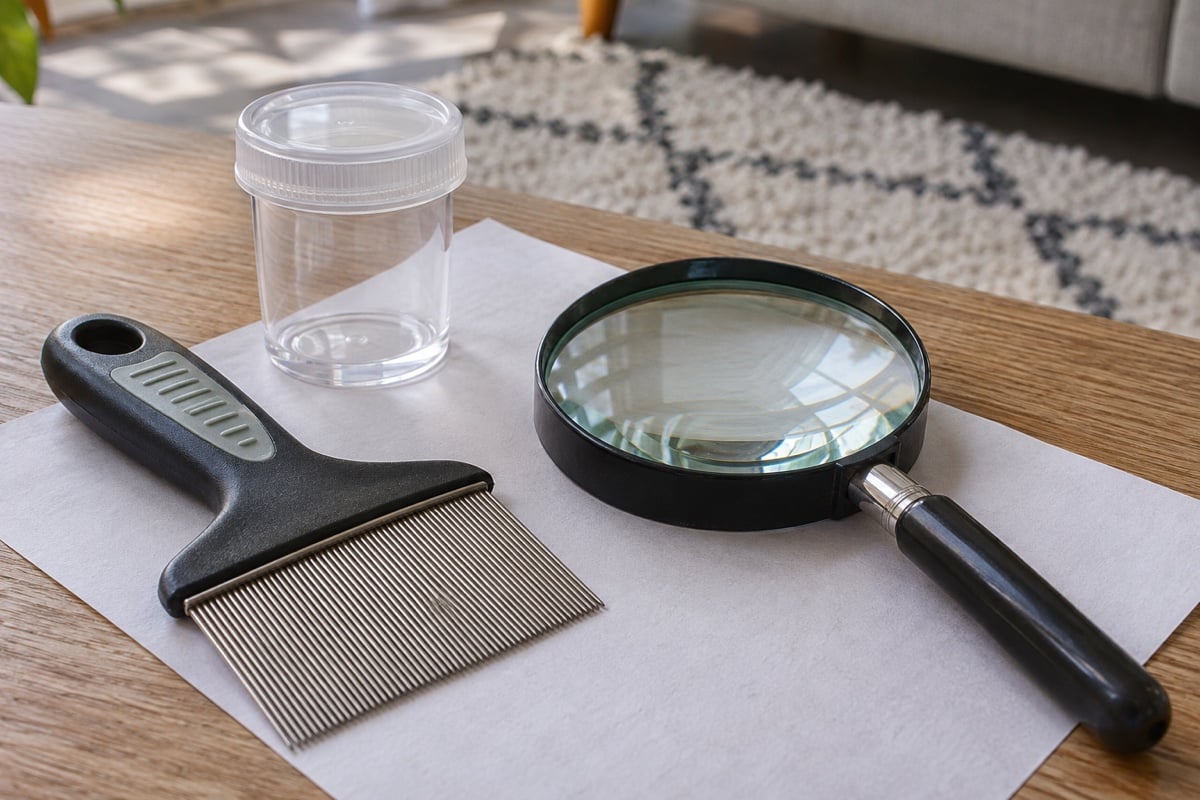
Cat flea eggs are tiny, smooth, oval and pearly white, roughly half a millimetre long. They are easily missed among dust and bedding fibres and usually fall from the animal into its surroundings. Dark grains on a flea comb are more likely to be debris or flea dirt than eggs. A magnifying glass can help, but finding an adult flea or confirming flea dirt is usually easier than identifying every white speck.
How long do fleas live?
It depends on the species, stage and conditions, not simply whether your pet has long or short hair. An adult cat flea commonly lives around 30–40 days on its host, although survival varies with conditions and grooming. Survival away from the host also varies. Larvae need food and suitable moisture, and a fully developed adult may wait inside its cocoon before coming out. That delay is why fleas can appear in an empty home and why clearing an infestation takes longer than killing the adults you see today.
Can fleas cause diseases?
Fleas can cause flea allergy dermatitis and, in heavy infestations, blood-loss anemia, particularly in small or young animals. Pets and people can acquire Dipylidium tapeworm by swallowing an infected flea, rather than through its bite. Certain fleas can transmit murine typhus or plague in particular settings. Most itchy bites don’t mean one of these infections is present, but fever or illness after flea or rodent exposure needs medical advice with the exposure history explained.
Sources
- UC IPM: Cat flea life cycle
- CDC DPDx: Fleas
- University of Minnesota Extension: Fleas
- CDC: Getting rid of fleas
- FDA: Safe use of flea and tick products in pets
- CDC: dog and cat tapeworm

