Adult fleas are tiny, dark, wingless insects with a body flattened from side to side and strong back legs. A jumping speck is a reason to look closer, not a complete identification. Compare the adult features first, then use the stage and lookalike guides below to decide what evidence to collect.
All sections
Adult flea pictures: shape matters more than colour

- Size: common adult pet fleas are only a few millimetres long, roughly up to 3 mm (about 1/8 inch). Species and specimens vary.
- Shape: a flea is thin from side to side, like an insect standing on edge. A broad oval seen from above is a reason to compare other possibilities.
- Legs and movement: adults have six legs and enlarged hind legs. They crawl and can jump; they have no wings.
- Fine details: bristles and comb-like structures need a sufficiently sharp, enlarged view. Colour or the animal it was found on cannot reliably identify a flea species.
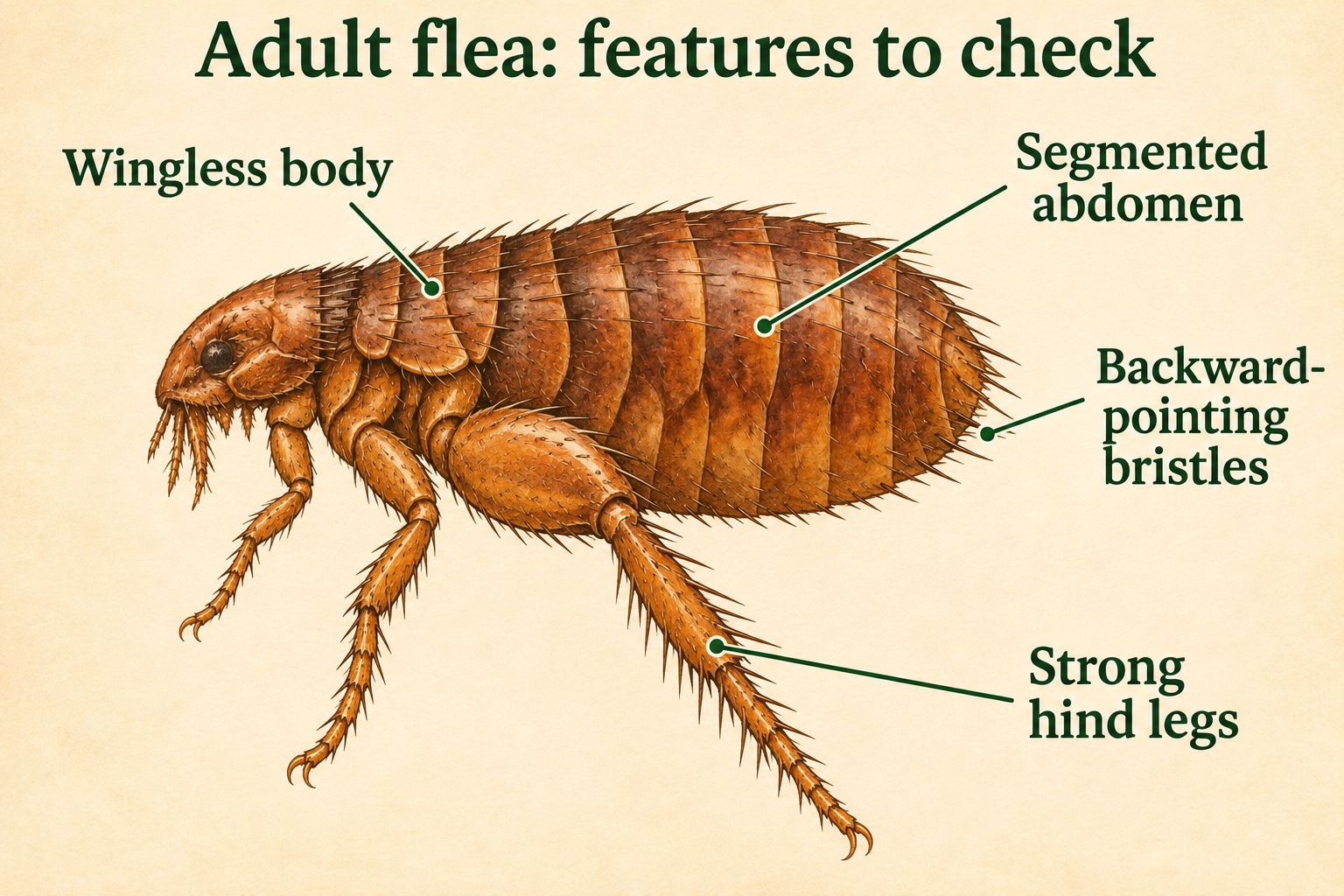
Screen size and zoom change how large every picture looks. Photograph a contained specimen beside a millimetre ruler, with both in the same plane and in focus. Without that reference, a close-up cannot give an exact body length.
Fleas on a pet and under magnification


Flea eggs, larvae and cocoons look different
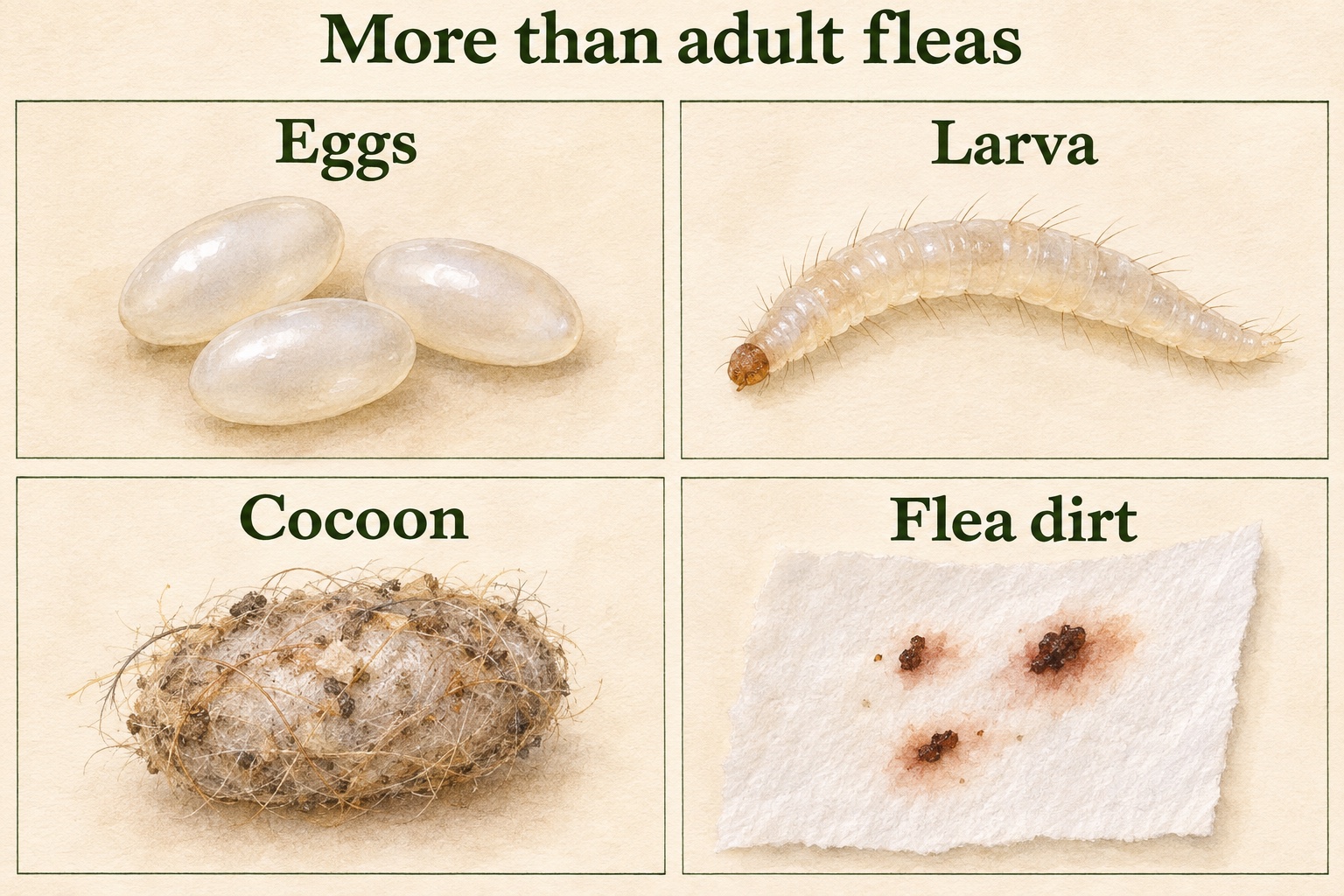
Fleas develop through egg, larva, pupa and adult stages. The pupa develops inside a cocoon. A flea larva is a pale, legless, worm-like animal, not a tiny jumping version of the adult. Flea dirt is droppings, not a fifth life stage. The CDC lifecycle guide explains the sequence.
| Stage or sign | Appearance and approximate size | Likely search area |
|---|---|---|
| Adult flea | Dark, wingless and thin from side to side; a few millimetres long. Crawls and jumps. | Pet coat, or a newly emerged flea looking for a host. |
| Egg | Smooth, pale oval, under 1 mm long. No legs or independent movement. | Eggs fall off the host into bedding, carpet and other resting areas. A white speck alone is not enough to identify one. |
| Larva | Pale, slender and bristly, with a brown head and no legs. Mature larvae can approach 5 mm; they crawl rather than jump. | Protected places in bedding, carpet or crevices, away from light. |
| Cocoon with pupa inside | Small silken covering, often disguised by lint, hair and debris. The outer surface can resemble ordinary dust. | Sheltered places where larvae developed. Do not expect an obvious exposed “baby flea”. |
| Flea dirt | Dark pepper-like flecks containing digested blood; size and shape vary. | Pet coat and resting places. Try the damp-paper check below. |
The egg, larva and cocoon descriptions follow UC IPM’s identification guide. You may find an adult without finding the other stages. Cocoons can conceal developing fleas, so one unsuccessful search is not an all-clear.
Flea dirt or ordinary debris? Use damp white paper
- Collect loose specks. Comb the coat over white paper or a light surface. Avoid scraping irritated skin.
- Moisten the sample. Transfer the collected specks onto damp white absorbent paper. Flea dirt can leave a reddish-brown stain because it contains blood.
- Keep the result in context. A reddish stain supports the suspicion of flea dirt, but blood from irritated skin can also stain. Photograph the sample and show it to a vet if uncertain; the test does not identify a flea species.
Eggs are pale; flea dirt is dark. A dark fleck that stays still is not automatically an insect, and white flakes are not automatically eggs. DermNet describes the damp-towel clue. VCA explains why grooming can hide evidence, especially in cats.
Flea, bed bug, tick or springtail?
Compare the body shape and observed movement before interpreting bite marks. Size overlaps between species and life stages; use the whole combination.
| Animal | Features to compare | What the clue means |
|---|---|---|
| Flea | Thin from side to side, six legs, strong hind legs; can jump. | A sharp side view and specimen location help. Jumping alone is not unique to fleas. |
| Bed bug | Broad oval body, flat from top to bottom when unfed. Adults are usually 5–7 mm; young bugs are smaller and paler. | Do not rule out a young bed bug just because it is small. Compare with EPA reference features. |
| Tick | Nymphs and adults have eight legs; larvae have six. Ticks crawl and do not jump. | Six legs alone does not rule out a larval tick. An attached tick calls for tick removal guidance, not flea treatment. |
| Springtail | Tiny animal, often elongated but sometimes rounder; can jump. Common around damp places. | Jumping specks near moisture may be springtails. They do not bite people or pets; UMN explains their identifying features. |
Take a photo that can actually help identification
- Keep the specimen contained. If safely possible, use a small clear, sealed container. Do not crush it or place it on bare skin. Ask the identification service how it wants samples prepared before sending anything.
- Take two views. Record where it was found, then take a focused close-up from above and from the side if possible. Use bright, even light and keep the original files.
- Add a real size reference. Place a millimetre ruler beside the contained specimen in the same plane. Record body length separately from the legs if you can measure it reliably.
- Record context. Note the date, room or animal, whether it crawled or jumped, and whether other specimens or flea dirt were found. A brief movement video can help when a still photo is blurred.
Send the clearest evidence to your vet, a qualified pest professional or a local extension identification service. Describe what you observed without naming it as a confirmed flea first. If you have a useful original picture to share with this guide, contact us with the location, size reference and any identification already obtained.
What to do with the result
- A flea has been identified: inspect all household pets and coordinate a pet-and-home plan. Our flea-control guide covers the next steps.
- Only suspicious debris or a blurry speck: collect a better sample before choosing a pest treatment. Use our home inspection guide to record the evidence.
- Only itchy skin marks: use the bite picture and care guide. Skin symptoms alone cannot identify the insect.
- A pet remains itchy: ask a vet even if you found no flea. Use only products labelled for that animal’s species, age and weight; never use a dog-only flea product on a cat.
Finding new adults after treatment can reflect emergence from protected cocoons. Keep to the product label and veterinary plan instead of applying extra doses early. CDC guidance explains why follow-through across pets and the home matters.
Reference specimens and more views
For a documented specimen, CDC PHIL 25575 identifies a cat flea, Ctenocephalides felis, in left-side view. CDC PHIL 5089 explains magnified head and comb features. These references establish details of those specimens, not the identity of an insect in an unrelated household photo.
More flea pictures
Use the adult features and scale advice above for identification. The views below do not establish measured size or species.


Sources and further reading
- University of Minnesota Extension: flea features and biology
- UC IPM: flea eggs, larvae and cocoons
- CDC: flea life cycle
- CDC DPDx: fleas
- CDC: tick life stages and leg counts
- CDC: ticks cannot jump
- EPA: bed bug appearance and life cycle
- University of Minnesota Extension: springtails
- FDA: flea and tick product safety

