Flea bites often look like small, itchy bumps in groups, especially around the ankles and lower legs. Their colour, swelling and spacing vary. Use the pictures to compare visible features, then check pets and resting places for fleas: a matching rash alone cannot establish the cause.
All sections
Flea bite pictures: what to compare
Start with the overall distribution, then look at individual marks. The three human photographs below show different views; they are not a before-and-after sequence. Their original case histories and confirmed diagnoses are not available here, so the captions describe what is visible.

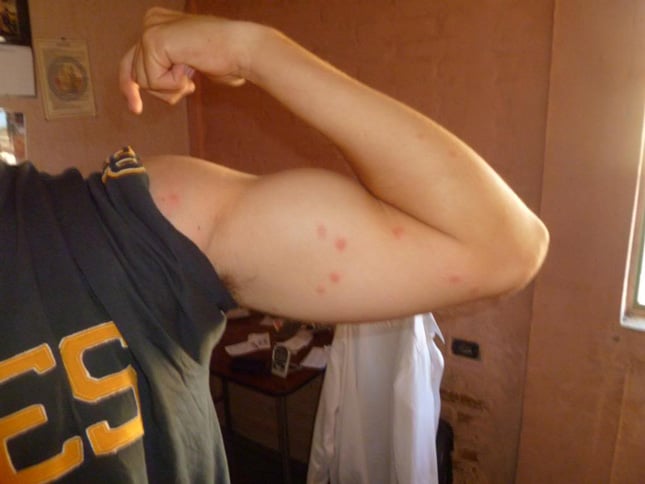

Colour, clusters and timing: useful clues, with limits
| Clue | Useful observation | What to check next |
|---|---|---|
| Small raised marks | Record the number and body location. Itching is something you report; it cannot be seen in a photo. | Look for a flea on a pet or in the home. A mark by itself does not identify the insect. |
| A cluster or short line | Note whether marks are grouped or scattered. Both arrangements can occur with insect bites. | Do not use a “three bites in a row” rule to choose between fleas and bed bugs. |
| Colour on your skin | Redness can be harder to see on brown or black skin. Compare swelling and texture as well as colour. | Use similar lighting each time. This gallery does not cover the full range of skin tones. |
| Marks that seem to return | Record genuinely new spots separately from an old spot that becomes itchy again. | Old reactions may flare again; renewed itching does not by itself prove a fresh bite. |
| Pain, heat or spreading swelling | These changes matter even when the photograph looks subtle. | Use the care guidance below; do not wait for a perfect picture before seeking help. |
Flea reactions often involve the lower legs; marks can also occur elsewhere, including around a waistband. Some reactions persist, blister or become crusted after scratching. DermNet explains this variation. A colour change alone cannot date a bite. See our guide to flea bites on humans for more on symptoms.
Flea bites, bed bugs or another skin problem?
The most useful comparison combines the skin findings with evidence of exposure. The following are investigation routes, not diagnoses based on appearance.
| Possible cause | Evidence worth checking | Next step |
|---|---|---|
| Fleas | A correctly identified adult flea, or flea dirt found while combing a pet, supports flea exposure. | Inspect pets and their resting places. Use the flea identification pictures for the insect itself. |
| Bed bugs | Check mattress seams and bed frames for live bugs, shed skins and dark spotting. Skin marks overlap with other bites. | Photograph or contain a specimen for identification. The EPA inspection guide shows where to look. |
| Other insect bites | Consider outdoor activity, travel and an insect you actually saw. Many bites produce itchy bumps. | Keep the exposure details with your photos; do not decide from redness or spacing alone. |
| A non-bite rash | Eczema, hives and other skin conditions can resemble bites. Finding no insect does not settle the cause. | If marks persist, spread or recur without a clear explanation, ask a clinician to assess the skin. |
Check the skin, the pet and the resting places
- Record the skin changes. Take one wider photo showing the body area and one focused close-up. Note when you first noticed each new spot, symptoms and recent travel or animal contact.
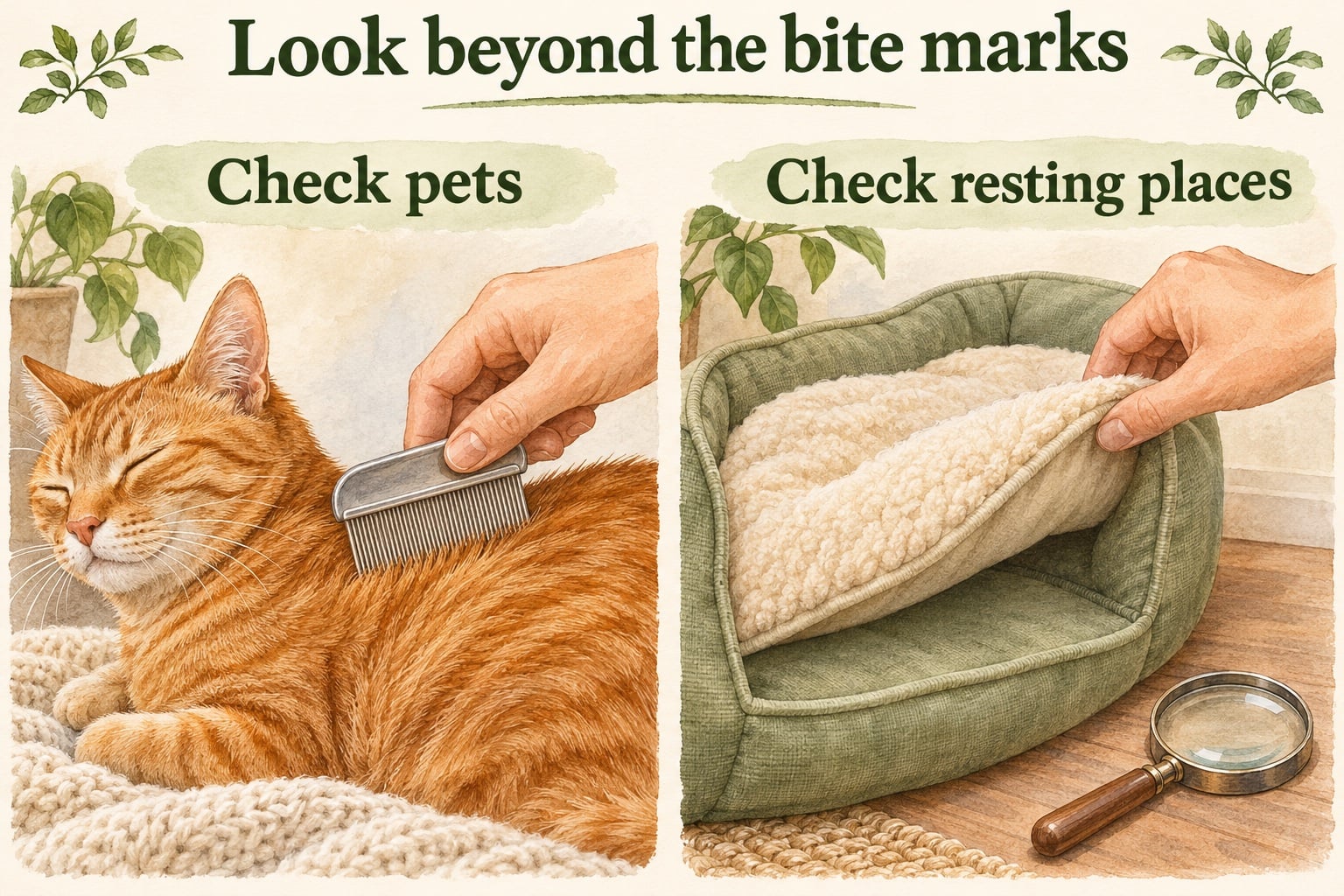
- Comb pets and save the evidence. Use a flea comb over a light surface. Keep a clear picture of anything collected; a vet can help distinguish fleas, flea dirt and ordinary debris. An itchy pet alone does not confirm fleas.
- Inspect where animals rest. Check pet bedding, carpet edges and sofa cushions. Record exactly where a specimen was found before cleaning. If no pet lives with you, mention previous pets or possible wildlife activity to a pest professional.
A short record to take to a clinician or vet
Date first noticed: ___ Body area: ___
New spots or old spots itching again: ___
Symptoms and how they changed: ___
Pet or room checked; what was found: ___
Recent travel, animal contact and treatments already used: ___
Keep the original photos without colour filters. If comfortable, include a clean ruler beside intact skin without touching an open or sore area. Photograph the insect separately; do not place it on skin for scale.
Relieve itching and know when to get help
For a minor suspected insect bite, wash gently with soap and water, use a cold pack wrapped in cloth, and avoid scratching. A pharmacist can advise whether an antihistamine or hydrocortisone is suitable for the person, age and body area. Follow the product directions; do not put these treatments on open wounds unless advised. See the NHS bite-care guidance and our flea bite treatment guide.
Emergency: trouble breathing, swelling of the mouth or throat, or collapse needs emergency help. Prompt medical advice: increasing pain, heat, pus, spreading swelling, fever or feeling unwell. Tell the clinician about recent travel and suspected flea exposure. Persistent or unexplained skin changes also deserve assessment.
What do flea bites look like on dogs?
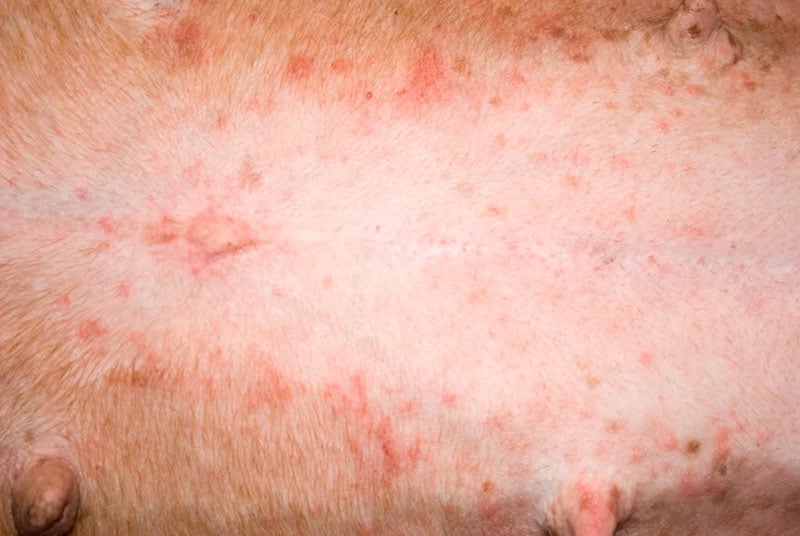
For a pet, scratching, scabs or hair loss may be more noticeable than separate bite marks. Cats can groom away flea evidence, so an unsuccessful comb check does not rule out a problem. A vet may recommend flea control while investigating other causes. VCA explains these signs in cats.
Care for the pet and tackle confirmed fleas
Ask a vet about painful, broken, weeping or persistently itchy skin. Weakness or pale gums needs urgent veterinary advice. Choose a flea product for the correct species, age and weight, following its label and the vet’s advice. Never apply a dog-only flea treatment to a cat. Avoid human creams and essential oils on pets unless a vet specifically directs their use.
Once fleas are identified, coordinate pet treatment with cleaning of bedding and the home. Start with our flea-control steps. For treatment context, see flea drops for cats and dogs and what flea shampoos can and cannot do.
Documented reference and photo notes
For a reference with a recorded case description, CDC PHIL 25257 describes cat-flea bites on a woman’s leg and foot in Decatur, Georgia, in 1963, credited to Dr. H. G. Scott. The reference is linked for context; it does not establish the cause of a reader’s marks. The NHS comparison gallery also covers other bites and different skin tones.
A dog resting at home

Sources and further reading
- DermNet: flea-bite reactions
- NHS: insect bites and stings
- NHS: hydrocortisone for skin
- University of Minnesota Extension: fleas
- EPA: finding evidence of bed bugs
- VCA: flea control in cats
- FDA: safe flea and tick product use

