
While tackling fleas in the house and on your pets, you may wonder whether the yard could keep bringing them back. It’s one possible source, especially where animals rest or wildlife shelters, but it isn’t automatically the cause of every infestation. Here’s how to find out where fleas are hiding, get the area ready and choose what to do if you confirm they’re outside.
Work in this order:
- Confirm flea activity and mark the shaded animal-resting spots involved.
- Make those places accessible, remove ordinary accumulated debris and correct unwanted moisture.
- Coordinate appropriate flea prevention for each pet with indoor cleaning.
- If needed, consider a targeted, labeled treatment that fits the site; biological products have their own limitations.
- Get professional help early for extensive, recurring, inaccessible or wildlife-related activity, and agree on follow-up.
This can take some planning and follow-up, particularly if your pets spend a lot of time outdoors. Fleas won’t necessarily be spread across the whole lawn. A doghouse, the space under garden furniture or another shaded resting spot may be where the activity is concentrated. Find those places first and you can focus the work instead of treating the entire yard unnecessarily. Keep the outdoor jobs in step with your pets’ prevention and anything you’re doing inside.
Find out where the fleas are hiding
First find evidence of the insects so you know where to begin flea treatment. Developing fleas favor protected, shaded and moist places. Open, sunny grass is often less favorable. Think about where your pet sleeps, rests or waits: around a kennel, garden furniture, shrubs, fences or beneath a deck. Check sheltered areas used by visiting animals as well. An insect found in one place doesn’t mean that the whole garden has the same problem.
White socks pulled over the lower leg can make dark, jumping fleas easier to see when inspecting a suspected area. Avoid deliberately exposing yourself to many bites; protective clothing and professional identification can be more appropriate if activity is heavy. Capture a specimen safely if identification is uncertain, because other small insects may be mistaken for fleas.
Check several resting places and jot down—or sketch—where you found fleas. Compare those spots with where your pet normally goes. Check the same places again afterwards, so you can see whether activity is declining instead of judging the whole job by one bite or a stray insect elsewhere.
Before you begin flea treatment in the yard
Arrange appropriate flea control for every relevant pet while you plan the outdoor work. The animal, home and yard should be considered together; you don’t have to prove that the pet is completely flea-free before assessing an outdoor source. Keep animals away from any area being treated and follow the product’s re-entry directions afterwards. Continuing suitable prevention helps stop new adults from reproducing on a returning pet.
Clear enough space to reach the affected areas. Mow at a height that suits your grass, rake up accumulated leaves and remove unnecessary debris around animal resting spots. Moving toys, old equipment and clutter can reveal places you couldn’t inspect before. You don’t have to strip out every leaf or compost pile; follow the evidence. Fix a leaking tap or other unwanted source of moisture where practical. These jobs make the area easier to manage and support whichever control method you choose.
Choose measures for the confirmed sites
The options below have different roles: habitat maintenance supports control; animal prevention interrupts reproduction on hosts; pesticides have defined permitted uses; biological products depend on species and conditions; and professionals can investigate difficult sources. Flooding and cedar-chip barriers are not dependable alternatives.
Choose according to where you’ve found fleas, how animals use the space and what you can apply correctly. If the problem is around a shaded kennel, the big sunny lawn may not need treating. On the other hand, missing a second resting spot can leave fleas developing there. The sections below will help you work out which jobs matter before spending money or applying pesticide.
Manage moisture and accessible resting places
Check leaking taps, pipes, irrigation and places where water collects. Improve drainage where practical without sending runoff toward drains or neighboring areas. Irrigate for your planting and local water restrictions; cutting every lawn to half an inch is not a general flea-control instruction. Recheck the mapped resting spots while continuing pet care. Follow separate moisture directions if using a biological product.
Consider targeted outdoor insecticide treatment
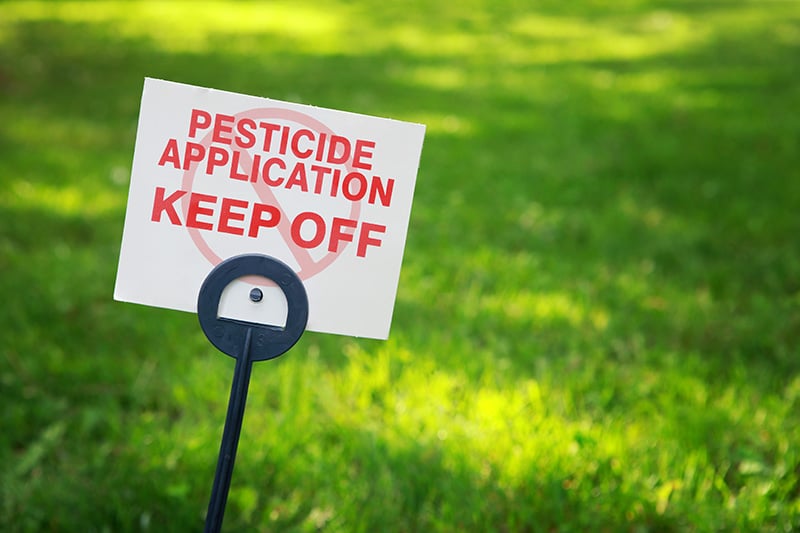
If insecticide treatment is needed, choose a product labeled for outdoor flea control and for the location you intend to treat. “Environmentally friendly” isn’t a substitute for reading its permitted uses, application rate, weather restrictions and precautions. Protect water: follow all directions for ponds, streams, drains and other sensitive sites. Use the clothing and protective equipment the label specifies; a general dust mask doesn’t automatically meet a product’s respiratory-protection requirements.
Before you spray the yard, remove toys, feeding bowls and other items as directed. Keep children, pets and anyone not involved in the application away during treatment and until the stated re-entry conditions are met. If the pack is unclear, ask the manufacturer or a qualified professional before applying it.
Target confirmed affected places, including suitable sheltered animal resting areas. A fence around a pet’s space doesn’t automatically mean that every surface inside it needs spraying. Apply only to sites the product allows. Repeat only when the exact label or your professional’s plan calls for it; a general two-to-four-week timetable can’t be used for every insecticide.
How to spray the yard with insecticides
- Read the full label before opening the product. Establish who and which animals must stay out, for how long, and what drying or other re-entry conditions apply.
- Clear the treatment site of toys, feeding items and clutter. Protect play equipment or other items only by the method specified for the chosen product; don’t improvise a cover that leaves residues where children will touch them.
- Put on the required gloves, clothing and any other specified protection. Check that the sprayer is suitable, correctly set and in good condition.
- Measure and apply the labeled rate to permitted affected sites. More concentrate or a heavier application isn’t an automatic improvement.
- Pay attention to confirmed hotspots such as allowed areas beneath a deck, near a kennel or under shrubs. Observe plant, water, drift and weather restrictions.
- Record the product, date and areas covered. Continue monitoring and follow the label’s retreatment limit rather than spraying again simply because a flea is seen soon afterwards.
Assess beneficial nematodes and their limits

If you are considering a biological option, read about beneficial nematodes and their limits. These are microscopic organisms sold for particular insect-control uses. Their species and strain, viability, storage, soil conditions and the target pest all matter. A product used for one insect doesn’t automatically work on fleas or termites, and not all nematodes have the same host range.
Some are sold for outdoor flea larvae, but results in the field don’t support calling them a perfect solution. Use them as part of a plan that still covers pet treatment and the source. Heat, drying and sunlight can reduce their survival, so handling matters. Follow the supplier’s directions for your pack; they don’t all come on a sponge or need the same amount of water.
How to use nematodes for fleas
- Check the named nematode, target pest, expiry, storage instructions and application conditions before purchase. Use a fresh, viable product suited to the proposed site.
- Prepare it as the supplier directs. Some formulations need mixing in water or release from a carrier such as a sponge; the amount of water and preparation method vary.
- Use compatible application equipment and the specified dilution. Check any restrictions on filters, pressure, water quality or other products that might affect the organisms.
- Apply to the permitted affected areas under the recommended light, temperature and soil conditions. Avoid an automatic whole-lawn application if the relevant habitat is a small sheltered area.
- Maintain the recommended soil moisture and check the same flea hotspots afterwards. Don’t assume that every product needs exactly seven days of watering or will reproduce sufficiently to remove every flea.
Get professional help for difficult sources
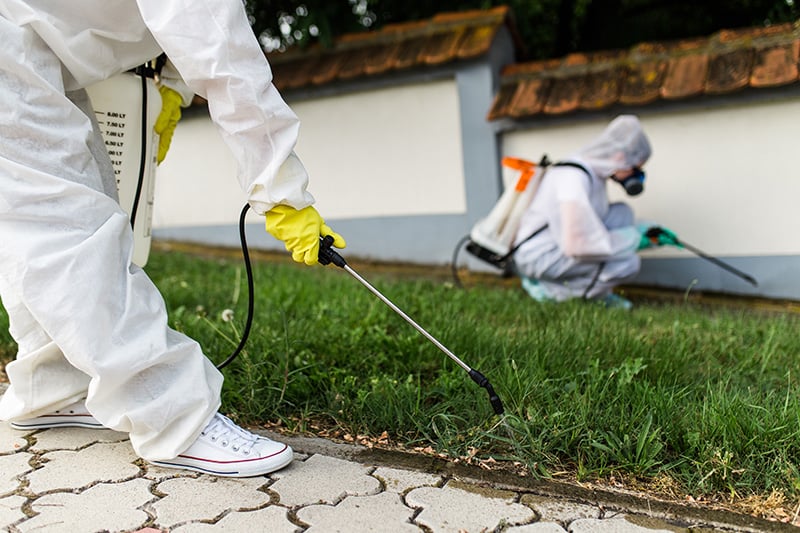
If the infestation is extensive, keeps returning, involves a wildlife source or is difficult to manage yourself, a qualified pest-control professional can help. Ask them to inspect the area, identify the pest and explain what they propose to do, including follow-up. Find out how the outdoor work fits with your pets’ prevention and any fleas inside, because treating just one part can leave another source untouched.
Before booking, ask about the affected sites, products and methods, preparation, animal and child re-entry, follow-up visits and the basis for deciding whether more work is needed. Describe the flea problem and what you’ve already tried. Results and speed depend on the situation. If discreet vehicles, a particular response time or a guarantee matter to you, ask what the company actually offers rather than assuming those things are included.
Why flooding and cedar chips are not reliable controls
Flooding: it does not guarantee removal of eggs, larvae, their food or protected pupae. Damp sheltered ground may still support development after water drains away, while unnecessary flooding can damage planting or cause runoff. Do not use an automatic monthly flooding routine.
Cedar chips: choose them only as mulch if they suit the planting and animals that can reach them. Their scent is not an established flea barrier, and fleas can arrive on animal hosts. Chips do not reliably exclude cats or wildlife. Do not add concentrated cedar oil or insecticide to make them stronger; continue appropriate animal care and monitoring.
Sources
- CDC: Getting rid of fleas
- University of Minnesota Extension: Fleas
- FDA: Safe use of flea and tick products in pets
- Texas A&M AgriLife: managing fleas
- Cornell IPM: Steinernema carpocapsae

