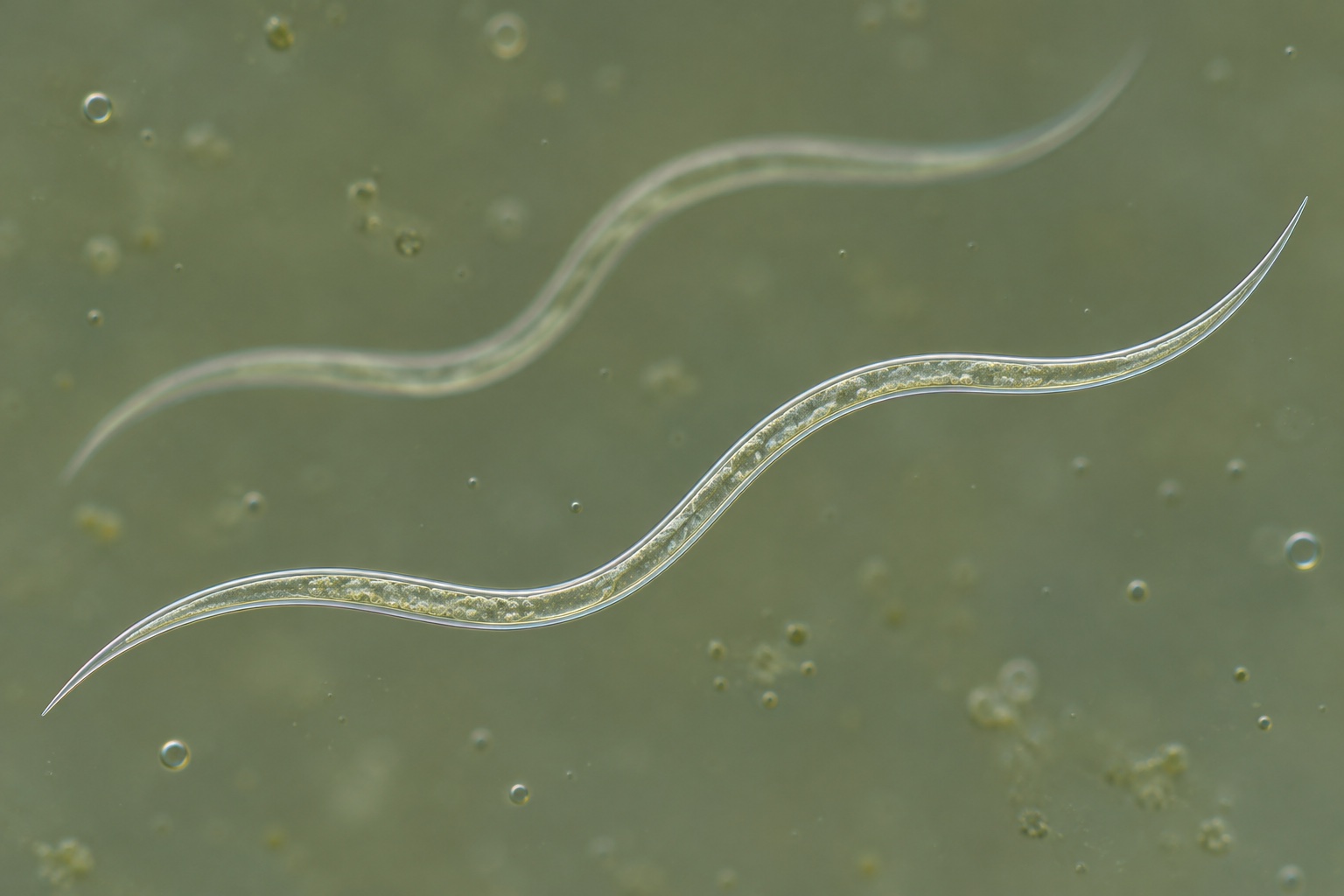
You may have a plan for your pets and carpets but still be wondering what to do about fleas outdoors. Start with the places animals actually rest, especially sheltered, shaded spots with suitable moisture. Your whole sunny lawn may not need treatment. When looking into yard treatment, you may encounter beneficial nematodes. They’re a biological option, but they need the right conditions and aren’t a guaranteed nontoxic replacement for every other method. Before buying, check the nematode species, the pest it’s intended for and whether your garden suits it.
What are beneficial nematodes for fleas? How do they work?
Steinernema carpocapsae is an insect-parasitic nematode studied against cat-flea immature stages. It should not be described as reliably clearing adults, larvae and pupae from every lawn in a day. Laboratory or greenhouse results depend on the strain, substrate, dose, temperature and moisture and don’t guarantee the same result in a garden. Cornell lists cat fleas among its possible targets, while Texas A&M notes that outdoor flea-control effectiveness isn’t well tested.
These beneficial insect-parasitic nematodes are microscopic roundworms. They’re different from the plant-parasitic nematodes that damage crops and the worms that infect pets. Young infective nematodes enter susceptible insects and release associated bacteria that help kill them. The nematodes then develop and reproduce inside, and new infective juveniles can leave to find another host. To keep working, they need suitable conditions: drying, heat and ultraviolet exposure can reduce their performance. Don’t confuse them with pet deworming medicine or apply them directly to an animal.
How to use beneficial nematodes for flea control?
Use a product only for the locations and pests its supplier specifies. Outdoor soil and turf applications are different from indoor flea control. Don’t spray a living-nematode suspension over household carpets or a doghouse interior simply because it’s biological. Indoors, rely on appropriate pet prevention, washing and vacuuming, with a labeled premises product if needed.
If you’re considering nematodes outdoors, work through these steps:
- Confirm flea activity and identify shaded animal resting sites. Choose a nematode species and product intended for the target, not an arbitrary garden mix.
- Check the expiry date, storage requirements, temperature range, application rate and compatible equipment. These are living organisms, so delivery and storage condition matter.
- Mix and apply according to supplier directions, keeping the suspension appropriately mixed and avoiding strong direct sun. Don’t assume every pack uses the same sponge, water volume or nozzle.
- Provide the specified moisture before and after treatment without flooding or leaving standing water. Local watering restrictions and soil drainage may make the method impractical. Monitor results rather than assuming reproduction guarantees control.
Preventing flea re-infestation from outdoors
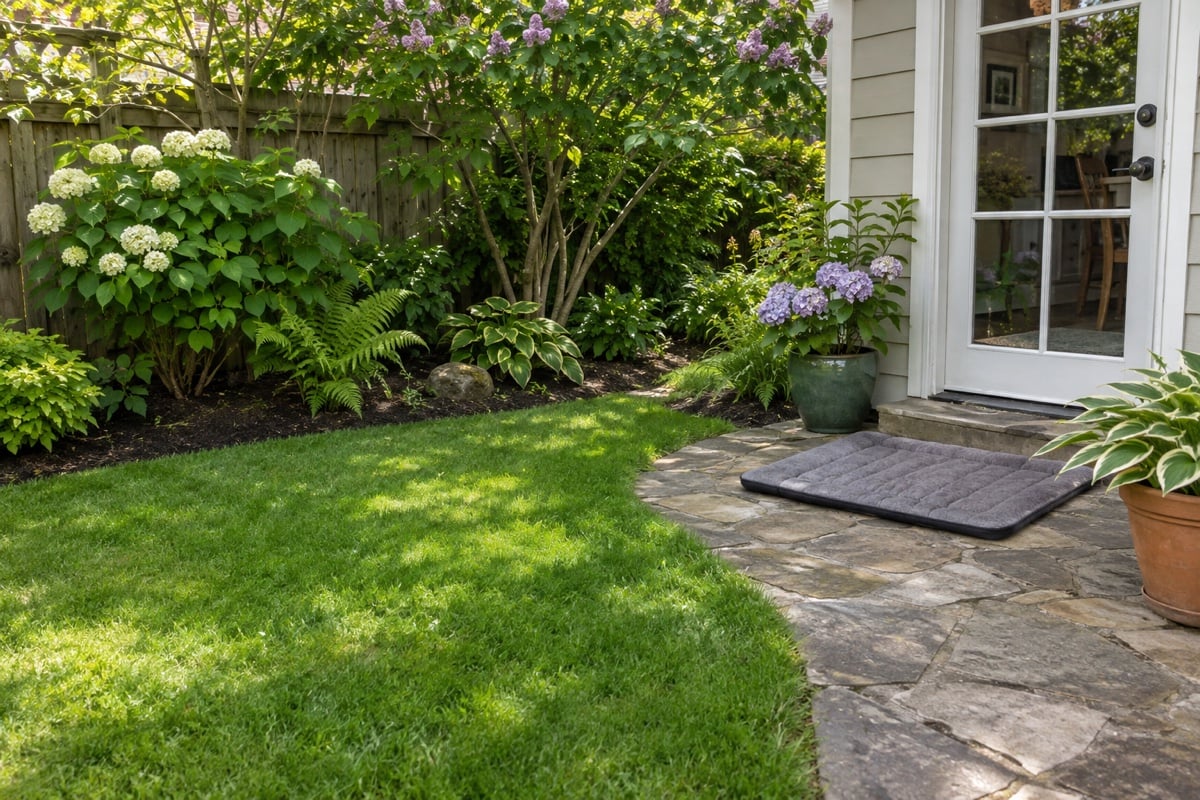
Fleas can return because an animal hasn’t been treated, protected stages are still present or wildlife keeps using the same resting spots. Secure pet food and rubbish, clear clutter and move wood piles away from the house. Mow grass and trim excessive growth around animal resting areas, and use suitable exclusion methods to discourage nesting under structures. Keep your pets on their own appropriate preventive. Indoors, wash bedding with detergent at suitable care-label settings, and vacuum floor edges and upholstery. Household borax is not needed as a bedding rinse. Empty vacuum contents outside into a closed bag.
If you want to compare nematode products, ask the supplier about evidence for fleas specifically and what help they provide with application. Check your own conditions first, then watch actual flea findings to see whether numbers fall. If they don’t, review the whole pet-and-household plan instead of watering and spraying again without knowing it’s helping.
Sources
- CDC: Getting rid of fleas
- University of Minnesota Extension: Fleas
- FDA: Safe use of flea and tick products in pets
- Cornell IPM: Steinernema carpocapsae
- Texas A&M AgriLife: managing fleas
- Research: entomopathogenic nematodes against cat-flea larvae

