Product information checked November 2, 2026. Specific age, weight and interval examples below refer to US labels unless another country is named; follow the exact local pack.
This guide compares common approaches to flea control for cats, including practical measures, active ingredients and situations to avoid. A useful choice depends on the exact formulation, the cat’s age and weight, medical history and other household animals. No ingredient list can divide every product into universally safe and unsafe categories, and using a smaller or irregular dose is not a substitute for choosing correctly.
The four sections below cover:
- Physical measures that support control and monitoring.
- How particular product types work.
- Formulation, contact and availability questions.
- Products and uses that require particular caution.
Physical measures that support flea control
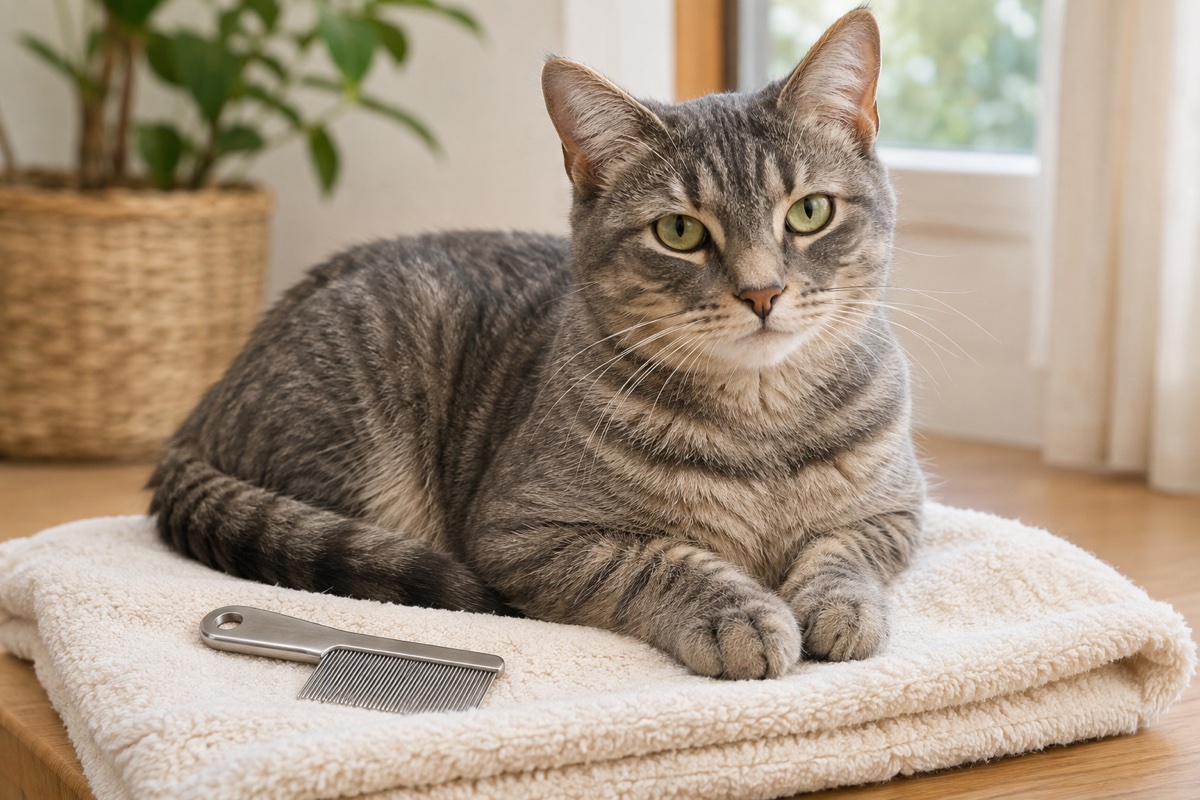
- Flea combs: gently remove some adults and flea dirt and help track progress. Drop captured fleas into soapy water; avoid scraping painful skin.
- Vacuuming: concentrate on sleeping areas, carpet edges, furniture crevices and beneath cushions. It removes some environmental stages and larval food but does not reach every cocoon.
- Bedding and bathing: wash bedding using suitable care-label settings. Cats do not all need routine flea baths, and repeated bathing can be stressful or interfere with some topicals. Ask about an appropriate cat shampoo only when bathing is needed.
- Outdoor sites: reduce debris and animal access around resting areas. Nematodes are condition-dependent biological tools, not a guaranteed garden preventive. A sunny lawn may not need treatment at all.
Understanding product types and ingredients
- Essential-oil products: a strong smell does not prove efficacy, and water dilution does not establish a safe cat dose. Avoid homemade mixtures and discuss the exact pet-labeled formulation.
- (S)-methoprene: an insect growth regulator that mimics insect juvenile hormone and interferes with immature development. It is not the chitin-synthesis inhibitor lufenuron and does not kill existing adult fleas by itself. Combination products contain other ingredients, so check the whole formulation.
- Historical ProMeris: the cat formulation contained metaflumizone; it should not be confused with a canine combination containing amitraz. EMA records withdrawal of the ProMeris authorization. This is an older product entry, not a recommendation to obtain old stock or use a dog formulation on a cat.
- Selamectin: original Revolution is a prescription monthly topical with species-specific indications and minimum ages. The US cat label starts at eight weeks. Revolution Plus combines selamectin with sarolaner. Its US monthly cat label starts at eight weeks and 2.8 lb and includes tick coverage; original Revolution’s cat label does not have that tick indication. Do not transfer every claim or instruction between them.
Formulation and household-contact questions
- Herbal blends: do not rely on a generic “use sparingly” instruction for lavender, citronella, cinnamon, clove, eucalyptus or other oils. Concentration, route and the cat’s grooming exposure matter. Keep concentrated oils away from the cat unless a vet has advised an exact product.
- Imidacloprid products: useful adult-flea treatments include cat-specific formulations. Advantage, Advantage II and Advantage Multi are not identical. Use the labeled cat weight range and interval rather than an arbitrary reduced amount; check all active ingredients.
- Brand and availability: product ranges change. Check that the exact pack is currently authorized and appropriate locally, especially for an old name such as ProMeris. A historical review or marketplace listing does not establish current suitability.
- Fipronil products: formulations such as cat Frontline products differ from dog combinations. Follow minimum age, application, bathing and drying directions and keep children and other pets from fresh application sites as instructed. Discuss pregnancy, illness or previous reactions before selecting a product.
Uses and products to avoid or review carefully
- Dog-only permethrin products: never apply these to cats or split a dog dose. Keep cats away from freshly treated dogs for the label’s stated period. Pyrethrins are a different ingredient group; any product must be specifically labeled for cats rather than assumed safe from its plant origin.
- Homemade citrus and essential-oil treatments: do not use concentrated limonene, linalool or oil blends as improvised cat sprays. Pennyroyal can be seriously toxic to both cats and dogs.
- Older cholinesterase-inhibiting insecticides: TCVP and other ingredients need current product-specific scrutiny. Check local authorization and contact precautions, particularly around children, and discuss alternatives rather than relying on a blanket carcinogen slogan.
- Unlabeled substitutions: an ingredient such as fenoxycarb in a garden or premises product does not make it a cat treatment. Do not apply household pesticides, mix products or improvise dose calculations.
To choose among flea products, first confirm the cat’s current weight and age, then check the complete active-ingredient list and intended purpose. Ask your vet about other parasites, illness, pregnancy, seizure history or previous reactions. Follow one coordinated prevention plan, including bedding care and vacuuming. Do not combine products without checking compatibility. Drooling, vomiting, tremors or weakness after treatment needs prompt veterinary advice; seizures or collapse are urgent.
Sources
- FDA: Safe use of flea and tick products in pets
- University of Minnesota Extension: Fleas
- CDC: Getting rid of fleas
- FDA: animal-drug approval and pesticide registration
- EPA: TCVP review and precautions
- EMA: historical ProMeris authorization and withdrawal
- Merck Veterinary Manual: essential-oil toxicosis
- DailyMed: original Revolution label
- Zoetis: Revolution Plus for cats

