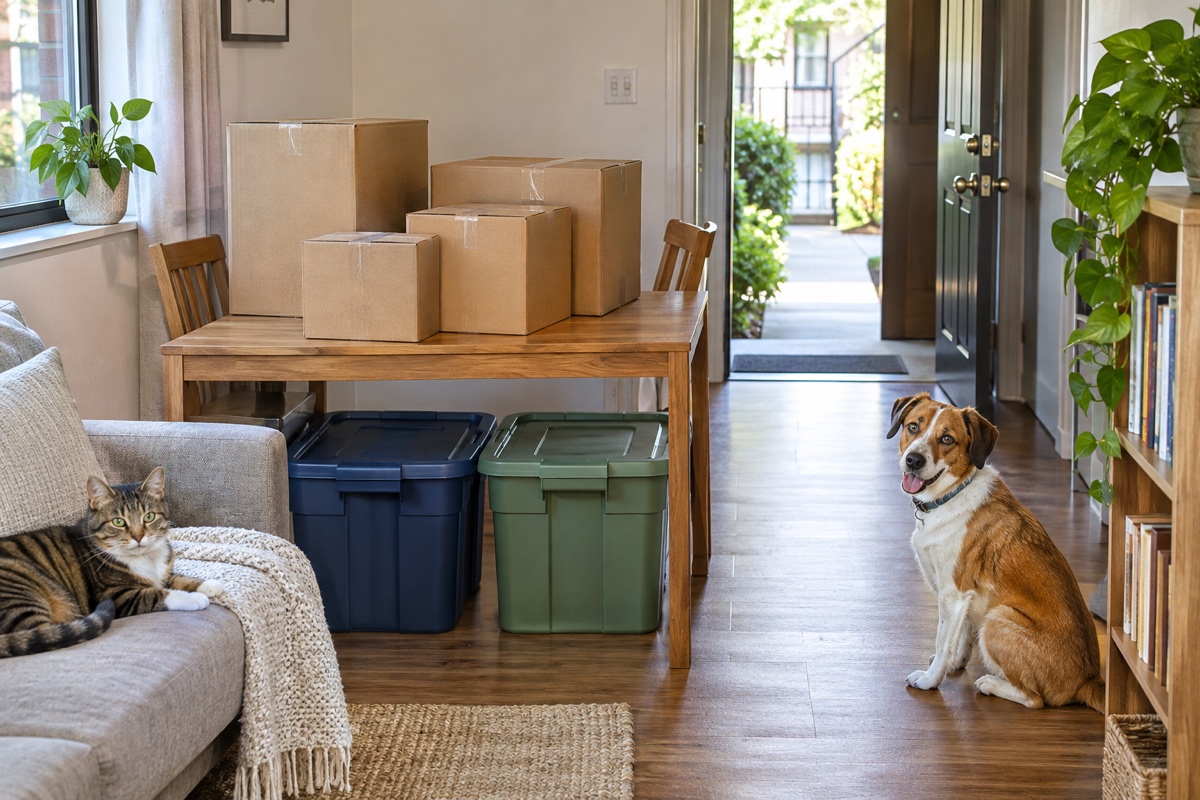
If fleas have been confirmed and moving day is close, organize packing around what you can inspect and clean. Start with the pet’s beds, blankets and favorite furnishings, where eggs can fall from its coat and immature stages can develop. Set up a clean packing area and keep a simple list of anything that still needs attention at the new place.
Separate packed belongings from items still to check
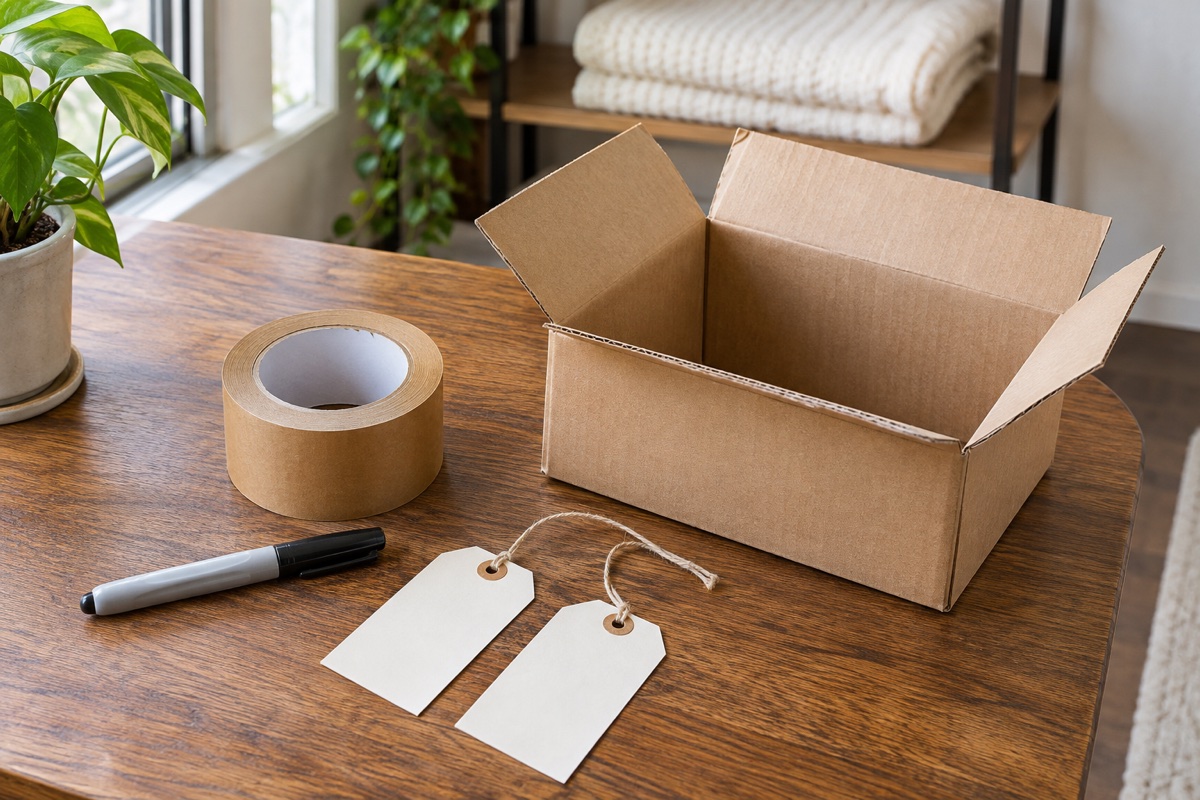
Choose an area away from the room or furniture where you found flea activity, if space allows. Clean the packing surface and gather fresh boxes or clean lidded containers, bags for washable textiles and a marker. Decide what “ready” will mean. For a blanket it might mean laundered and dried. For a hard-sided item it might mean inspected and cleaned according to its directions. For upholstered furniture it might mean inspected and vacuumed, with the item flagged for follow-up.
Use labels that tell you what to do next. “Ready — washed and dried” and “Check first — pet blankets” are clearer than “living room” alone. Use a durable label, such as a luggage tag tied to a zipper, and update it when each task is complete. Keep items awaiting cleaning in a separate area. In a studio, use a single clean tabletop for finished items and keep the pending pile in containers off to one side. The goal is a workflow you can follow without repeatedly opening boxes or laying clean things back on the pet’s favorite chair.
Plan for the animal as well as the belongings. Contact your veterinarian for guidance suited to each pet, and keep treatment records and supplies accessible during the move. Adult cat fleas often live on the animal while eggs fall into the surrounding environment. Cleaning and a veterinarian-guided pet plan address different parts of the same problem. The household flea-control guide explains how they fit together.
Keep the route to the washer and exit clear. Close or cover ready boxes between trips and keep them away from the pet’s resting furniture. Show helpers the ready and pending areas before they start moving things.
If time is limited, prioritize pet-contact textiles and furnishings over belongings from closed cupboards. For example, wash the covers the dog slept on before dealing with a box of books. Keep that priority list beside the packing area.
Clean soft furnishings and hard belongings separately
Carry washable pet blankets, slipcovers and throws to the washer in a closed bag or covered hamper. Wash and dry according to each item’s instructions. Transfer finished items to a fresh bag or clean container and put them directly in the ready area. Keep the dirty transport bag separate until it can be cleaned or disposed of as appropriate. Check the clothes and bedding guide for more on laundry during flea control.
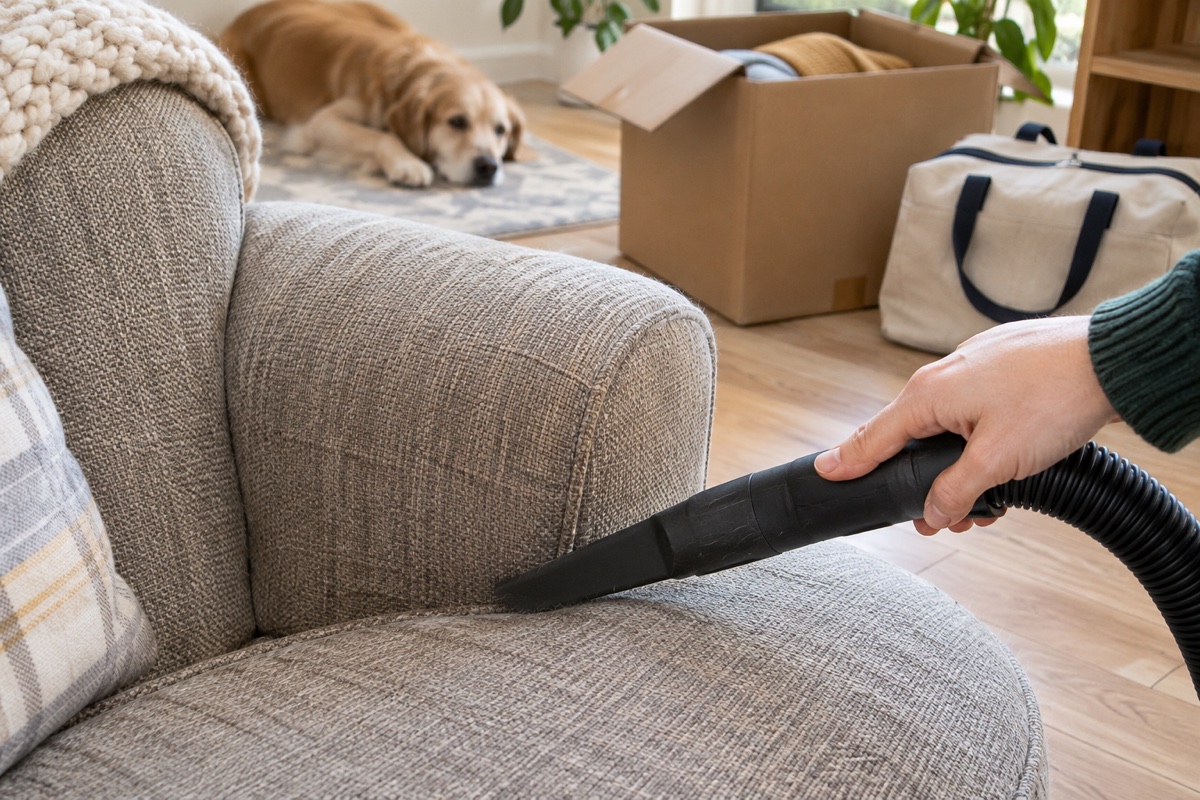
For sofas, area rugs and other fabric items where the pet rests, inspect accessible seams, edges and undersides. Use a suitable vacuum attachment to clean reachable surfaces, including beneath loose cushions. Clean the floor where the item stood and empty or dispose of the vacuum contents according to its instructions. If the fabric cannot be safely cleaned at home, call a cleaner who handles the material. Tell them about the confirmed fleas so they can explain what they can do and how they want the item delivered.
Inspect hard belongings for dust, pet hair and debris where those materials collect, such as beneath the base of a crate or around the lip of a storage bin. Clean them according to their care instructions and give them time to dry before sealing. A lid or furniture wrap can help keep groups of belongings separate while you move. Closing or wrapping an item does not kill fleas inside it. Consider anything wrapped for transport as still needing the follow-up you marked on its label.
If a pesticide has already been applied, ask the applicator which surfaces can be cleaned, wrapped or handled and when. Follow the label and written instructions. Leave treated surfaces and items awaiting clearance off the loading list until you have an answer.
Make a short list of the things you will need right away
Pack a clean bed cover, leash or carrier, food bowls and veterinary paperwork where you can find them. If a usual pet bed cannot be cleaned before the truck comes, note that clearly and plan a washable alternative for the first night. Keep the pending items together on the truck or in your own vehicle so they can be unloaded to the right place without being opened by mistake.
For example, a move-day list might say “Cat carrier checked and cleaned. Two blankets washed and packed in the blue bin. Armchair vacuumed and tagged for recheck at the new home.” Those details make it easier for anyone helping you to follow the plan. If you hire a mover or cleaner to handle an item with known activity, tell them ahead of time and ask what preparation they need.
Open the ready containers first
Use separate surfaces for opening ready containers and inspecting pending items. Place clean bedding on a surface you have checked and cleaned. Choose an accessible resting spot for the pet so you can inspect around it after the move. Work through the items marked for follow-up one by one, keeping them apart from the cleaned belongings. A removable cover can go straight to the wash. A rug or armchair can be checked in a spot with good light and enough space to reach its edges.
Record any live insects, the item and exact location, when it was unloaded and whether it came from an affected room. A nearby sighting alone does not establish that the item was the source. Continue the pet and household plan if it is still underway. If sightings continue, share your list and any specimens with a pest professional so they can check likely sources at the new address. The guide to fleas after treatment gives an example of how to compare findings over time.
Sources
- CDC guidance on getting rid of fleas
- UC Integrated Pest Management guide to fleas
- EPA guidance on controlling fleas around the home
- EPA guidance on reading pesticide labels

