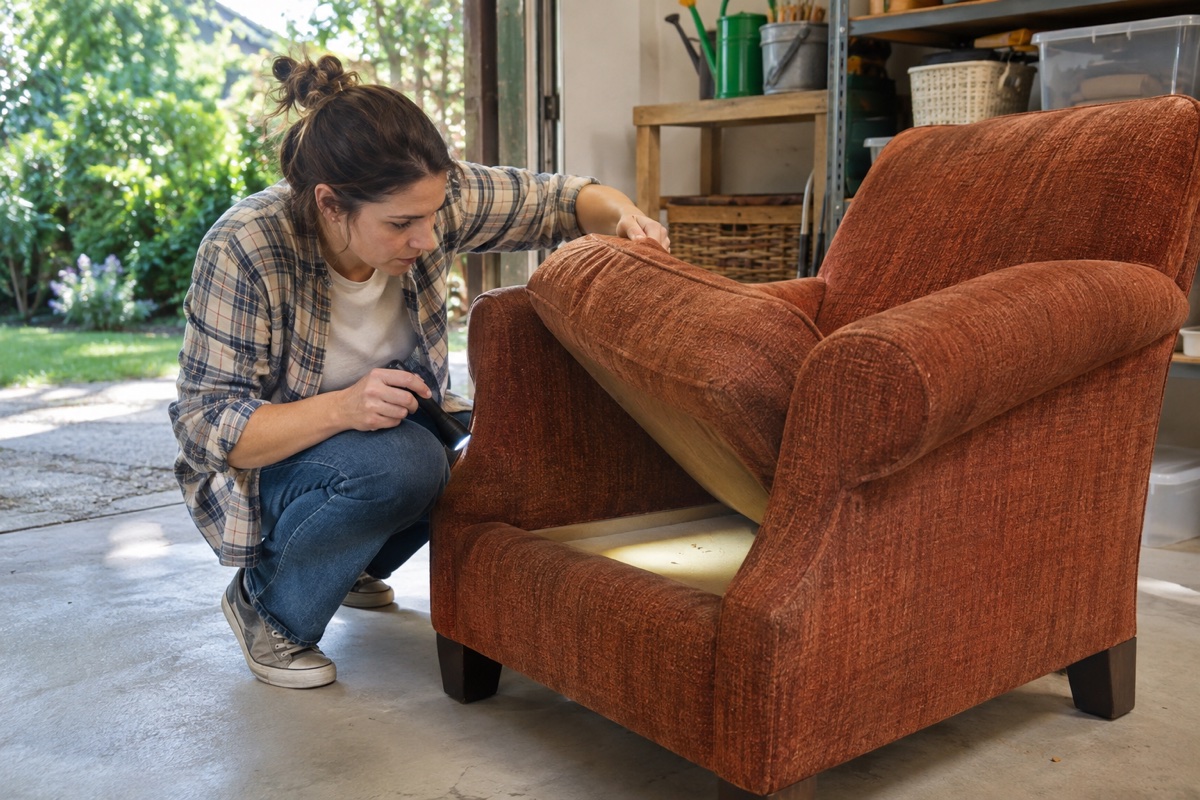
Before you load a used chair, sofa or rug, look it over where it is. Seams, folds and the underside can be hard to check once the item is wrapped and strapped in a vehicle. A short inspection won’t find everything, but it can help you decide whether you’re comfortable bringing the item home.
Ask about the item’s history and whether you can inspect it
Ask where the furniture was used, whether animals rested on it and why it’s being removed. Has it been in storage? Is the fabric cover removable? Can you see under the cushions and check the underside before you commit? A home that has pets doesn’t automatically have fleas. What matters is whether there’s evidence of a pest problem and whether you can inspect and clean the piece safely.
Take a flashlight and a clean sheet of white paper. If there’s a rug, ask to see it unrolled rather than checking just the outer surface. If a seller mentions recent pesticide use, ask what was applied and when. You’ll need the directions for the specific product before deciding whether it’s safe to handle the item or do any further cleaning. If the item is already wrapped or you can’t see the parts where pests might hide, factor that into your decision.
Ask to inspect the item in daylight or somewhere with a good lamp. A folded throw over a seat or a fitted cover can make an online picture look tidy while hiding the parts you need to check. Find out whether the cover can come off and whether the frame can safely be tilted. For a piece offered curbside or from an unattended collection point, you may have no reliable history or good place to check it. Factor that into whether you take it home.
Check seams, folds and the underside before loading
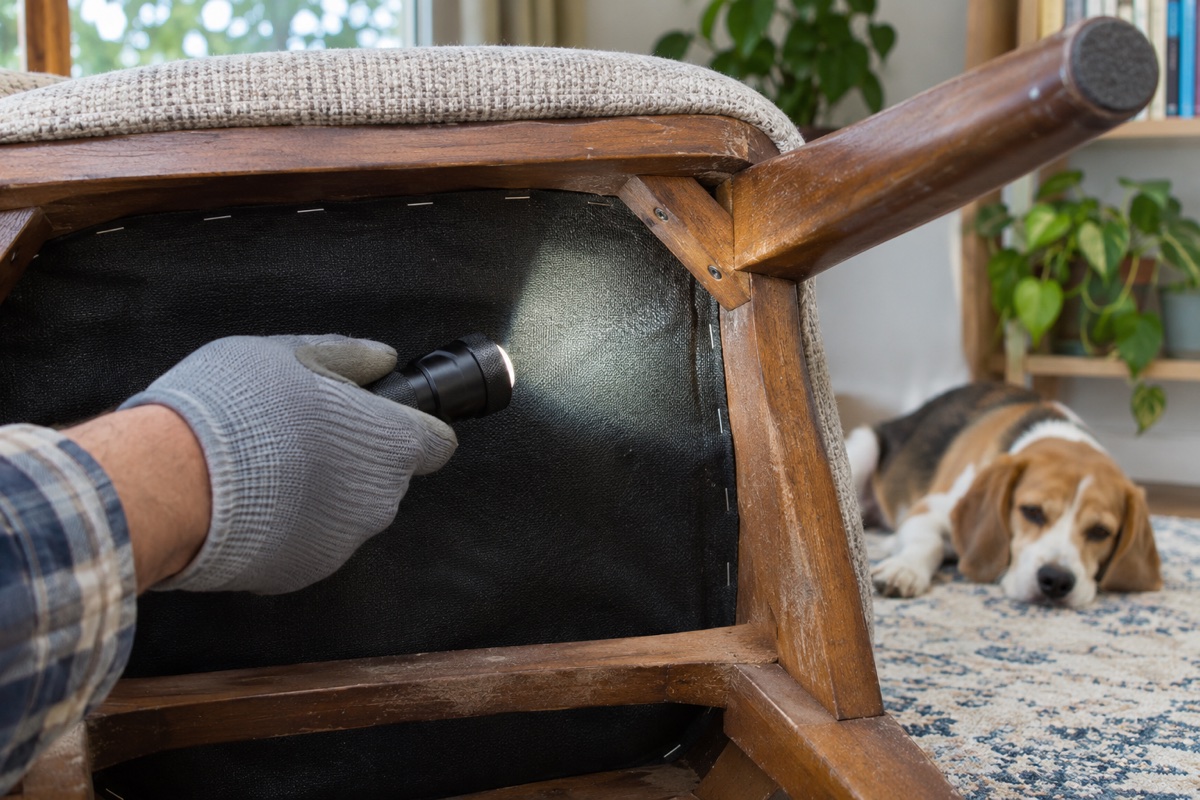
For a sofa or upholstered chair, lift removable cushions and shine the light into the seams and corners. Check any fabric that hangs close to the floor and around the legs where hair collects. For a rug, look at both sides, the edges and the backing. If an item has a wooden frame, check joints and cracks you can see without dismantling it. Don’t reach under heavy or moving furniture while someone is lifting or adjusting it.
A small dark insect that jumps can be a flea. You may find one near a spot where an animal rested, though fleas can be difficult to spot on a piece of furniture. If the owner agrees, try to photograph or collect an insect for identification before moving the item. Tiny pale flecks and dark specks alone are hard to interpret. You can compare any visible insect with the flea identification guide.
Used furniture can also carry bed bugs. Look for a crawling insect, shed skins or dark marks in seams or frame joints. Different pests leave different evidence and need different control plans. The guide to flea and bed bug clues explains what to look for beyond marks on skin.
Leave the item where it is while the evidence is being identified. Wrapping can contain debris in transport, but it won’t treat the item. If you’re buying through a seller, explain what you found and ask to reconsider once the item has been assessed.
The construction of the piece tells you where to start. On a chair with a wooden frame, look at the join beside the fabric and the lower edge of the back panel. On an upholstered bench, check any seams that run around the seat and the corners where the fabric wraps underneath. If an area is stapled shut, leave it intact. Check the visible edge, record what you were able to see, and take a photo if you found anything suspicious.
Check whether the furniture has a loose accessory that can be inspected on its own. A detached seat pad or decorative pillow might be washable even when the chair itself isn’t. If you see a few specks in the folded fabric, record whether you saw movement. If you find a live insect and can collect it with the owner’s permission, label the sample with the exact seam and item. Keep it separate from anything you find later at home.
Plan where the piece will go when you arrive
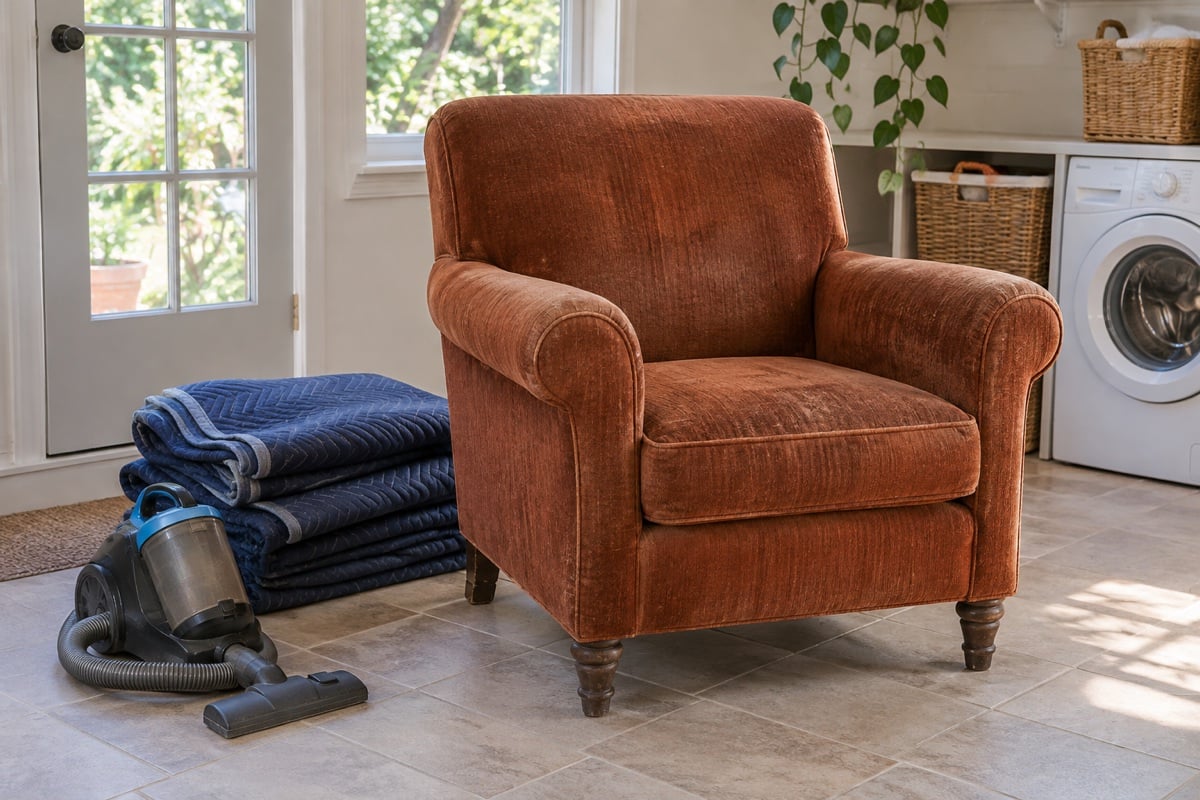
For an item you decide to take, clear a place where you can inspect and clean it before using it. Choose a spot you can vacuum easily, away from your pet’s favorite bed. Carry removable textiles separately if the care instructions let you wash them. Wrapping or using a clean cover during transport can help keep debris out of the vehicle. Remove and dispose of the wrapping carefully when you reach the cleaning area.
Vacuum the reachable seams and gaps, beneath removable cushions and around the legs or edges. Wash removable covers or throws only if their care labels allow it. Take care with delicate upholstery and antique finishes. If you don’t know how the fabric or backing responds to water or steam, check the manufacturer’s directions or ask an upholstery cleaner. Empty or dispose of the vacuum contents following the machine’s instructions.
If you’re considering a pesticide, check whether its label specifically allows use on that material and surface. Treating a piece of furniture without evidence can expose people and pets unnecessarily. For a piece you can’t clean or inspect well, a licensed professional can help decide whether there’s a pest problem and which measures are appropriate.
Clear the arrival area before you leave to pick up the furniture. Work out where to put the cushion covers and moving blankets while you inspect the chair. If you borrowed blankets from a friend, check their care instructions and ask before washing them. A sofa that won’t fit through the planned doorway may need to go directly through a living area, so decide where you can still check it before letting pets use it.
Keep track if you notice an insect after the move
Look again at the seams, rug edges and the floor around the item after you’ve brought it in. If you see a suspected flea, note exactly where it appeared and check nearby pet resting areas. Do a separate flea-comb check if you have a dog or cat. A sighting close to the used furniture is a clue about where to look, but the evidence may also point to the pet or another part of the home. Record the item’s arrival date, what you found during the original inspection and any areas you could not inspect. Keep a sample or photo and share those details with a pest professional if activity continues. See the guide to inspecting a suspected flea infestation for the next steps.
Sources
- UC Integrated Pest Management guide to fleas
- UC Integrated Pest Management guide to bed bugs and used furniture
- EPA introduction to pesticide labels

