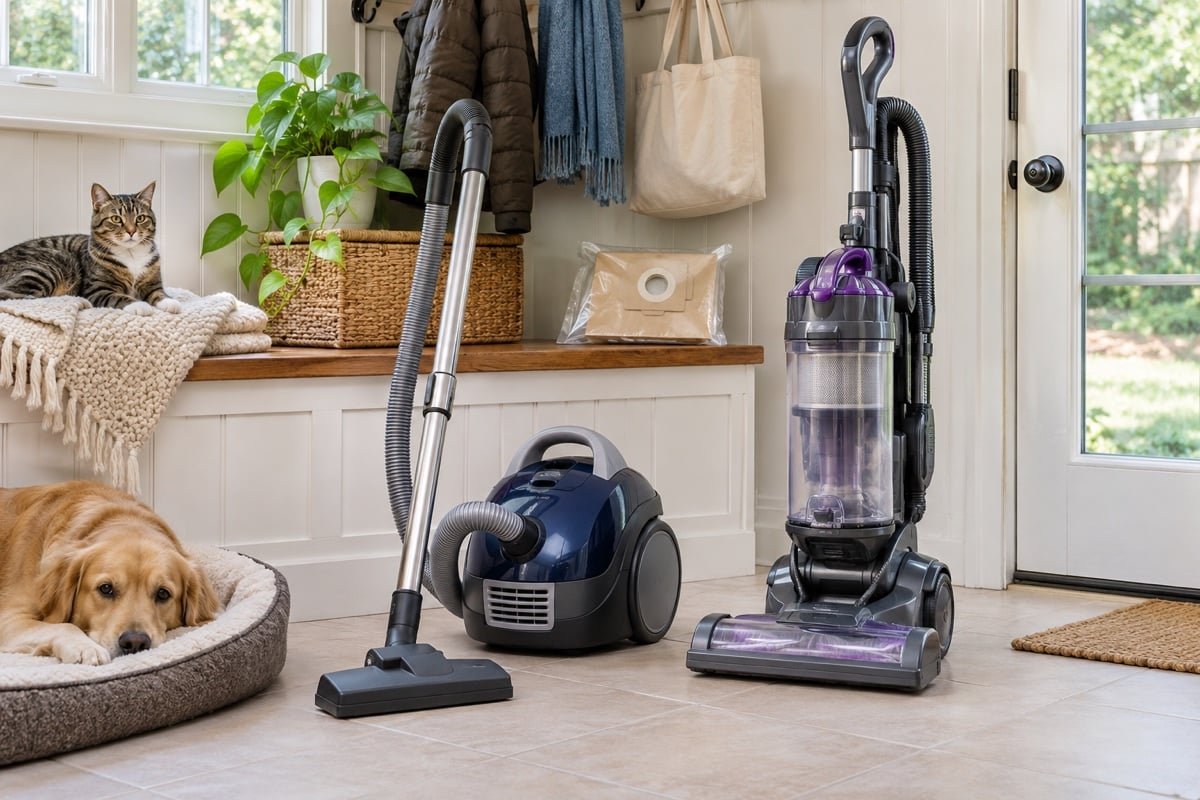
When you finish vacuuming a room with fleas, deal with what the machine picked up before putting it away. The bag or bin contains hair, dust and whatever flea stages the vacuum collected. The simplest routine is to contain the debris, take it to the trash and clean only the parts your vacuum’s instructions say you can clean.
Seal and discard the used bag
- Switch off and unplug the vacuum. Check how the bag releases and have a suitable replacement and trash bag ready.
- If you can move the machine safely, take it to a sheltered outdoor spot away from doors, pets and children. Otherwise, place the trash bag beside it and handle the used bag over that opening.
- Close the vacuum bag’s sliding seal or flap if it has one. Remove the bag as the manual directs and put it straight into the trash bag without squeezing or opening it.
- Seal the outer bag and put it in an outdoor trash container. Fit the correct fresh bag before using the vacuum again.
If you need an insect for identification, try collecting one directly from the affected area instead of opening the used vacuum bag.
Tip the bin into a bag
- Switch off, disconnect power as the manual directs and detach the bin. Check its release latch before carrying it to the disposal area.
- Outdoors if practical, lower the bin’s opening inside a trash bag before releasing the catch. Empty slowly to limit escaping dust; do not brush debris onto the floor or into a sink.
- Seal the bag and put it in an outdoor trash container.
- Reassemble the bin and filter as directed, checking they are seated correctly before the next use.
If holding the bin and bag together is difficult, get help or use a stable container to support the bag. Keep pets away until the debris is contained.
Look inside the bin with the machine off. If dust or hair is stuck on the sides, consult the instructions for your model. Some bins can be wiped or washed after you remove the filter. Others include parts that need to stay dry. If you wash anything, let it dry completely before putting it back. Emptying the bin and washing the bin are separate jobs. You can contain the debris now even if the next filter-cleaning date isn’t due.
An insecticide or flea product belongs only on the sites named on its label. Avoid spraying the bin, bag or filter unless the product label and the vacuum’s instructions specifically allow that use. Sealing the debris is the practical step that limits its spread while you dispose of it.
Check the tool you used in the affected area
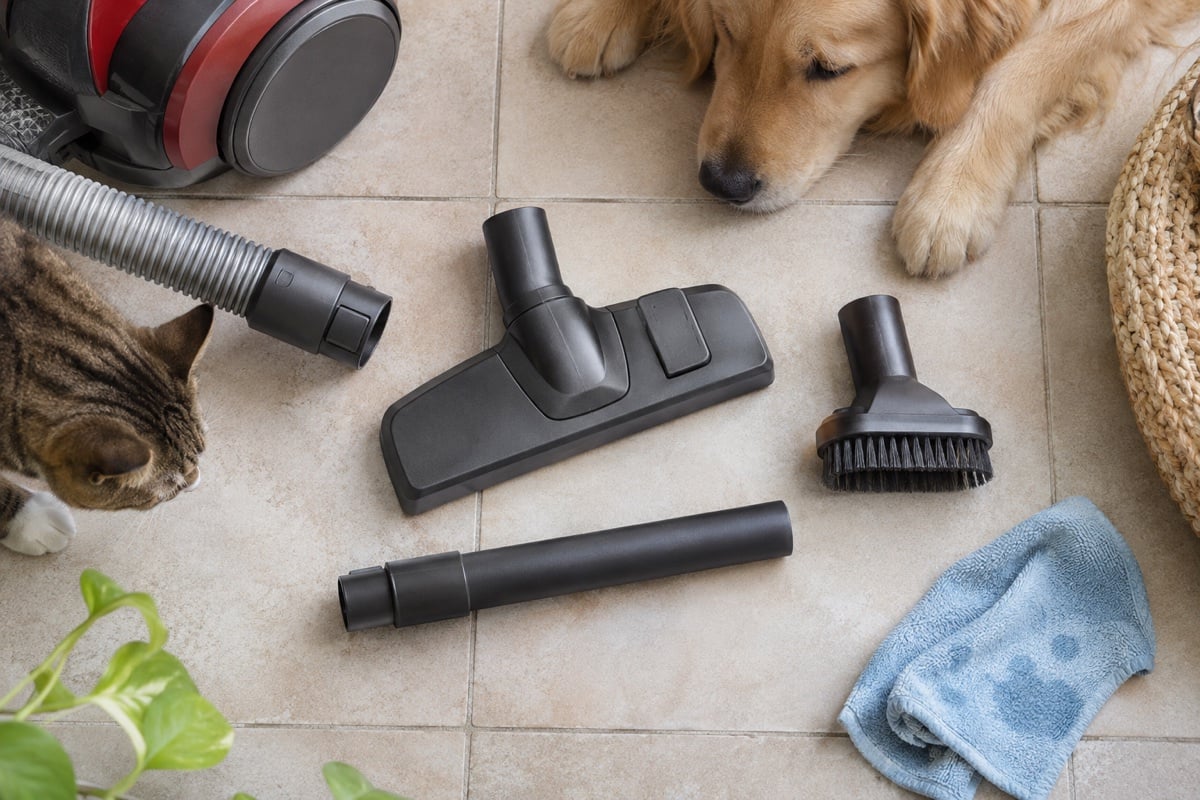
Look at the nozzle and brush roll before putting the vacuum away. Hair and lint often collect around the opening or brush. Clear them only as the manual directs and with the machine off. Put the debris into the same disposal bag before sealing it, or use a separate bag if you’ve already taken the first one outside. Inspect each attachment used on the affected area. Wash a detachable tool only if its instructions permit it, keep powered components dry and let washed parts dry completely before reassembly.
Follow the manual for the filter. Some filters can be rinsed, while others need replacement or a dry cleaning method. This is a good time to check when yours was last serviced. A vacuum that’s pulling poorly because of a full bin, blocked nozzle or clogged filter may leave more material behind in the areas you’re trying to clean.
Set up a routine you can repeat
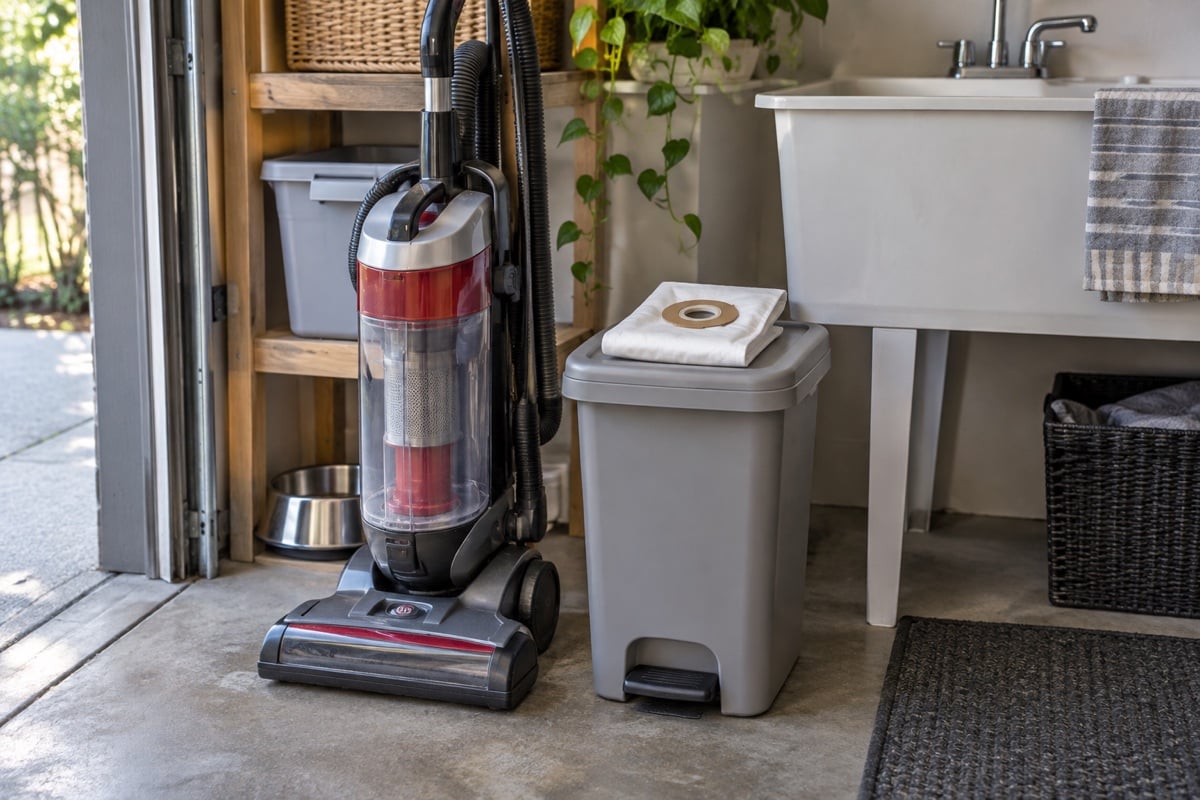
Keep replacement bags or a roll of trash bags near where you store the vacuum. After each session in an affected area, empty the bin or deal with the used bag according to the machine and pest professional’s directions. If more than one person vacuums, record the rooms cleaned and any unfinished area if you paused to empty a full bin. Tell the next user when the bag or bin has been dealt with. Use the same inspection points to track confirmed live insects; ordinary dust in the bin is not evidence of fleas.
University extension guidance recommends vacuuming carpets, upholstery and floor edges near places pets rest as part of a coordinated flea-control plan. It can remove some flea stages and the debris larvae feed on. Continue appropriate pet treatment and clean the areas your pet uses, and check when vacuuming can resume if a pesticide has already been applied. The household flea-control guide covers the larger plan. If fleas are still appearing, see the guide to tracking flea sightings after treatment.
Sources
- UC Integrated Pest Management guide to fleas
- University of Minnesota Extension guide to fleas
- University of Missouri Extension guidance on vacuum-bag disposal
- EPA introduction to pesticide labels

