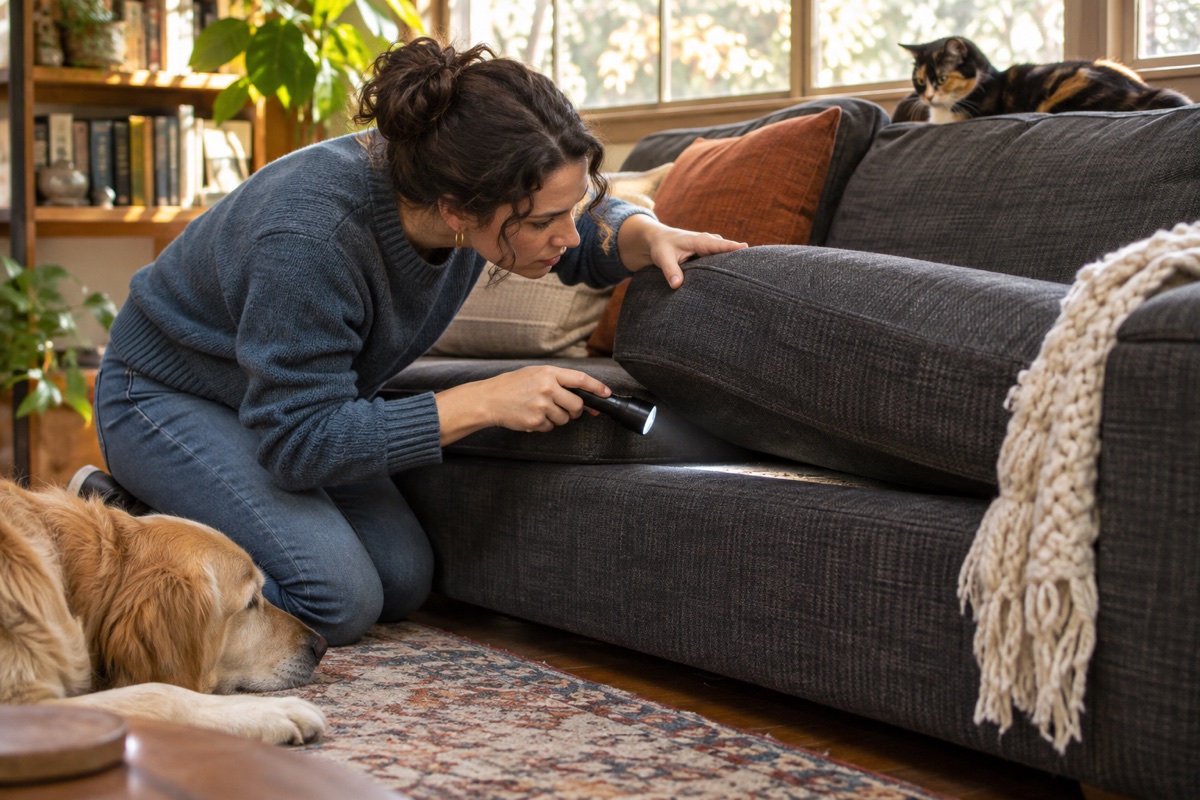
If you keep noticing a small jumping insect when you sit on the couch, start with the spot your pet uses most. Lift the cushion and check its seams and the gap below it, then look at the floor and any rug under that end of the couch. An inspection takes a few minutes and gives you a much better starting point than guessing from itchy marks.
Work from the favorite seat outward
Gather a flashlight, a piece of white paper and a small clear container with a secure lid. Put the paper near the cushion so you can see small dark insects against it. Start where your dog or cat curls up or lies against the arm. If your pet uses a blanket, look at the folds first, then keep that blanket apart from clean laundry until you’ve checked it.
Lift one removable cushion at a time. Check the piping, folds, zipper area and fabric under the cushion. Shine the flashlight into the space where the seat meets the back and down between the arm and cushion. Look under the couch too, especially where pet hair collects around the feet or along the edge of a rug. If the cushions are fixed, use the flashlight to inspect the reachable seams and the floor beneath the furniture. Avoid forcing apart a frame or using a reclining mechanism while reaching underneath it.
Fleas can be found on upholstery near places pets rest. Adult cat fleas commonly spend much of their time on the animal, and eggs can fall into the places it lies. You may find stronger evidence with a flea comb on your pet than by inspecting the couch alone. Make a separate note of the couch, pet and nearby floor so you can see where the activity is concentrated.
Start with the sofa as people and pets normally use it. If the dog lies on a throw that covers the whole middle seat, check where the throw bunches up near the arm. With a sectional, inspect the join beside that seat before moving on to the other end. Keep track of which cushions you lift. A quick sketch with the chaise, the arm and the pet’s favorite seat marked is enough to put the cushions back in order and repeat the same search later.
A couch with a skirt needs a slightly different check. Lift just enough fabric to see the lower edge and the floor underneath. On a sleeper sofa, look at the visible fabric and exposed edges while the mechanism is closed and stable. If you find an insect in an area you can’t safely reach, note the spot for a professional. You can still inspect the floor, nearby textiles and pet without opening the mechanism.
Check the clues before you treat
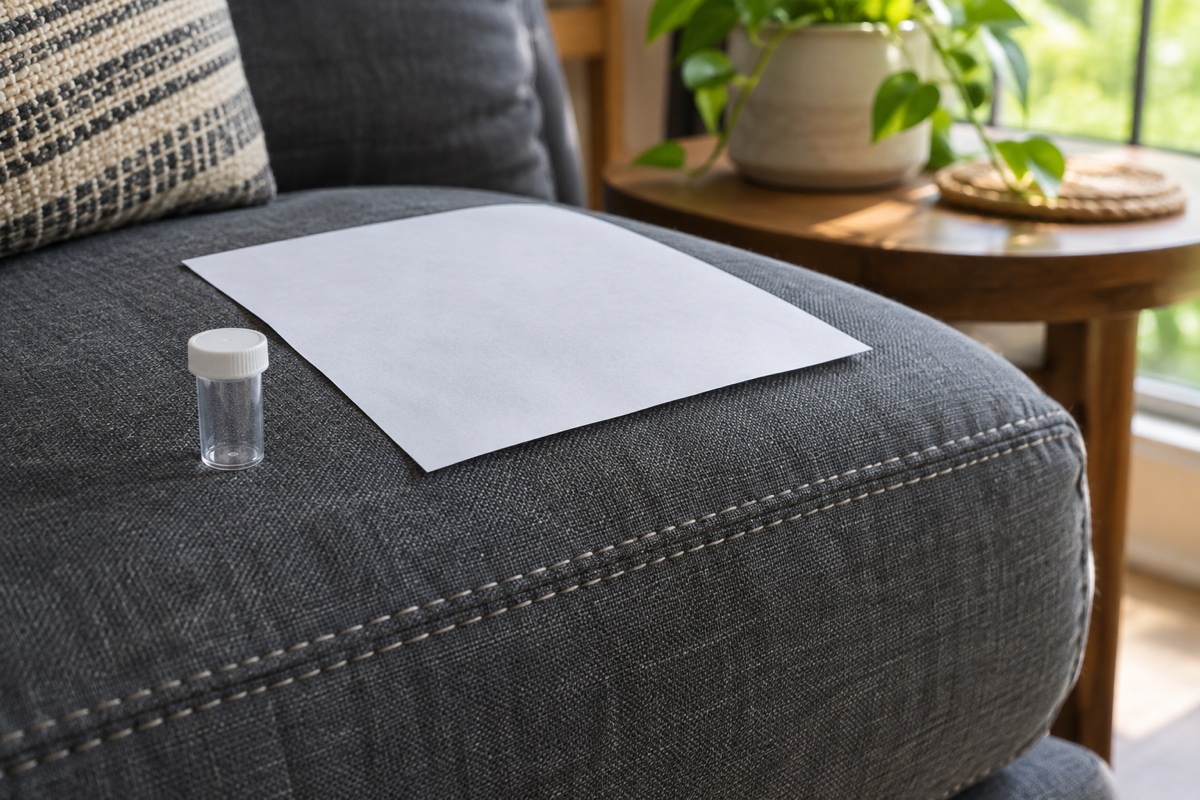
An adult flea is small, dark and flattened from side to side. Its jump can be a clue, but it may be hard to see clearly while it’s moving. Fleas can also crawl, so an insect failing to jump during your inspection does not rule them out. If you can catch a specimen, keep it in a sealed container for identification. A clear close-up photo with something for scale is also helpful. The flea identification guide shows details to look for.
Pepper-like specks in a cushion seam could be ordinary debris or flea dirt. Put a few specks on damp white paper and look for a reddish-brown stain. Flea dirt contains digested blood, so the color change gives you a reason to inspect more closely. Confirm what you can with a comb or a specimen. If you find shed skins, dark marks in seams or an insect that crawls rather than jumps, have it identified before choosing a treatment. Fleas and bed bugs require different approaches. See the comparison of flea and bed bug clues.
Write down where you sat or where your pet rested and repeat the inspection. Many insects and skin conditions can leave similar marks. Seek healthcare advice if the marks persist or get worse.
A speck on the front edge and an insect in the gap under the back cushion are different findings. If you take photos, start with a wider shot so you can place each one later. Put a white card beside the spot for the close view if there’s enough room. Keep any sample in its own container so you can say exactly which part of the couch it came from. This helps when a technician wants to compare what was found on the sofa with a sample from the bedroom.
Vacuum the couch and the area immediately around it
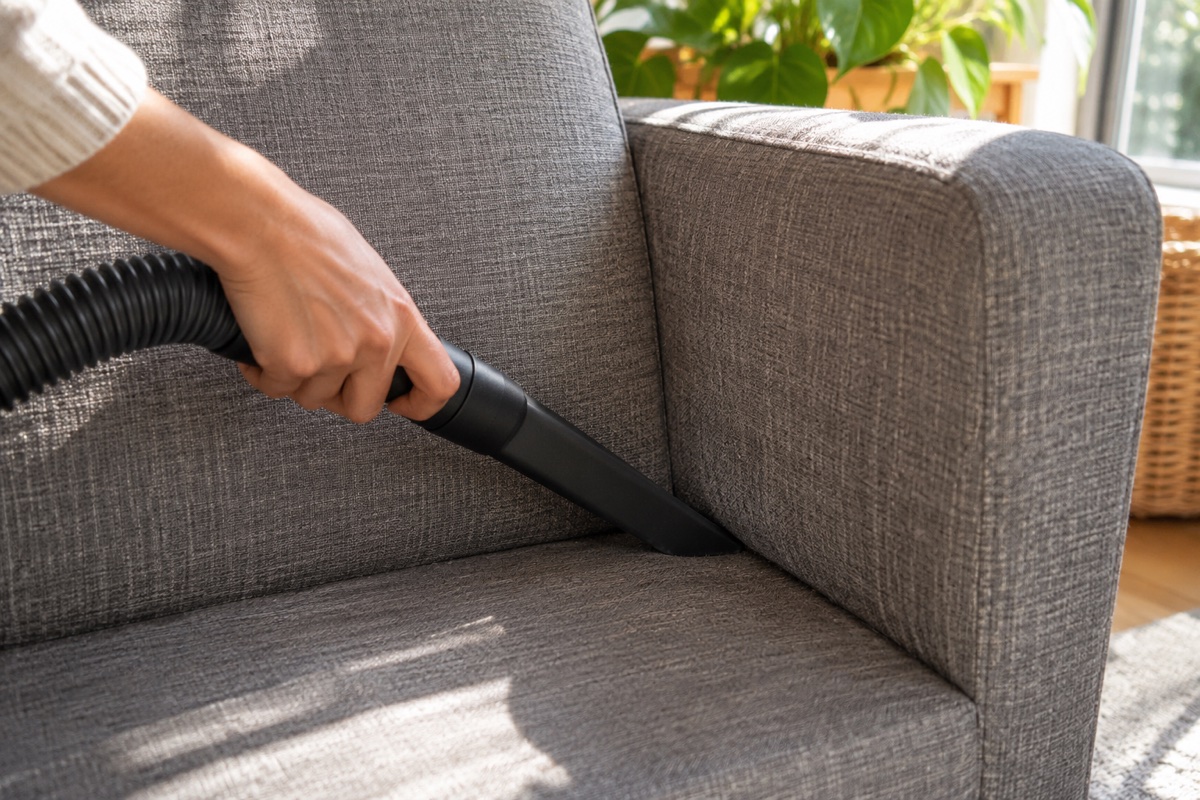
Use a crevice tool along the accessible seams, under cushions and around the frame. Work slowly through the places where hair and lint have collected. Vacuum the floor below, the edges of nearby rugs and the baseboard behind the couch if you can reach it safely. Afterward, seal and discard the vacuum bag or empty the canister into a bag you can seal and put in an outside bin, following the machine’s instructions. Do not add insecticide or loose powders to the vacuum.
Check the care label before washing a throw, slipcover or cushion cover. A zipper by itself doesn’t mean a cover can be machine-washed. Launder only items whose care instructions allow it, and keep clean items apart from the ones you haven’t washed yet. If the couch is leather or delicate fabric, check the manufacturer’s directions before applying water, steam or any cleaning product.
If you’re considering a pesticide, check whether the label specifically allows application on that type of furniture and on the part you want to treat. Products for carpets, pets and furniture have different directions. Ask a pest professional if you’re unsure what can be treated safely, and follow the applicable instructions for people and pets returning to the area.
When a removable cover can be washed but its insert can’t, separate the jobs. Check the fabric label, remove the cover where you can contain loose hair and debris, and keep it with the other items waiting to be washed. The foam or filling may have its own care directions. If the insert has a damaged seam or exposed filling, ask the manufacturer or an upholstery cleaner how to handle it without soaking or tearing it.
Check the pet, the couch and the floor together
If you found a flea on the couch, check the animal and its other regular resting places. Ask your veterinarian about an appropriate flea-control plan for each pet. A clean couch can pick up fleas again when activity continues elsewhere in the home. For the rest of the room, follow the household flea-control guide.
Check the same cushion seam, rug edge and pet again so you can compare your findings. Record live fleas separately from old debris and add the date and location. If you find fewer fleas over repeated checks, keep up the cleaning and the pet’s treatment schedule. If sightings stay steady, rise or spread to other rooms, share your notes with a licensed pest professional. They can inspect the couch and other likely resting areas and help identify what you’re finding.
If a second check turns up an insect under a nearby chair, add that chair to your inspection route and leave the original couch checks in place. Write the findings on separate lines. Over a few checks, you’ll be able to tell whether the couch sightings are falling while the new spot needs more attention. Share the separate counts with a technician if you need help planning the next inspection.
Sources
- UC Integrated Pest Management guide to fleas
- UC Integrated Pest Management guide to identifying bed bugs
- CDC guidance on getting rid of fleas
- EPA guide to reading pesticide labels

