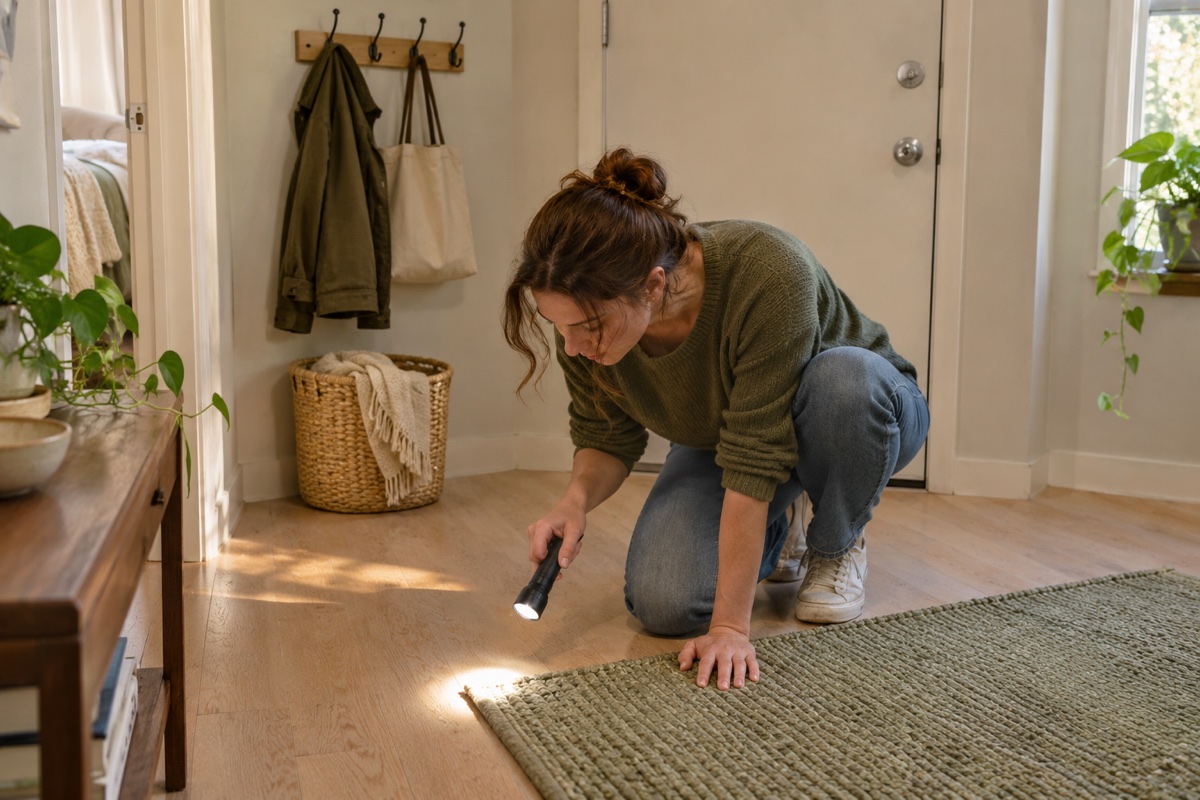
You’ve found a jumping insect in your rental and want to know who to call and what to do tonight. Start by writing down exactly what you found and where, then send a short message asking the property manager for an inspection. A photo or specimen helps them decide what to inspect, especially in a building where several apartments share a hallway, laundry room or entrance.
Record what you found
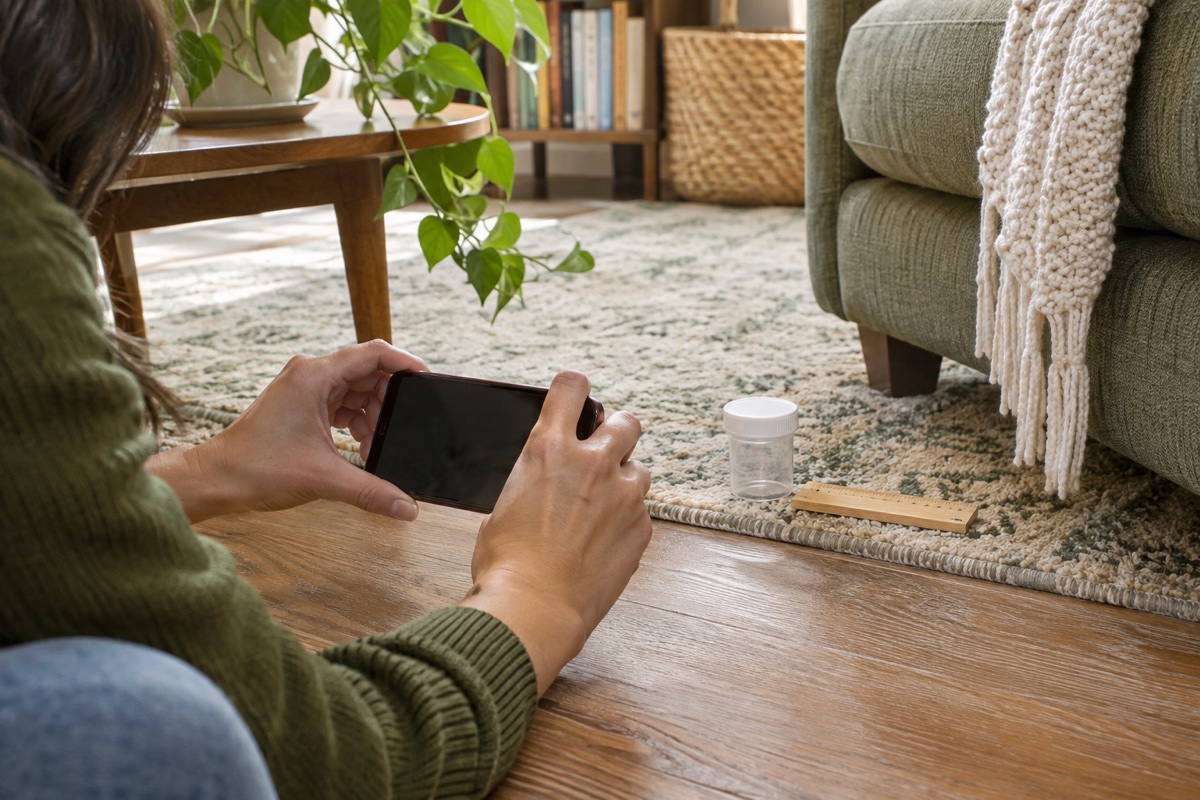
Start where you noticed activity. If you saw an insect on your sock beside a couch, note the time and the spot. Look at the floor under that piece of furniture, nearby rugs and the places pets rest. If you have a dog or cat, a separate flea-comb check gives you evidence from the pet as well as the room. Write down which animal you checked and what you found. A small dark speck that leaves a reddish stain on damp white paper may be flea dirt, but a specimen is more useful when you’re unsure what insect you have. See the guide to using a flea comb.
If you can collect a specimen without handling it directly, put it in a small clear container with a secure lid. A sharp close-up beside a ruler helps if you can’t save the insect. Label the photo with the date and room. For example, “November 9, by the living-room rug, one jumping insect” gives an inspector more to work with than “fleas everywhere.” A bite pattern alone can’t establish the cause. If you’ve seen marks on your skin but found no insect, describe the marks as a separate observation.
Record your move-in date and where you first saw activity. Adult fleas can emerge from protected cocoons after a place has been empty. The timing helps an inspector investigate, though it can’t establish when the infestation began or identify its source.
Take two pictures if you can. A wider view that shows the living-room rug next to the sofa helps someone find the exact spot again. A close-up helps with identification. Keep both images under the same date. If the insect escaped before you could photograph it, say so in your notes and describe what you actually saw. The inspection can still go ahead, and the technician can decide where to look for better evidence.
Send one clear message to the property manager
Use the building’s usual maintenance channel and keep a copy. Include your unit, the rooms involved, when you first noticed activity and whether you have a specimen or a clear photo. Mention any steps you’ve already taken, especially any products applied indoors. If you’ve seen a similar insect in a shared area, give the location and date as a separate item.
Here’s a message you can adapt.
“Hi, I found a small jumping insect beside the living-room rug in Unit 4 on November 9. I’ve attached a photo and can leave the specimen in a sealed container for the inspector. I also saw a similar insect near the laundry entrance yesterday, but I’m unsure whether it was the same kind. Could you arrange an inspection and let me know what to prepare? Please send any instructions for keeping my cat out of treated areas and the plan for a follow-up visit.”
Ask who will contact you to arrange access and how they’ll report what they find. In a shared building, ask whether any other areas should be inspected based on the evidence. Give the manager the details you observed so they can follow up with other residents if needed. If they ask you to treat the unit yourself, clarify what your lease and local rules say before committing to a service or paying for work.
A maintenance request can disappear from view once someone marks it complete. Save the ticket number and the reply, especially if a different person handles pest calls after hours. If the visit hasn’t been arranged when you follow up, send the original request number and your newest observation. One update that says where the activity has continued gives the person handling the request something concrete to act on.
Ask how the building handles entry if you’re away. For example, if you work during the proposed window and your cat hides under the bed, tell the manager before confirming the appointment. You may need to be home to move the cat or show the inspector where you collected the specimen. Agree on what the inspector can access and where they’ll leave written findings if you can’t be there.
Focus cleaning on the areas you can reach
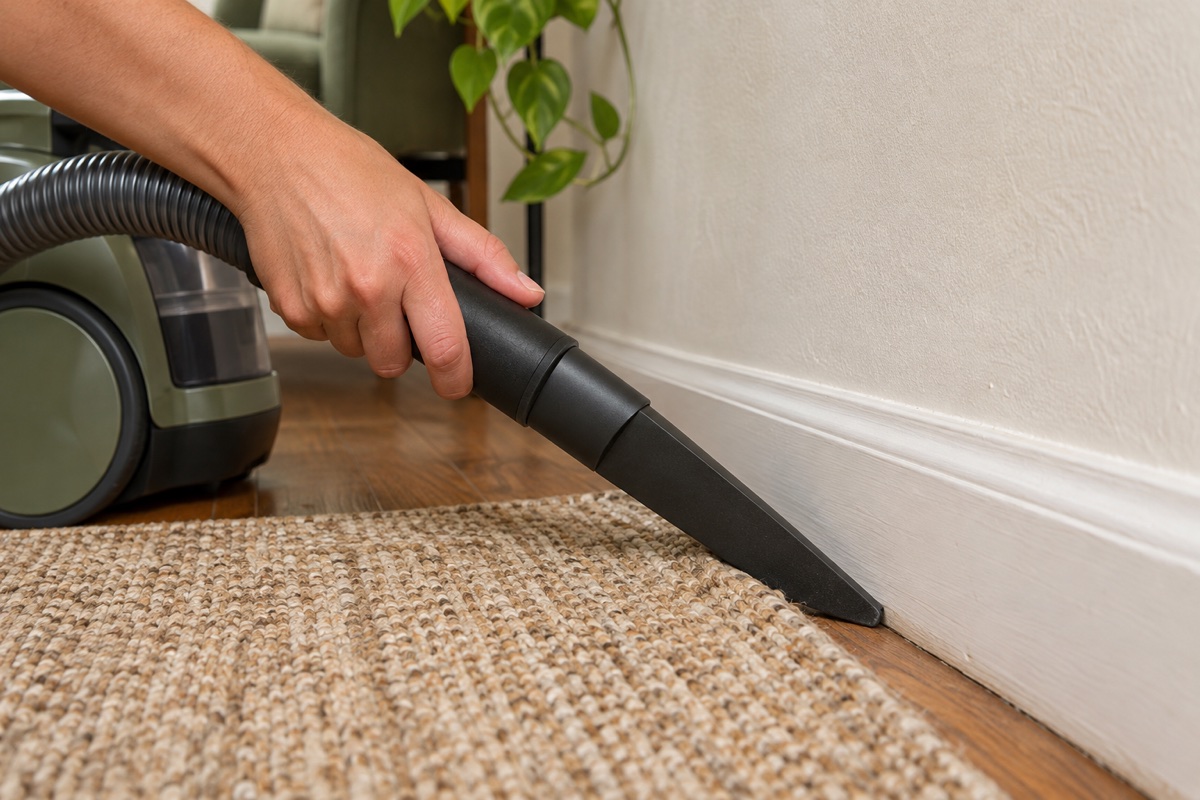
Vacuum around pet resting spots, the affected rug, nearby baseboards and upholstered furniture. Check both sides of removable cushions and the floor beneath them. Wash washable pet blankets and removable covers according to their care labels. Keep clean items apart from items you still need to wash, especially if you carry them through a shared laundry room. Carry affected washable items in a closed bag or container, load them directly into the machine, and use a clean bag for the finished laundry. If you’ve already used a pesticide, follow the label and any instructions you received about when to resume cleaning.
If you have pets, contact your veterinarian for a plan that suits each animal. House cleaning and appropriate pet treatment work together because fleas can develop in the environment while adults feed on an animal. Keep a note of when each pet was treated so you can share it during follow-up. For the full cleaning routine, see the household flea-control guide.
If the living room is also where everyone sleeps or works, decide which part you can clear today. Start with the floor beside the affected seat and the area around the pet bed. Leave enough room for the inspector to get to the edge of the rug and underneath the furniture. Photograph the original location before moving anything that helps explain where the insect was found. If the technician asks you to prepare the room differently, use their instructions.
Find out what the inspection established
After the visit, ask which pest the inspector found, where it was found and whether the source is clear. If they propose a pesticide, ask for the product name and written instructions about preparation, re-entry, cleaning and any repeat visit. Mention pets, aquariums and any areas you can’t easily clear so the technician can give you instructions for your unit. If you found evidence in a shared space, ask who is checking it and how to report new sightings there.
Keep a simple record for the next visit. A dated line with the room, how you checked, the number of live insects you found and what you cleaned is enough. Repeat checks in the same places so you can compare them. If you’re still finding fleas after treatment, note whether the counts are dropping, staying steady or spreading to another room. Share that record with the manager or technician when you follow up. The guide to fleas after treatment has an example of what that record can look like.
Say the inspection finds fleas on the living-room rug, but no one has checked the stairwell yet. Your follow-up can record those as two separate items. Ask what the technician wants you to do in the apartment and who will decide whether the stairwell needs an inspection. At the next visit, you can tell them which rooms you rechecked and whether you saw anything new outside your unit. That gives the manager enough detail to track both requests.
Sources
- UC Integrated Pest Management guide to fleas
- UC Integrated Pest Management guidance on monitoring and recordkeeping in rental properties
- CDC guidance on getting rid of fleas
- EPA tips for selecting a pest control service

