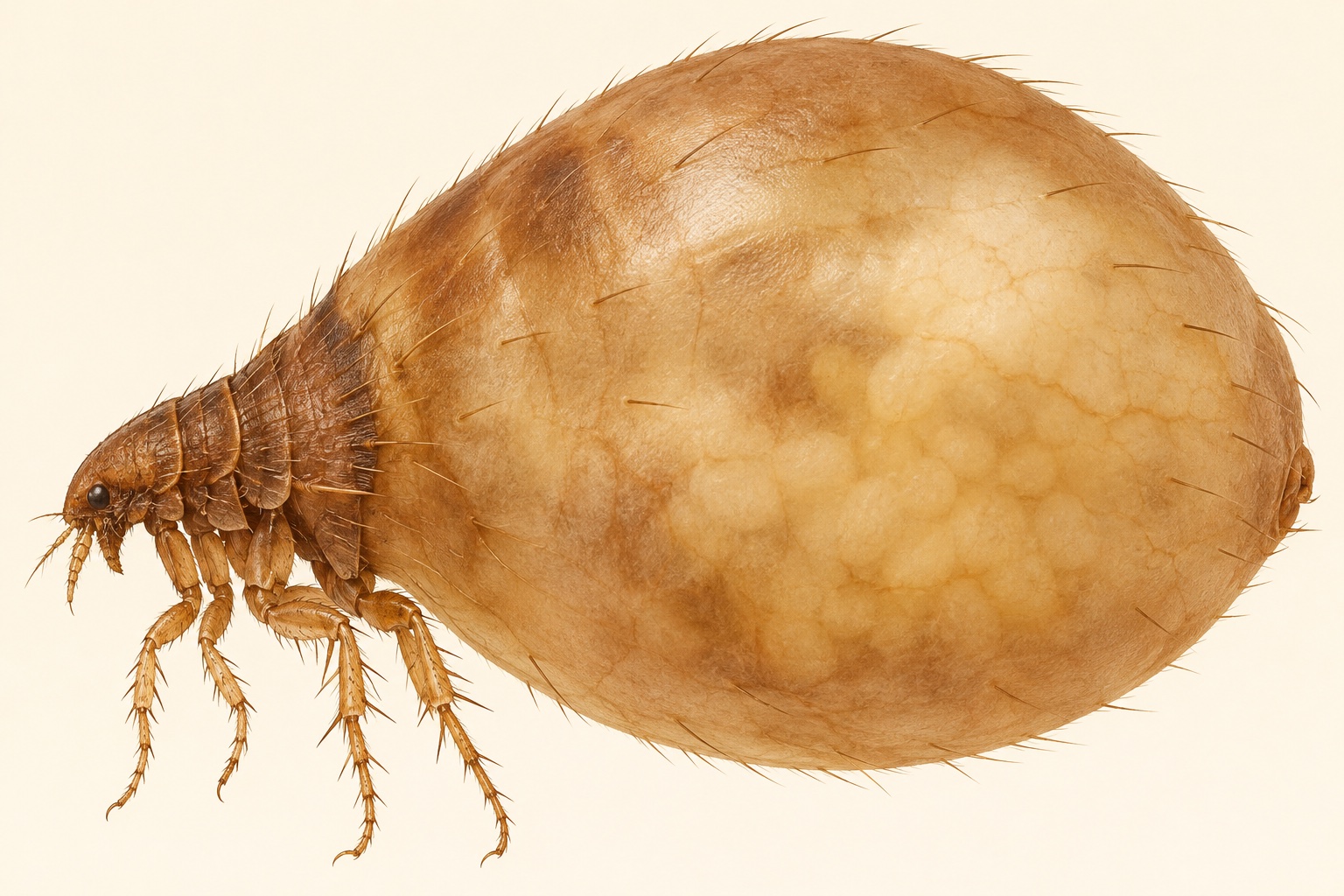
The female sand flea, also called the chigoe or jigger flea (Tunga penetrans), causes tungiasis by embedding in the skin. It affects communities in parts of the Caribbean, South America and sub-Saharan Africa, particularly where people encounter infested soil or earthen floors. Travellers can be affected too. In this guide, we’ll look at the flea’s life cycle, the symptoms, prevention and why you need professional care for a suspected embedded flea.
Defining the beach flea
Jiggers or chigoe fleas are also called sand fleas, although people also use that name for harmless beach crustaceans. Those little shrimp-like beach hoppers don’t cause tungiasis. And a jigger isn’t a chigger, which is a mite. It’s easy to mix up the names when you’re searching for help, so make sure the advice is about the right creature.
Only an embedded female Tunga flea causes the characteristic lesion. A dark point or lump on a foot can have other explanations, including a splinter, wart or another skin condition. Tell a clinician about relevant travel or ground exposure rather than treating any dark spot as proof of a jigger.
Life cycle of Chigoe fleas
Adult chigoe fleas feed on mammals. The female is tiny before embedding, but its abdomen can expand to about 1 cm as eggs develop. The exposed rear opening allows eggs to pass out onto the ground. Eggs hatch outside the person or animal, commonly in about three to four days. Two larval stages and a pupal stage develop in suitable soil or floor material, taking roughly three to four weeks before new adults seek a host.
The eggs don’t hatch into a colony beneath your skin, and scratching isn’t needed to release them. The embedded female typically lives for four to six weeks, shedding eggs onto the ground during that time. Development in the surroundings depends on local conditions, so a single “8–10 day” timetable doesn’t describe the whole process. This distinction matters for prevention: treating one lesion doesn’t remove an ongoing source of exposure.
For more context, see the guide to sand flea bites on humans, which distinguishes ordinary bite reactions from embedded fleas.
Symptoms of Tungiasis
Tungiasis most often affects feet, including the toes, soles, heels and areas around nails. A lesion can become itchy, tender or painful, with a pale raised area and a central dark point. Several lesions can make walking difficult. These features should be assessed in the context of where the person has been; an online photograph can’t confirm the diagnosis.
Increasing redness, warmth, discharge, swelling or fever needs prompt medical attention. An embedded flea and damage from scratching or attempted removal can be complicated by bacterial infection. People with diabetes, poor circulation or reduced immunity should seek advice early for a new foot wound.
Why proper Jigger removal is important
You may feel tempted to squeeze a painful spot or dig it out with a pin. That can damage the skin, leave material behind and introduce infection. Sharing improvised tools adds another risk. A clinician can check whether a flea is actually present, choose a suitable treatment and arrange care for the wound.
Severe or repeated tungiasis can damage feet and nails, especially when access to care is limited. Serious secondary infections can include tetanus or gangrene. That doesn’t mean every suspected lesion will lead to a severe complication, but it’s a reason to obtain care before a painful foot becomes difficult to use. Keep the area clean and protected while waiting for advice; avoid caustic mixtures or household pesticides.
Prevention and control of Jigger infections
Prevention starts with knowing whether tungiasis occurs locally. Exposure can happen around homes and animal resting places as well as sandy outdoor areas. Wear suitable footwear, avoid direct contact with potentially infested ground and inspect your feet after relevant exposure. If local cases are occurring, follow public-health advice about the surroundings and affected animals.
Keep feet clean and check a persistent new lesion rather than repeatedly applying itch cream. A household with recurring cases may need coordinated human, animal and environmental care, not simply removal of the visible fleas. Infested domestic animals should be assessed by a veterinarian. Don’t give dogs or cats a universal ivermectin dose from an online recipe or use animal medicines on people.
Ordinary DEET insect repellents should not be assumed to provide dependable protection against tungiasis. They are repellents, not a treatment for embedded fleas. Use any repellent only as its label directs, including age and reapplication instructions, and ask local health services about measures suited to the actual exposure. Don’t spray the whole body or apply a product to a wound on the assumption that more is better.
Treatment of Tunga penetrans
Seek medical assessment for a suspected embedded flea. Treatment options include a specific dimeticone formulation and, where appropriate, sterile removal by a trained professional. Availability and the best option vary by location. Don’t substitute an arbitrary head-lice product or try to copy a surgical procedure with a thorn, knife or sewing needle.
After treatment, follow the instructions for cleaning, dressing and checking the area. Your clinician may also check your tetanus protection and look for a bacterial infection. Don’t keep pouring alcohol or other harsh chemicals into the wound. Go back for care if pain, redness or discharge increases, or if you still find it difficult to walk.

