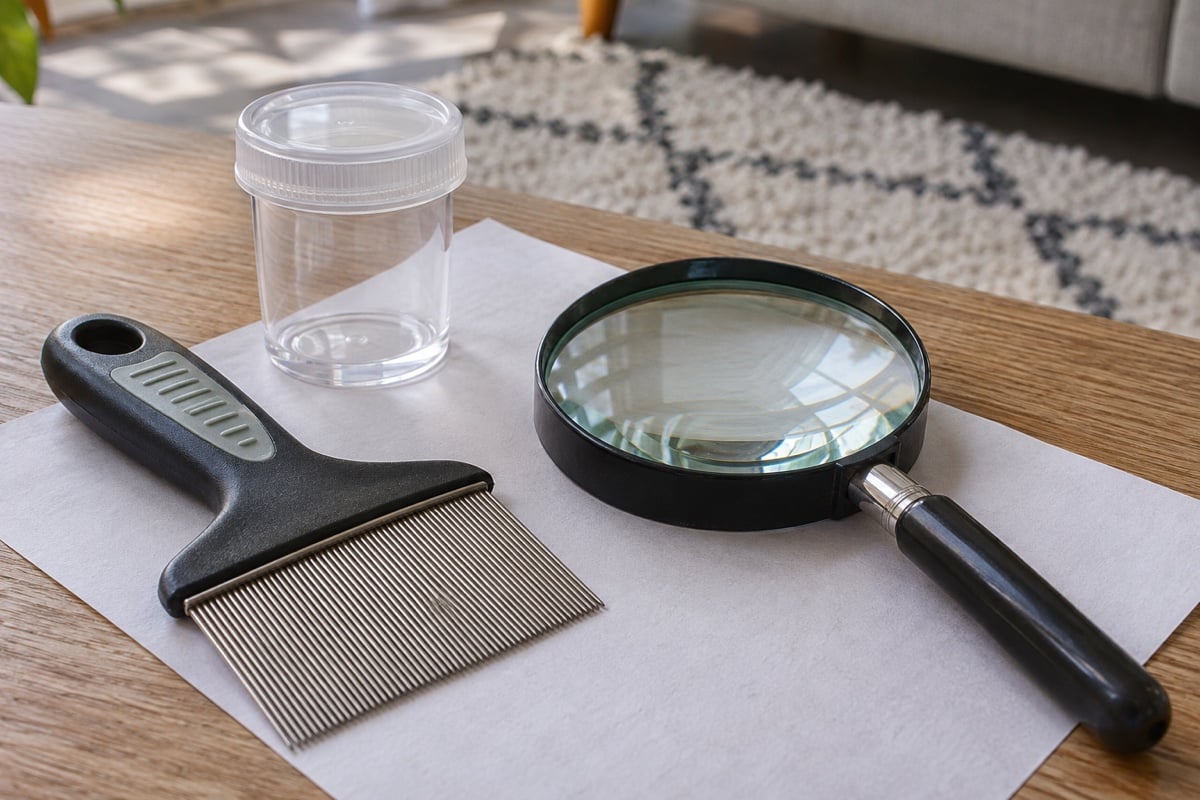
Most people with pets, including me, have at some point wondered what fleas and ticks are. This article about the flea and tick difference will make it easier for you to identify the source of the problem, so you can prevent or get rid of it quickly. Most people that visit this site already have an insect problem that needs to be taken care of. Feel free to ask questions as this is what I’m here for. Below you will find a description of the flea and tick life cycle and what makes them so different.
The flea
Fleas are wingless insects with six legs and a body flattened from side to side. Common pet fleas are only a few millimetres long. They jump and move quickly through fur, so you may notice scratching or flea dirt before you see a live adult. Use a comb and check the animal’s resting sites to investigate a suspected flea infestation.
Adult cat fleas generally stay on a suitable host to feed and reproduce. Eggs fall into the surroundings, where larvae and pupae develop. Warmth, humidity and sheltered resting sites influence development. Heated homes can support flea activity even when conditions outdoors are poor. Lifespan is variable, and you do not need to wait for adults to die naturally: coordinated animal and environmental control interrupts the cycle.
A female can produce many eggs, which explains why delay makes control harder. It does not make an infestation impossible to eliminate. Some fleas transmit infections, but risk depends on the species, region and exposure. Irritation, allergic skin disease and heavy blood loss in vulnerable animals are also reasons to act.
The tick
Ticks are arachnids. Adults and nymphs have eight legs, while larvae have six. They crawl and attach to a host rather than jumping or flying. Size varies greatly with species, life stage and feeding: an unfed nymph may be very small, while an engorged adult is much easier to see. Do not rule out a tick because it is smaller than the adult in a photograph.
Ticks feed on different animals, including mammals, birds and reptiles. Many species use a different host at successive stages, but not all follow the same pattern. Hard-tick females generally lay eggs in the environment after feeding; the eggs are not deposited in the bite wound. Development can take years, and climate preferences and seasonal activity vary by species. It is inaccurate to say that all ticks prefer cold weather.
Both fleas and ticks deserve attention. Some ticks transmit important infections, so check people and pets after relevant outdoor exposure. For a tick attached to human skin, use fine-tipped tweezers to grasp close to the skin and pull steadily upwards; clean the area afterwards. Do not burn it or coat it with oil. Seek medical advice for a rash or fever after a tick bite and mention when and where it happened.
Many pet flea products also cover ticks, but some do not. Check the exact label and the tick species or duration covered, and ask your veterinarian about prevention appropriate to your area.
| Feature | Flea | Tick |
|---|---|---|
| Movement | Jumps and crawls; no wings | Crawls; does not jump or fly |
| Legs | Six as an adult | Six as a larva; eight as a nymph or adult |
| Common clue | Fast-moving adults or flea dirt in fur | An attached parasite that enlarges while feeding |
| Control focus | Suitable pet treatment plus resting-site cleaning | Prompt tick checks/removal and appropriate prevention |
Sources
- CDC DPDx: Fleas
- University of Minnesota Extension: Fleas
- CDC: Getting rid of fleas
- FDA: Safe use of flea and tick products in pets
- CDC: tick life cycles
- CDC: what to do after a tick bite

