If you think you have a flea infestation but aren’t entirely sure, this page will help you know what to look for. First, find out what you’re dealing with. The flea pictures on this site show the general shape: a small, dark, wingless insect, usually a few millimetres long, with a body flattened from side to side. Fleas jump and move quickly through fur. Try to find an insect or other supporting evidence, because itchy marks alone won’t tell you whether fleas are there.
Understanding the flea life cycle helps you know where to look. Adults feed on animals, while eggs, larvae and pupae usually develop in the surroundings. A breeding household infestation may contain all four stages, but spotting one adult doesn’t prove that every stage is present throughout the house. Concentrate your first checks on animals and the places they spend time.
So where do you begin? Finding the source is more useful than trying to count every flea. Start with your pets, their beds, the carpet beside favorite resting places and nearby cracks you can reach. If you don’t have pets, think about animals that lived there before, visiting pets or signs of rodents and wildlife. If you collect an insect, a pest professional can identify it before you spend money on treatments.
How to spot a flea infestation
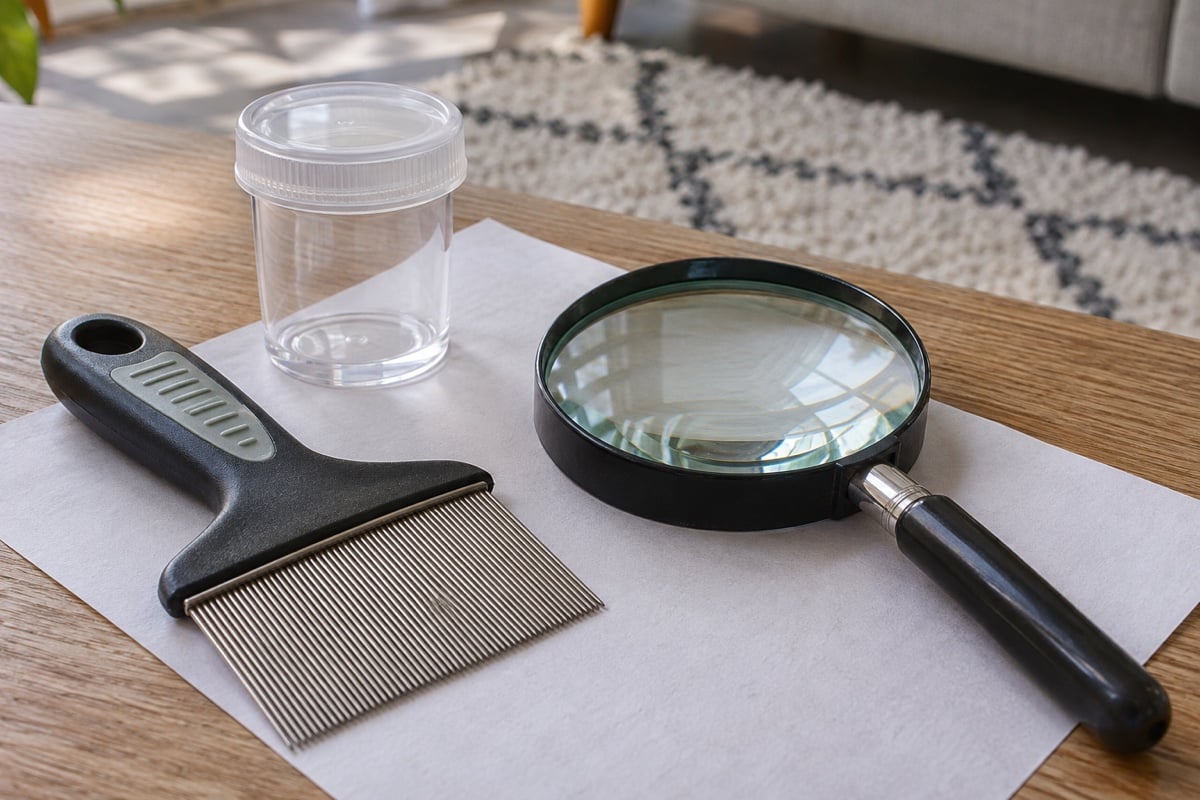
I recommend checking your dog or cat as soon as you notice scratching or biting at the coat. Fleas may be the cause, though allergies and other skin problems can look much the same. You can use a flea comb to work through the fur under good light, paying attention to the neck, tail base and other areas the animal tolerates. Examine the comb over white paper for live adults or dark specks. Flea dirt is flea droppings; a reddish-brown stain on damp white tissue supports that identification, but blood-containing scabs can also stain. Ask your vet about sores, hair loss or persistent itching even if no fleas are found.
Flea eggs can fall off wherever your pet rests, so check the bedding, carpet edges and nearby upholstery. Walking slowly through a suspect area in white socks can help you spot a dark insect jumping on, although an empty pair of socks doesn’t rule fleas out. If you find an insect, contain it for identification rather than deciding from a fleeting movement. Once you’ve confirmed fleas, make a plan to control fleas on your pets and in your home. Note the dates of sightings and treatments so you can judge whether activity is declining or further advice is needed.
Keep a few notes as you check
- Where live insects or fresh flea dirt were found, and which animal or resting place was involved.
- Any recent move, visiting animal or signs of rodents near the building.
- The exact products already used and their application dates.
- Skin symptoms that continue and need a vet or clinician’s attention, even while you’re still identifying the pest.
Sources
- CDC DPDx: Fleas
- University of Minnesota Extension: Fleas
- CDC: Getting rid of fleas
- FDA: Safe use of flea and tick products in pets

