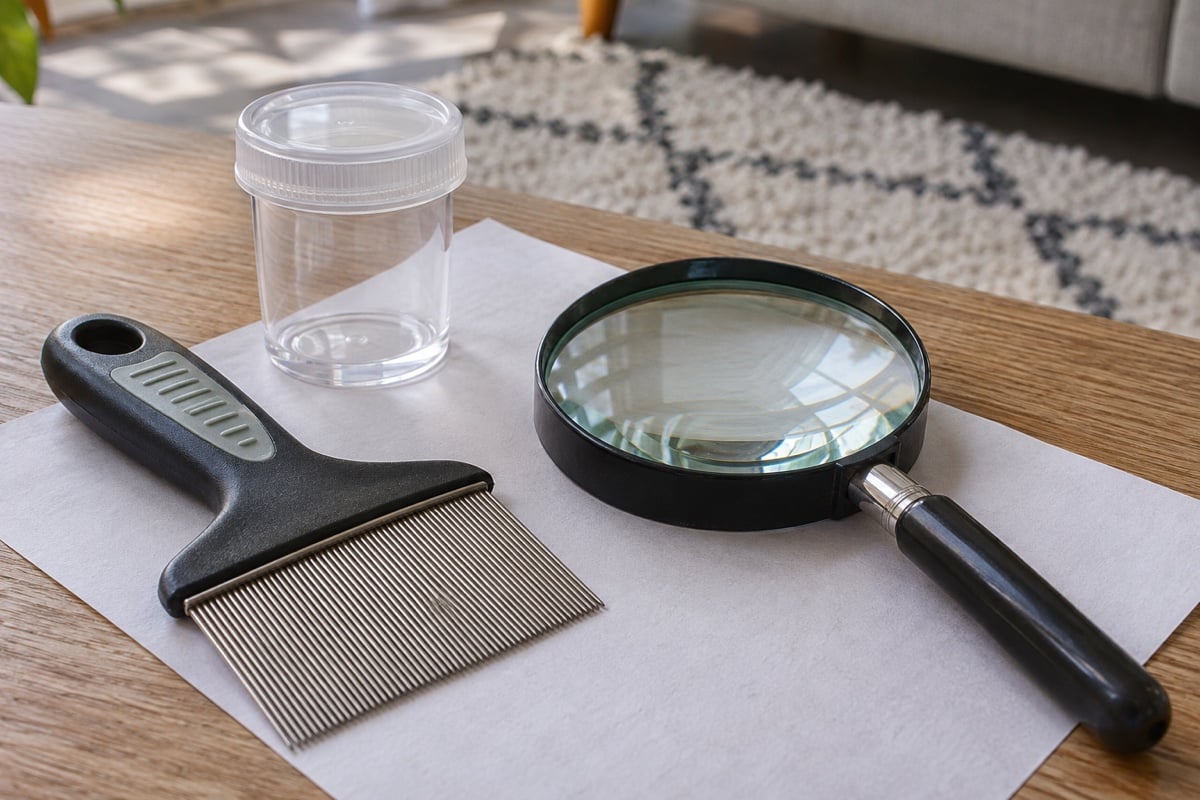
There are many different types of fleas in the world. Most people will be surprised to know that there are actually more than two thousand different species. What they all have in common is the flea life cycle. The stages are egg, larva, pupa and adult, in that order. You will learn all about the life cycle of fleas (which is pretty amazing) and the different flea stages. This knowledge will make it much easier for you to get rid of them and keep them away in the future.
First stage of the flea life cycle: The flea eggs
Depending on the environment, a flea egg often hatches within several days under favorable conditions; development takes longer when conditions are less suitable. The time it takes the flea to develop from egg to adult flea is affected by humidity, temperature and food availability. Some parasites have sticky eggs that fasten to the animal. This is not the case with flea eggs. They fall off the animal when it scratches itself or rolls around on the carpet, sofa and in the bed. That’s why the place where you sleep can easily become the flea’s favorite habitat. Flea eggs look small and oval and are best viewed using a loupe. A female flea can lay eggs repeatedly after feeding, so an untreated host can continue supplying the surroundings with new eggs.
The second stage is the larval stage
There are three larval growth stages, called instars, within this part of the cycle. The flea larvae feed and grow before spinning cocoons in which they pupate. They have small hairs on their body and are only a few millimeters long, with size changing as they grow and partly transparent. They move around and eat the feces (it sounds disgusting, but it’s mostly just dried blood) of the adult fleas. After completing larval development, they create cocoons of silk and pupate. Temperature, moisture and food affect how quickly that happens.
Third stage in the life cycle of fleas: The pupal stage
The fleas are one step closer to adulthood. It’s a matter of days or up to a year before they choose to emerge from the cocoon. Temperature and humidity are some of the things that determine how fast that happens. This protected part of the cycle helps explain why new adult fleas can appear after an initial treatment. Control is still possible, but it needs continued follow-up. Note that they can be difficult to get rid of at this stage. Flea pupae develop within protective cocoons. A fully developed adult can remain inside its cocoon while waiting for emergence cues; that waiting period can last for months under some conditions. This is not the same as an exposed adult living for months on a treated pet.
Fourth and last stage is when the adult flea is born
These nasty things are designed to suck the blood out of animals and people. If that isn’t a good reason to hate them, I don’t know what is. Adults need blood meals to reproduce. Survival away from a host depends on the flea species and environment; a long waiting period inside a cocoon should not be confused with an exposed adult surviving for years without feeding. Adult fleas get to their target by jumping. They have 3 pairs of legs and the ones on the back are designed to jump extremely high. They have absolutely no problem jumping from the carpet to your feet or legs. A small breeding population can produce many offspring when hosts and environmental conditions support development. The rate is not a fixed household forecast. That’s why you want to get them in the early stages, before it gets out of hand. If you have a flea problem that you need to get rid of, be sure to read this post about flea control.
Sources
- CDC DPDx: Fleas
- University of Minnesota Extension: Fleas
- CDC: Getting rid of fleas
- FDA: Safe use of flea and tick products in pets
- University of Florida IFAS: Dog flea life stages
- UC IPM: Flea life cycle and control

