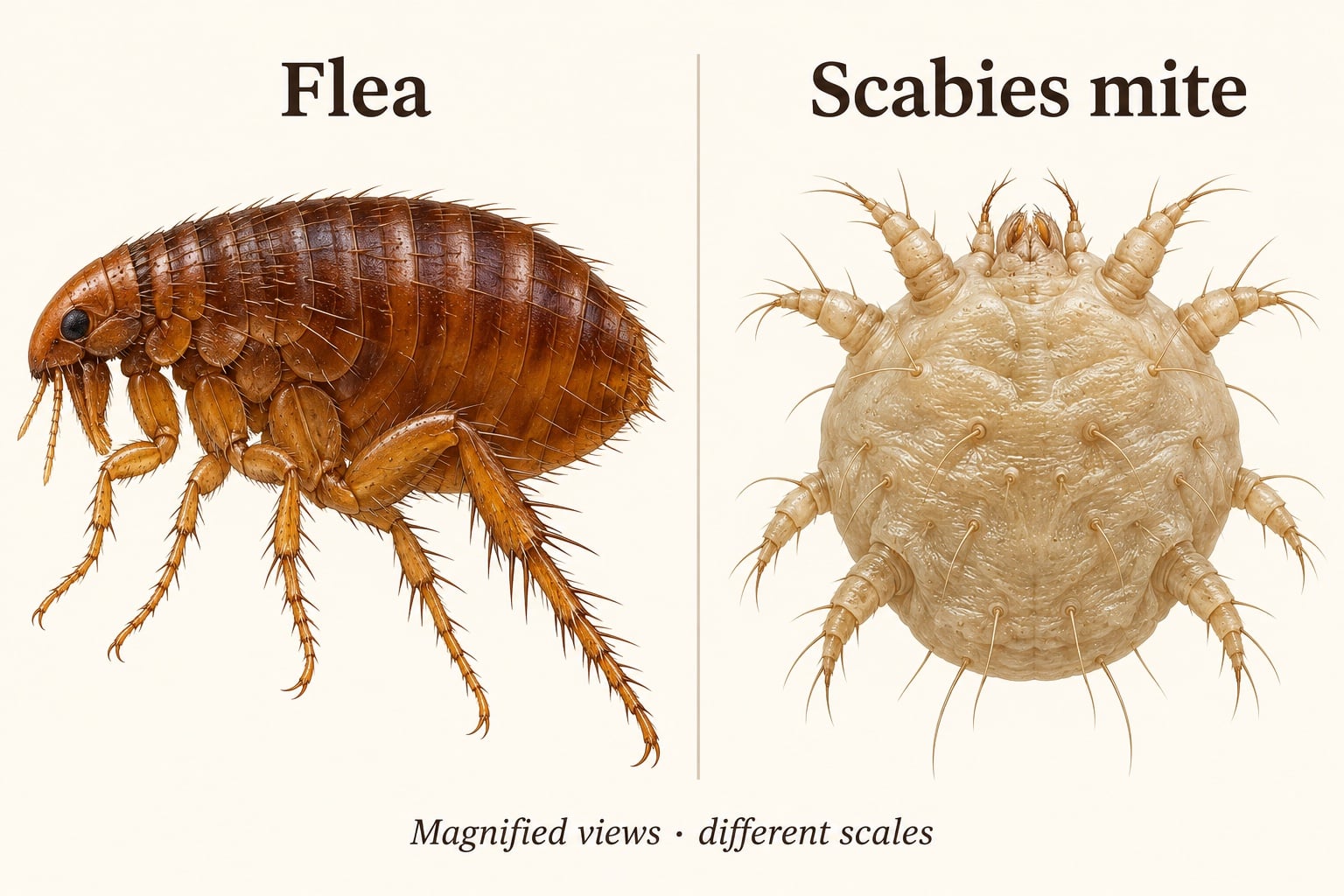
Flea bites and scabies can both leave you with a very itchy rash, but they need different treatment. Human scabies comes from the human itch mite, not usually from your pet’s fleas or mange. In this guide, we’ll compare the main clues and explain what to do next. Pictures alone can’t settle the question, especially when a rash keeps coming back or won’t go away.
Scabies: a contagious skin condition
Human scabies is caused by Sarcoptes scabiei var. hominis. Female mites burrow in the upper skin layer and lay eggs. It most often spreads through prolonged skin-to-skin contact with an affected person; sharing bedding or clothing is a less common route. Animal mange mites may cause temporary irritation in people, but they don’t establish and reproduce as human scabies does. Treating a pet alone won’t cure human scabies.
Here are a few tell-tale signs and symptoms of scabies in humans:
- Intense itching, often worse at night, with a pimple-like rash.
- A first infestation may produce no symptoms for four to eight weeks, even though it can spread during that time.
- Common sites include finger webs, wrists, elbows, armpits, waist and genital areas.
- Babies and very young children may also have involvement of the head, neck, palms or soles.
- Small burrows may be visible, but their absence does not rule out scabies.
- Scratching can cause sores or bacterial infection. Crusted scabies is particularly contagious and needs prompt medical care.
These clues are useful, but telling scabies apart from insect bites, eczema and other rashes isn’t always easy. Anyone can get scabies. A clinician can look at where the rash appears, ask about close contacts and check for mites or burrows. If several people in close contact have persistent itching at night, get it assessed.
Flea bites
Common cat fleas use animal hosts but can bite people, including in a home without current pets. Their bites don’t cause a contagious mite infestation. Eggs and immature stages in pet resting areas can keep supplying new adults. Look for fleas on animals or in the environment rather than assuming a particular skin pattern proves the diagnosis. Possible skin reactions include:
- Small itchy raised bumps, with color varying by skin tone.
- Local swelling, sometimes a central spot or blister.
- Individual bumps or clusters; groups of exactly three or four are not required.
- Common involvement of ankles and lower legs, with other sites possible.
Flea bites, like scabies can be itchy. Some people are known to develop hives or allergic reactions that can lead to secondary skin sores.
Summary of flea bites vs scabies
| Feature | Flea bites | Human scabies |
|---|---|---|
| Cause | A reaction to bites from an insect; common cat fleas use animal hosts. | A human itch mite living and reproducing in the upper skin layer. |
| Appearance | Raised itchy bumps or clusters; not diagnostic alone. | Pimple-like rash, sometimes visible fine burrows; not diagnostic alone. |
| Distribution | Often lower legs and ankles; can occur elsewhere. | Often finger webs, wrists, waist or genital areas; infants may differ. |
| Spread | The rash is not contagious, but people can share exposure to an infestation. | Usually prolonged skin-to-skin contact; sometimes shared clothing or bedding. |
| Movement | Adults jump; eggs, larvae and pupae develop in the environment. | Mites crawl and do not fly or jump. |
| Treatment focus | Skin comfort plus confirmed flea control on pets and in resting areas. | A prescribed scabicide, coordinated close-contact treatment and laundry measures. |
| When to seek help | Unexplained, infected, extensive or persistent reactions. | Suspected scabies should be assessed; anti-itch cream alone does not kill mites. |
If you suspect scabies, get medical care and follow the prescribed treatment exactly. Other household members and close contacts may need treatment at the same time. Wash or isolate belongings as advised, and don’t use room foggers or pet pesticides on your skin. Itching can carry on for several weeks even after successful treatment, but new burrows or continuing new bumps need another check. With either condition, get prompt advice for worsening pain, spreading warmth or swelling, pus or fever.

