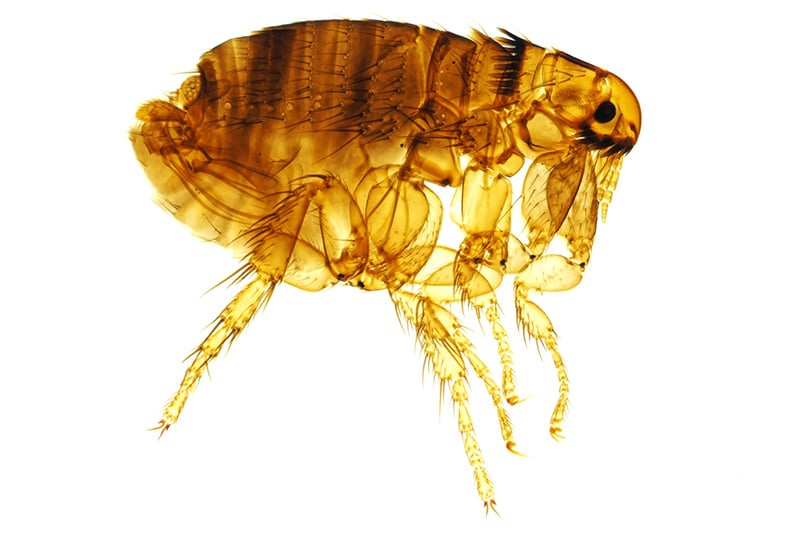
Dog fleas, Ctenocephalides canis, can make life uncomfortable for both dogs and their owners. Infestations can cause itching, flea allergy dermatitis and, when there are enough fleas, anemia. Some flea species can transmit infections, but that risk depends on the organism and where you live. Finding a flea on your dog doesn’t tell you it has plague or typhus.
Ctenocephalides canis in the United States
The common name “dog flea” does not identify every flea found on a dog. Cat fleas, Ctenocephalides felis, commonly infest dogs as well, and the true dog flea C. canis is less commonly encountered in the United States. A close view of the insect may be needed to distinguish them.
Flea development depends on temperature, moisture, access to an animal and sheltered resting places. There isn’t one winter-and-summer timetable for all dog fleas across the country, and a sandy area isn’t automatically infested. Indoors, fleas can keep going as long as conditions suit them. Start by looking where your dog rests and checking what evidence you can find.
What do Ctenocephalides canis or dog fleas look like?
Physically, the Ctenocephalides canis are only a few millimeters long. They have brown, wingless bodies flattened from side to side. Head shape and fine structures help an expert separate them from similar fleas.
Dog fleas have 6 legs; the hind ones are capable of jumping long distances. This is how they travel from one host to another. Dogs are a host, but the common name doesn’t mean the flea is restricted to one species. Dog and cat fleas may also bite people.
Dog flea bites and symptoms

Dog flea bites can cause itchiness or secondary skin infections. The symptoms of Ctenocephalides canis bites include:
- Itchy, red or swollen welts.
- Lumps that may develop into blisters or wounds.
- Dogs that are hypersensitive to dog fleas may suffer from flea allergic dermatitis or FAD. This can cause intense scratching, self-inflicted trauma as well as patchy hair loss in dogs.
- Heavy infestations can cause anemia from blood loss, especially in young animals.
Pale gums, marked weakness, collapse or a heavily infested puppy that seems unwell need prompt veterinary care. Do not delay care to finish a flea bath or home cleanup.
Preventing and treating Ctenocephalides canis infestations
There are two parts to getting a dog-flea infestation under control:
- Treating the host dog for adult fleas responsible for producing eggs.
- Clearing out immature stages (larvae/eggs) that may be developing under the furniture, below the carpets, flooring etc.
Methods to treat dog fleas on the host

- Choose a suitable pet treatment. Tell your vet your dog’s age, current weight, health history and every medicine or parasite product you’re already using. Together, choose a suitable labelled oral, topical or other treatment, and follow that product’s schedule.
- Check before giving a flea bath. If a dog shampoo is suitable, follow its own directions. Check bathing restrictions carefully if your dog also has a spot-on treatment.
- Use a comb for checking and removing some adults. Work gently through untangled fur and clean the comb as described in the combing guide. Keep the animal from drinking the cleaning water. A comb doesn’t replace ongoing protection.
- Get care for sore skin. A veterinarian can assess scabs, hair loss, infection or allergy.
For a person’s mild bite symptoms, gentle washing and a cold compress are practical first steps. A pharmacist can advise on suitable itch relief. Don’t use the dog’s parasite product, mothballs or an iodine recipe on human skin.
Treating dog fleas in the immature stages

While you’re looking after your dog, tackle the places where the next fleas are developing. Eggs and larvae can be hidden around resting areas, and cocoons shelter developing fleas and adults waiting to emerge.
- Make cleaning areas accessible. Move suitable loose items and clean under furniture, around floor edges and in the seams of compatible upholstery. A carpet doesn’t automatically need to be removed or discarded.
- Vacuum repeatedly as part of the plan. Use the appropriate attachments, empty or dispose of collected debris as directed and maintain the filters. One pass isn’t proof that all developing stages are gone.
- Launder suitable bedding. Follow fabric care instructions.
- Protect floor finishes. Use cleaning methods compatible with the floor and avoid saturating wooden boards.
- Use a household pesticide only when appropriate. Diatomaceous-earth products and other formulations need the actual pest, location, application and cleanup to be permitted. Avoid airborne dust and an arbitrary “leave it for a few hours” recipe.
- Use a purpose-made monitoring trap. Flea traps can help reveal adult activity. A catch or an empty trap doesn’t replace identification, treatment and follow-up.
Unsafe remedies to avoid
Do not put mothballs or powdered naphthalene on the dog, rugs or bedding, and never use kerosene in a lamp-and-water trap. Mothball ingredients can poison animals through swallowing, fumes or skin exposure; contact a veterinarian promptly after exposure. Do not apply carbolic acid, camphor, menthol mixtures, human medicated creams or improvised baking-soda dustings to the dog. Even a pet flea powder needs the exact species and use on its label and a compatibility check before combining it with another product.
Cleaning and suitable pet care work together to interrupt the flea life cycle. Keep comparable combing or trap records and review whether activity is falling. If you cannot identify the insect or control the problem, ask a qualified pest professional to assess the source and the sites that need attention.
Sources
- Merck Veterinary Manual: signs of anemia in dogs
- CDC DPDx: Fleas
- University of Minnesota Extension: Fleas
- CDC: Getting rid of fleas
- FDA: Safe use of flea and tick products in pets
- University of Florida IFAS: Dog flea
- Merck Veterinary Manual: Mothball toxicosis
- Merck Veterinary Manual: Petroleum-product poisoning

