
Finding fleas near your bed is the last thing you want, but first make sure you know which insect you’re dealing with and where it’s coming from. Pets and their resting places are often involved, though homes without pets can have fleas too. Let’s break the job down: check the evidence, arrange any animal treatment, clean the bedding and surrounding floor, then keep watching for activity.
Do you have fleas in your bed?
These clues can guide your inspection, but a skin mark alone cannot identify the pest:
- New itchy marks may prompt an inspection, but the time they appear and their pattern don’t confirm fleas or bed bugs.
- Look for a live insect and examine bedding and nearby seams. Fleas are small jumping insects. Bed bugs crawl and may leave dark spotting or shed skins. Flea dirt can appear as dark specks; blood stains alone aren’t diagnostic.
- A suitable flea-monitoring trap may help collect adults for identification. It doesn’t measure every hidden stage. Fruit and vinegar traps are aimed at some flies, not a dependable way to identify or eliminate bed fleas. Keep any trap away from children and animals.
Can you get fleas in your bed without having pets?
An infested pet that sleeps on the bed can leave fleas and eggs in the bedding. A flea problem is also possible without current pets:
- Previous occupants’ animals may have left developing flea stages behind. Adults can emerge after people begin using a vacant room.
- Visiting pets or items from an infested resting area can provide exposure. Investigate rather than assuming a neighbour’s pesticide drove fleas into your home.
- Rodents or wildlife around the building may provide a source. Inspect sheltered areas and access points, and obtain coordinated flea and animal-control advice before disturbing an infested nest.
Five steps to tackle fleas around your bed
Use this sequence alongside the household flea-control guide. Sleeping surfaces, animals and nearby resting areas need coordinated attention; treating the sheets alone will not interrupt the whole life cycle.
1. Confirm the insect and look for its source
Use the clues above to look for a live insect on pets, bedding or nearby floors. Keep a clear photograph or safely collected specimen for identification if you are unsure. Bites alone cannot distinguish fleas from bed bugs or a skin condition. Check where animals sleep, including visitors’ pets and possible wildlife around the building. Learn how to spot a flea infestation before choosing a treatment.
2. Arrange appropriate pet and source care
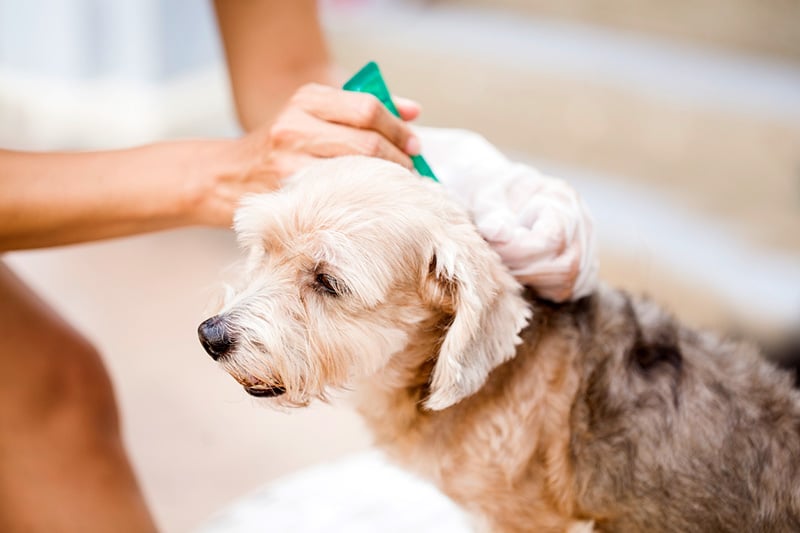
Check every pet and arrange treatment suited to its species, age, weight and health. A veterinarian can assess a heavy infestation or damaged skin and help choose a product. Never use a dog product on a cat, and do not transfer dog or cat medicine to another species. Follow each product’s own interval; tablets, drops and collars do not all last the same length of time.
- Use a flea comb to check the coat and remove some adults.
- Ask before combining a bath, spot-on, tablet or collar.
- Wash suitable pet bedding and clean resting areas alongside animal treatment.
- Do not feed garlic or garlic oil as a repellent; it can be toxic to dogs and cats. Brewer’s yeast is not a dependable flea preventive.
- Provide normal fresh water; do not add vinegar as flea treatment.
If you have no pets, investigate previous animal occupants, visiting animals and possible wildlife sources. Get professional advice before disturbing an infested nest so animal exclusion and flea control can be coordinated.
3. Wash sheets and other bedding

Take off sheets, pillowcases and suitable blankets without shaking them around the room. Wash them with detergent on the hottest cycle the fabric allows, then dry according to their care labels. Put clean bedding aside while you finish the bed area. Washable bedding does not automatically need to be discarded.
4. Vacuum the bed and nearby floor

Vacuum accessible mattress seams, the bed frame, nearby floor, carpet edges and upholstered resting spots. Follow care instructions and use attachments that will not damage the fabric. During active control, vacuum affected floors and resting areas daily or every other day, subject to cleaning restrictions after any treatment. Seal collected debris or the used bag and dispose of it outside according to the machine’s instructions.
Vacuuming removes some flea stages and can encourage adults to emerge. That does not mean you must spray afterwards. Watch your progress and use a pesticide only where needed and permitted by its label.
5. Monitor and follow the treatment schedule
Note where and when you find live fleas, continue cleaning relevant resting spots and keep each pet’s prevention on schedule. Protected pupae may produce adults after the first clean-up, so assess the trend rather than declaring failure after one sighting. Ask a veterinarian or pest professional for help if activity is not declining, the source is unclear or an animal remains uncomfortable. Do not repeat pesticides or pet doses early.
If a household treatment is needed
Persistent activity may need a targeted premises treatment. Ask a qualified pest professional which areas require it and follow the exact product’s preparation, application, drying and re-entry directions. A carpet or yard label does not automatically permit use on a mattress, pillows, sheets or an animal.
Keep loose homemade powders off the bed. Herbal mixtures containing rue, fennel, rosemary, peppermint or wormwood are not established flea treatments. Grinding herbs creates inhalable dust, and “natural,” “non-toxic” or a pleasant smell does not establish that prolonged skin contact or inhalation is appropriate. Use the cleaning steps above instead of an unlabelled dusting recipe.
Fogger limitations and precautions
Flea foggers are not a routine step or an automatic answer to a severe infestation. Aerosol can miss protected development sites, and foggers carry exposure and fire risks. Discuss a targeted plan if suitable pet care and cleaning are not working. If a fogger is selected, its complete label controls its use:
- Check permitted sites and calculate coverage from the labelled room volume. Do not assume one can per room or use more than directed.
- Never release a fogger in a small enclosed space. Address ignition sources exactly as directed because propellants can cause fire or explosion.
- Remove people and animals; protect food, toys, aquariums and other items as directed. Warn anyone who might enter.
- Stay out for the labelled period and ventilate as directed before normal use. Smell does not establish safe re-entry.
- A particulate mask such as an N95 does not filter pesticide gases or vapors, and wearing a mask is not permission to remain in the room.
- Follow cleaning and follow-up instructions. Do not invent longer exposure times or repeat treatment early.
Preventing another infestation
Continue suitable pet prevention, check the original hotspots and address confirmed sources. Outdoor work is relevant when animals are picking up fleas in sheltered resting sites; the yard guide explains that part of the plan. Not every indoor infestation requires spraying the whole yard or routine pesticide use throughout the home.
Sources
- CDC: Getting rid of fleas
- University of Minnesota Extension: Fleas
- FDA: Safe use of flea and tick products in pets
- EPA: total-release fogger precautions
- Merck Veterinary Manual: garlic toxicity in animals
- NIOSH: particulate respirator limits

