If you think you’ve been bitten by sand fleas, you’re probably wondering what the marks mean and what to do next. First, it helps to know that ‘sand flea’ can mean different animals in different places. The shrimp-like beach hoppers are harmless crustaceans, while the burrowing flea Tunga penetrans causes tungiasis in certain tropical regions. Biting flies and ordinary fleas can also be responsible for itching after a beach visit. Below, I’ll explain the difference, what can soothe an ordinary bite and when a spot that won’t heal needs medical attention.
What do sand flea bites on humans look like?
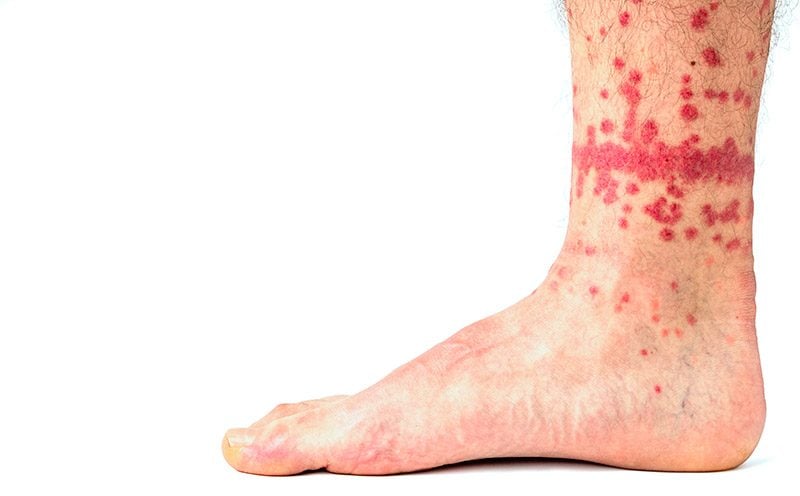
People often notice suspected sand flea problems around their feet, ankles or lower legs. Itchy red bumps there don’t tell you which animal caused them, though. Other insects and skin conditions can leave similar marks. Neither how high something jumps nor a rule about dawn or dusk will settle it. Where you’ve traveled, whether you actually saw the animal and how the mark has changed are more useful things to tell a clinician.
Types of sand flea bites
There are two different situations to understand here, rather than two stages of one beach bite. An insect can bite and leave, with an itchy bump remaining afterwards. Some people have stronger allergic reactions to flea saliva, as pets can too. In tungiasis, a female Tunga flea embeds in the skin, often on the foot, and the site may develop a central dark point. That sign isn’t a diagnosis by itself. Harmless shrimp-like beach hoppers don’t turn into embedded fleas.
An uncomplicated bite reaction and an embedded flea need different care. Seek medical assessment for a persistent, enlarging or painful spot after exposure in a region where tungiasis occurs. Increasing redness, warmth, pus or fever may indicate infection. Trouble breathing, faintness or swelling of the mouth or throat after any bite needs emergency help. These signs are more useful than trying to match your skin exactly to an online photograph.
How to treat sand flea bites
If you’ve ordinary itchy bites on otherwise intact skin, these steps may help you feel more comfortable. They won’t remove a burrowing flea, and a suspected infection needs assessment:
- Wash gently with soap and water and avoid scratching. Keep nails short; scratching can break the skin and increase the chance of infection.
- Use a cool compress for discomfort. If there is a persistent central spot or you suspect an embedded flea, arrange medical assessment instead of digging into it.
- A pharmacist can advise whether calamine lotion or hydrocortisone cream is suitable for an uncomplicated itchy reaction. Follow the label, including age, site and duration restrictions. Don’t put hydrocortisone on broken or infected skin or use these products as treatment for an embedded parasite.
- If the itching is troublesome, ask a pharmacist which antihistamine might suit you. Check whether it causes drowsiness and whether it goes with your other medicines. If pain is getting worse or making walking difficult, have the area assessed instead of repeatedly trying to cover up the symptoms.
- A lukewarm bath may feel soothing, but avoid hot water, vigorous scrubbing and baking-soda pastes on irritated skin. Comfort measures don’t eliminate a burrowing flea.
- Aloe Vera products are sometimes used as moisturisers, but they aren’t an established cure for tungiasis or infected wounds. Stop if a product stings or worsens the rash, and keep it off an open lesion unless a clinician advises otherwise.
- Avoid essential oils or pesticide mixtures on the skin. If symptoms persist, worsen or recur, seek advice and explain the exposure location and any treatments already tried.
Prevent the fleas from attacking you
I have always been a great fan of preventing flea bites rather than treating them. If you want to avoid getting bitten, just follow these tips and you’ll have greatly decreased the chance of that happening:
- Before traveling, ask about local biting insects and whether tungiasis occurs there. A rule about rainy days or cool beach weather won’t fit every animal people call a sand flea.
- Wear suitable shoes or sandals and avoid direct contact with potentially infested ground in affected areas. Remember that exposure to true burrowing fleas can occur away from the beach, including around dwellings.
- For biting insects, use a locally recommended repellent according to its label and cover exposed skin where practical. Don’t assume every general insect repellent prevents tungiasis.
- Use a chair or mat when sitting on the ground, check your feet after relevant exposure and seek advice about any persistent new lesion. Follow local public-health guidance where tungiasis is established.
How to remove sand fleas
If you notice a swollen or painful spot with a dark center after relevant exposure, get it checked. Tell the clinician where you were and when it appeared. Don’t squeeze it or dig at a suspected flea with a needle, pin or other improvised tool. Professional care may involve a specific topical treatment or careful sterile removal, followed by wound care and a check of tetanus protection where appropriate. A pet with a similar problem needs a vet. Never put pet flea products or household insecticides on your own skin.
I hope this article was helpful to you. To learn more, you can continue reading about flea bites on humans.

Sources
- WHO: Tungiasis
- NHS: Insect bites and stings
- Cambridge University Hospitals: Insect bites and stings
- NHS: hydrocortisone for skin

