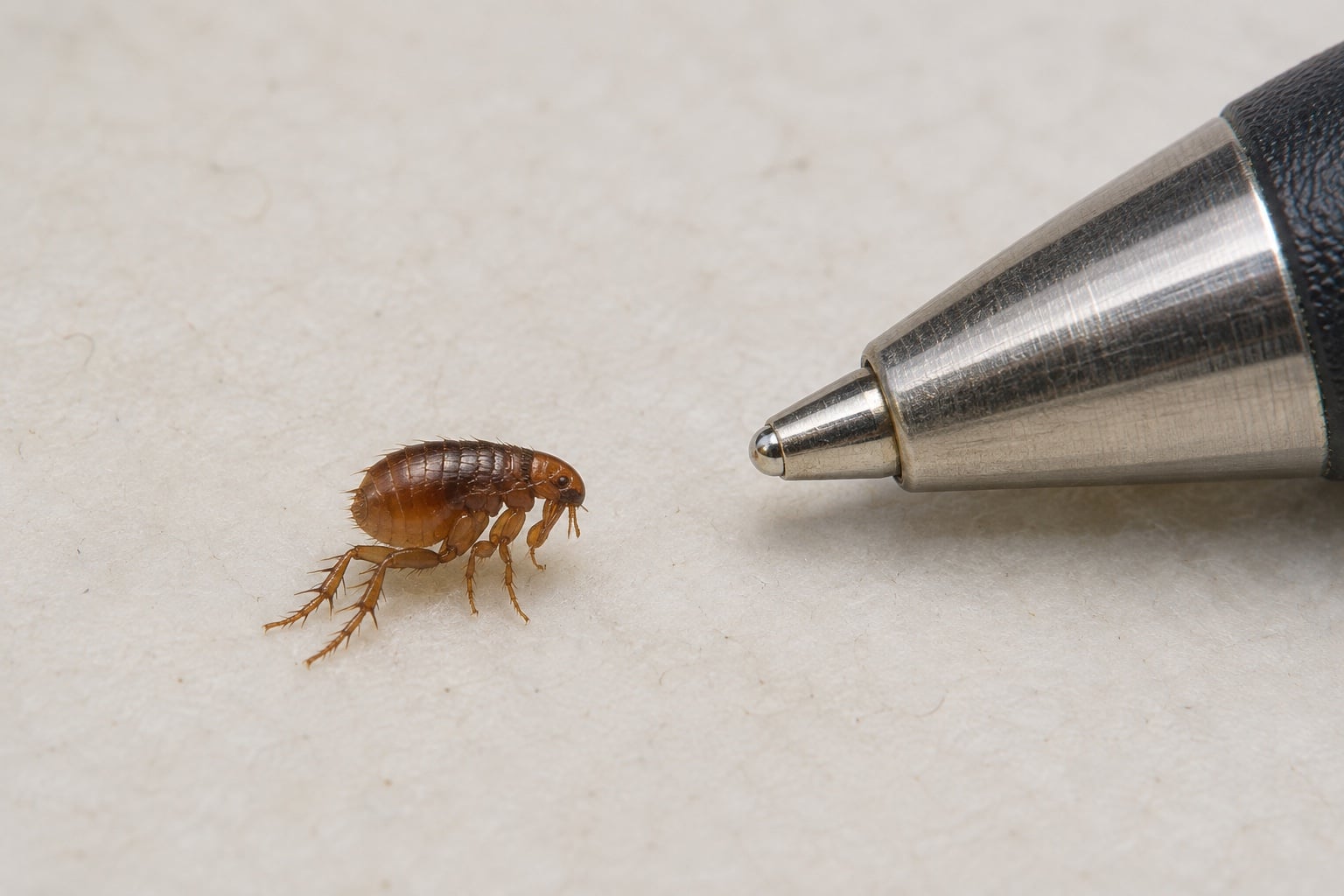
Archive context: this article discusses sensational UK “super flea” stories from 2016. It isn’t a report of a newly identified flea or a current invasion alert.
The 2016 “super flea” story combined ordinary seasonal flea concerns with claims about giant reproductive organs and a new threat to British homes. Dated coverage shows how those claims circulated; it does not establish a newly evolved flea.
What the dated reporting shows
- September 22, 2016: AOL repeated claims from other newspapers that unusually large fleas had arrived from Europe and would move into heated homes. This documents the headline story, not scientific confirmation.
- October 5, 2016: James Gilbert examined the claims in The Independent. The article reported that Natalie Bungay of the British Pest Control Association had seen no unusual reports of flea size or frequency. It distinguished fleas’ existing anatomy from evidence of a new mutation.
- November 2016: BPCA’s Professional Pest Controller magazine, issue 85, pages 28–29, reproduced the examination of the press claims.
The earlier version of this page attributed responses to Kevin Higgins and Clive Boase and speculated about infested lorries as the story’s origin. A dated source for those particular attributions was not established in this review, so they should not be treated as a verified account of how the story began. BASIS PROMPT, also mentioned in the old story, is a professional register, not a pest-control company.
Warmth, moisture and suitable hosts can support flea activity. More pest-control calls or an infested vehicle do not establish a new species or changed anatomy. The useful evidence is an identified specimen and a measured comparison, rather than the word “super” in a headline.
The flea phallus
Male flea reproductive structures include claspers and an aedeagus. Specialists can use these microscopic features to distinguish species. Complex anatomy is not evidence of a newly arrived flea with separate organs for different sexual roles. For household control, identifying the flea, its host and its life cycle is more useful than an exaggerated anatomical description.
What to do about an actual infestation
Use an appropriate flea treatment for every household pet, following its exact species, age, weight and dosing instructions. Vacuum pet resting areas and nearby floor gaps, rugs and upholstery; wash bedding on suitable care-label settings. These steps work together: vacuuming removes some developing fleas and larval food, while pet treatment controls fleas on the animals.
If a premises pesticide is needed, choose one labeled for that location and follow its removal and re-entry directions. Do not use a household spray on an animal or treat an entire yard simply because a pet goes outdoors. Inspect shaded outdoor resting sites and address those where there is evidence of fleas.
Severe itching or damaged skin warrants veterinary advice. Pale gums, marked weakness or collapse in a heavily infested puppy, kitten or other vulnerable animal need urgent care.
Cold weather outside does not guarantee the end of fleas indoors. Sheltered spots and protected cocoons can let them persist. Continue the labeled pet schedule and household cleaning, watching for fewer fleas over time rather than adding early doses because of a dramatic headline.
Sources
- CDC: About fleas and flea-borne disease
- CDC: Getting rid of fleas
- FDA: Safe use of flea and tick products in pets
- Cornell University: Flea and tick prevention
- CDC: flea prevention
- BASIS PROMPT: professional register
- ESCCAP UK: flea identification and male reproductive structures

