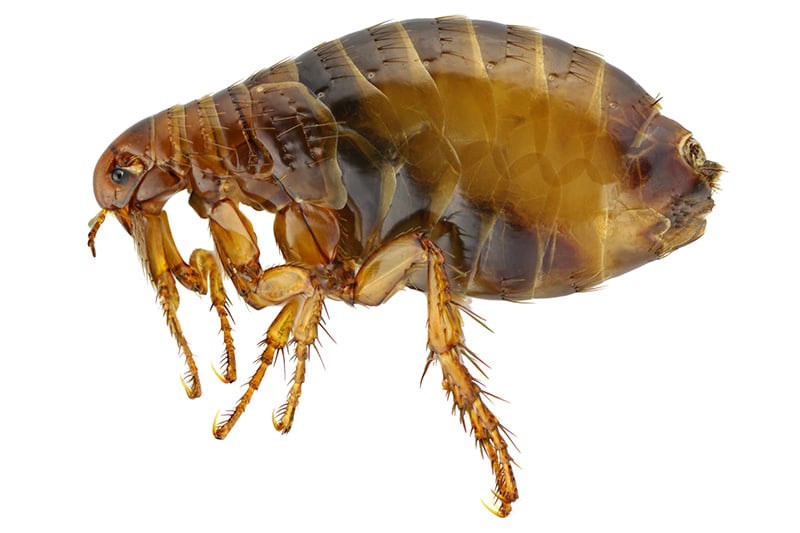
Despite their name, Pulex irritans or human fleas are normally associated with many other mammals like skunks, foxes, coyotes etc. Human fleas have a life cycle much like dog and cat fleas. Adult females need blood meals to reproduce, and developing fleas need suitable conditions in their surroundings.
Habitat and physical description of Pulex irritans
When it needs to feed, the adult Pulex irritans is found on the host’s body. It prefers temperate, tropical and terrestrial habitats.
The four stages are egg, larva, pupa and adult. Developing stages can be hidden in the surroundings and need not be obvious during a casual inspection.
Human fleas are more or less similar to dog and cat fleas in physical appearance: Adults are roughly 1–4 mm long, and detailed species identification requires more than size alone. Their bodies are reddish brown or rust colored, wingless and laterally compressed. They have 6 legs and mouthparts that are equipped for sucking and biting.
Human flea eggs are typically white in color and oval shaped.
Human flea bite symptoms and treatment

Humans can get bitten by human fleas as well as cat and dog fleas. In all these cases, the bites can be painful, irritating and extremely itchy. Human fleas typically bite their hosts on feet, lower legs, arms, neck, back or other exposed areas of the body. Some people may not have any symptoms despite being bitten by human fleas; in other cases, the following symptoms may be present:
- Swelling, burning or redness on the site of the bite.
- Slightly raised, clustered and itchy blisters particularly at the edges of tight fitting clothes.
- Bleeding or broken skin where a mark has been scratched or otherwise damaged.
- Excessive bites from Pulex irritans can lead to anemia in the host.
- You may come across the terms allergic dermatitis and pruritus. The first means an inflammatory reaction, and the second simply means itching; neither automatically means a bacterial infection. Scratching can break the skin and let infection develop, though. Increasing pain, warmth, pus, fever or worsening symptoms need professional advice, rather than automatically reaching for an antibiotic or steroid.
- Do not transfer the disease associations of every other flea species to Pulex irritans. CDC’s identification reference describes the human flea as an inefficient vector of flea-borne disease, although it can be an intermediate host for certain tapeworms. The species, location and actual exposure matter when assessing illness.
Treating bites of human fleas

Many straightforward bite reactions settle with simple care. Wash the area gently, use a clean cool compress and try not to scratch. If you’re unsure what caused the marks or they don’t settle, ask a healthcare professional to take another look. The name “human flea” doesn’t tell you that this is the insect responsible.
- Choose a skin product with advice. Lotions containing calendula, aloe or other ingredients may be marketed for soothing skin, but that doesn’t establish that they treat flea bites or prevent infection. Stop anything that irritates the area.
- Ask about appropriate medicines. A pharmacist can advise whether an antihistamine or hydrocortisone cream is suitable for the person, affected area and other medicines. Follow the exact label and age restrictions.
- Avoid homemade mixtures that irritate your skin. Don’t assume essential oils will act as a suitable antibacterial treatment, or that baking-soda paste is a dependable bite remedy. Gentle cleaning and advice about an appropriate treatment are more useful than trying one mixture after another on already damaged skin.
- Recognize warning signs. Seek medical advice for worsening symptoms, spreading painful changes, pus or fever. Trouble breathing, collapse or sudden mouth or throat swelling require emergency help. A doctor should assess suspected bites in a baby under one year.
Getting rid of human fleas

An office, school or home without pets is not proof that Pulex irritans is responsible. Human fleas are less commonly encountered in industrialised areas, and itching may have nothing to do with fleas at all. Look for an insect and have it identified before choosing a pesticide. If you can’t find the source, a professional inspection can help.
Today, there is a wide range of flea exterminating products available in the form of powders, sprays, flea bombs etc. If fleas are confirmed, choose products for the actual pest and location and coordinate cleaning, any appropriate animal care and follow-up. Products differ in which life stages they affect; a fogger or powder isn’t an automatic first step.
It’s also important to first determine if the bites are caused by human fleas or some other parasite. You could be allergic to certain products or may be having a skin ailment that appears exactly like the bite of the Pulex irritans.
Sources
- CDC DPDx: Fleas
- University of Minnesota Extension: Fleas
- CDC: Getting rid of fleas
- FDA: Safe use of flea and tick products in pets
- NHS: Insect bite care

