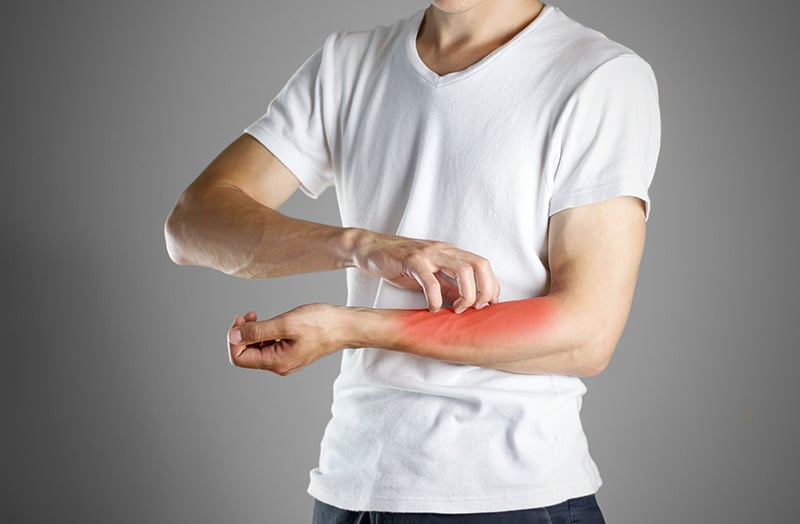
In most cases, flea bites settle with simple care, but there are a few symptoms you should watch for. Infection and a serious allergic reaction need medical attention. Start by washing the area gently with soap and water, soothing the itch and keeping your nails short. Try not to scratch, however tempting it is: scratching can break the skin and let bacteria in. Below, you’ll find what to expect, what can help and when to get medical care, along with dealing with the fleas causing new bites.
Call your local emergency number for difficulty breathing, sudden mouth, tongue or throat swelling, fainting or collapse after a suspected bite. If you have a prescribed epinephrine/adrenaline auto-injector, follow your emergency plan. Do not wait to see whether an antihistamine works.
Fleas often bite around your ankles and lower legs, where they can jump onto you from floors or places animals rest. You can get bites on your arms and elsewhere too, especially after holding an infested pet or lying on infested bedding. The location gives you a clue, but it doesn’t prove fleas are responsible: compare the bite pictures with evidence of actual fleas rather than relying on a rash alone.Do flea bites on humans itch?
Usually, yes! The itchy bump is your skin’s reaction to flea saliva, and we don’t all react the same way. Some people notice very little, while others get larger bumps that linger or small blisters. That’s different from the uncommon emergency reaction explained below. Pets can also develop flea allergy, but animal treatments should not be used on human skin.How long do flea bites last?
Flea bites may appear as individual bumps or clusters. Mild reactions often improve over a few days, while stronger reactions can remain for days to weeks. Redness may be less visible on darker skin. A flat dark mark left after inflammation is different from an active bite and may take longer to fade. Scratching, infection and deeper skin damage can cause scarring; no ointment can promise to prevent every mark. New bumps appearing each day may mean ongoing exposure rather than that the same bites are failing to heal.How to treat flea bite symptoms
 Leaving the bites alone lowers the chance of infection, although it can’t guarantee you won’t get one. Gentle cleaning and cooling are good places to start. For relief, you can try:
- A cold damp cloth or a wrapped cold pack, applied for short periods and removed if uncomfortable.
- Calamine lotion, if the product is suitable for your age and the skin is intact.
- A suitable anti-itch treatment recommended by a pharmacist, such as a short course of an appropriate hydrocortisone product.
- An oral antihistamine if recommended for your symptoms, medicines and health history; some cause drowsiness.
Can vinegar help flea bites?
Vinegar is often recommended online, but it isn’t an established treatment for flea-bite inflammation or infection. Apple cider vinegar, including raw or “with the mother” products, can sting and irritate skin. There is no need to dab it into bites or add it to a bath.
For relief, stick with a cool compress and a suitable skin treatment. Vinegar isn’t a substitute for flea prevention on your dog or cat either: rinsing a pet with it won’t give reliable ongoing protection and may irritate sore skin. Finding and removing the source of new bites will help more than reaching for strongly scented household ingredients.
How to treat flea bites on babies
 Babies have delicate skin, and several rashes can resemble insect bites. You can’t confirm fleas just by comparing a photo with bed bug bites. Look for fleas on pets and in resting areas, and ask a clinician if the cause is unclear. Begin with gentle first aid:
- Wash gently with soap and water, then pat dry.
- Use a cool damp cloth for comfort. Avoid direct ice and prolonged chilling of a baby’s skin.
- Keep fingernails short and help prevent rubbing or scratching.
- Ask a pharmacist or the baby’s clinician before using calamine, hydrocortisone, antihistamines or other medicated products. Age limits differ.
- Seek prompt advice for spreading warmth or redness, discharge, worsening swelling or a baby who is feeding poorly or seems unwell. Fever in an infant under three months needs urgent medical assessment.
Allergic reactions from flea bites on humans
Get emergency help if a suspected insect bite is followed by any of these symptoms:
- Difficulty breathing, wheezing or throat tightness.
- Sudden swelling of the mouth, tongue or lips.
- Fainting, collapse or marked confusion.
Call your local emergency number. If you have a prescribed adrenaline/epinephrine auto-injector and a reaction plan, follow that plan while emergency help is arranged. Don’t wait to see whether an antihistamine works.
Flea bite symptoms of infection
 The emergency symptoms above are different from a skin infection around a bite, but both need the right care. Watch for a bite becoming more painful, hot or swollen. Redness can spread, though it may be harder to see on darker skin. Other signs to look out for include:
- Pus, weeping or increasing tenderness.
- Spreading discoloration or a red streak extending away from a bite.
- Fever, swollen glands or feeling generally unwell.
Caring for marks after flea bites
Even after the itching stops and the bite heals, you may still see a flat dark or pale mark. These changes after inflammation often fade over weeks or months, but there’s no fixed timetable. Deep scratching or an infection can leave a scar, so be wary of anything promising to make every mark disappear in a few weeks. Wait until the skin has fully healed before using cosmetic products on the area. Use a simple moisturizer if you need one. Once the skin has healed, protect exposed areas from the sun with clothing and a suitable sunscreen. Go easy on it: scrubs, acids and picking at scabs can add irritation and make discoloration last longer. Ask a clinician about marks that linger, change or worry you, and get advice about any spot that stays painful or won’t heal. Fleas on humans can be as much a nuisance as fleas on animals, if you don’t know how to handle them. Learn how to get rid of fleas once and for all.Sources
- NHS: Insect bites and stings
- Cambridge University Hospitals: Insect bites and stings
- EPA: How to find bed bugs
- American Academy of Dermatology: Dark spots after skin injury
- NHS: hydrocortisone for skin
- DermNet: papular urticaria
- Seattle Children’s: insect bites and when to seek care

