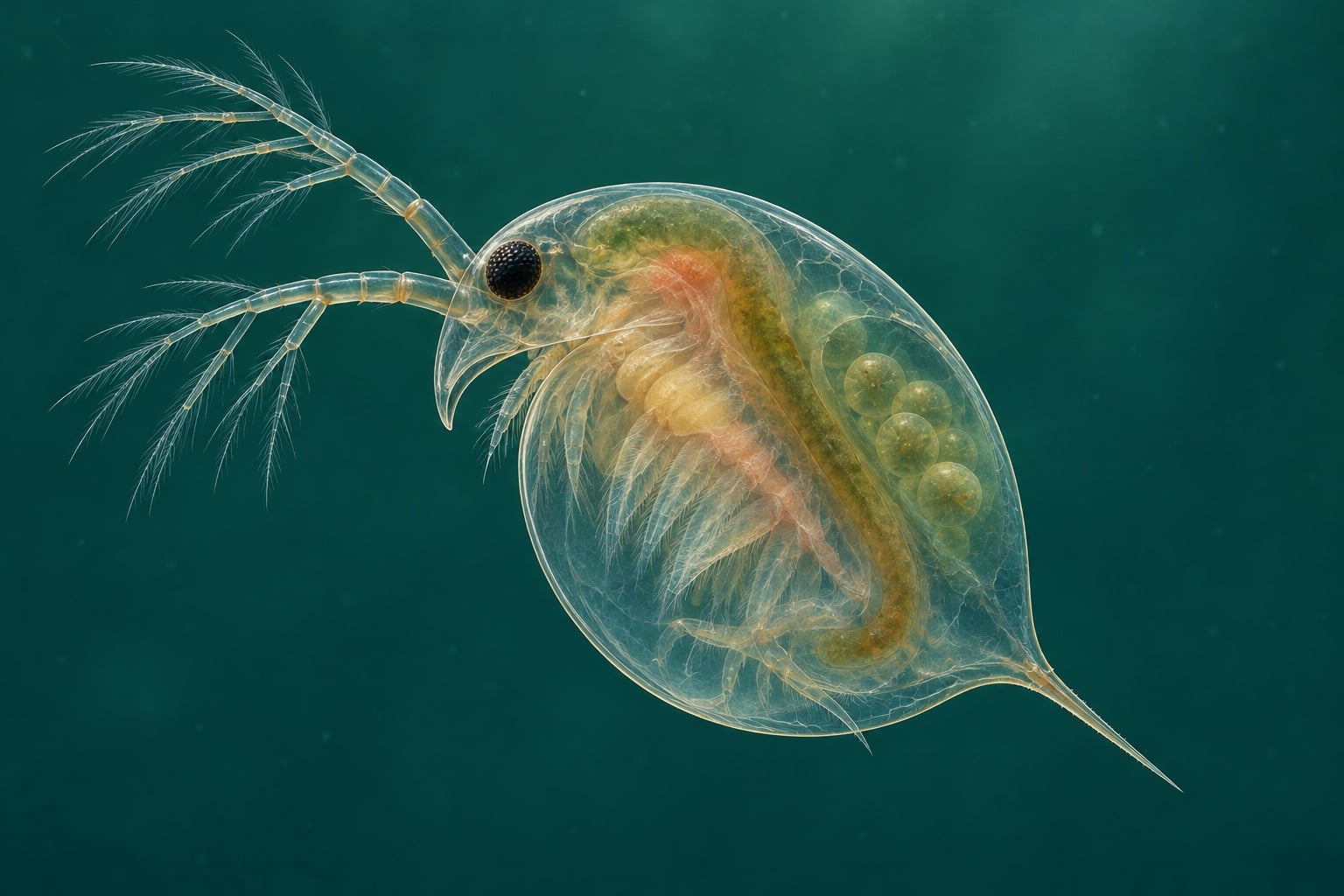
Despite their name, water fleas aren’t the fleas you find on your pets. They’re tiny aquatic crustaceans, including members of the group Cladocera such as Daphnia. Daphnia ambigua is just one species, rather than the scientific name for all water fleas. There are many cladoceran species, with different sizes, shapes and habitats. These joint-limbed creatures are relatives of crayfish and shrimp, so they belong to quite a different group from the blood-feeding insects in our homes. If you’re looking for those fleas, read my article on different flea types.
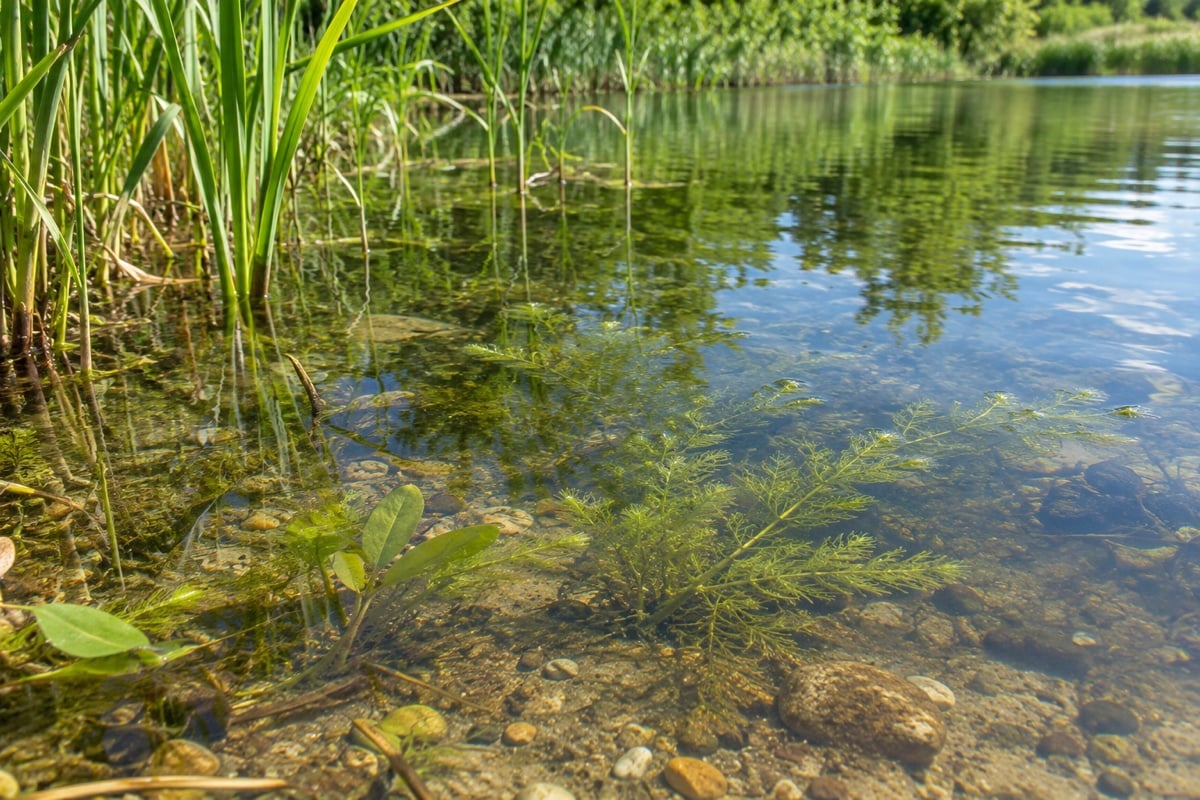
The common name “water fleas” was given to these tiny creatures because of how they move underwater; these organisms seem to hop or jump as they swim. They are commonly found in freshwater habitats such as ponds, lakes and slow-moving water. Many familiar Daphnia live in nutrient-rich bodies of water, although the habitat and abundance vary with the species and conditions.
Appearance and movement
Many common water fleas are a fraction of a millimeter to a few millimeters long. Body shape varies by species. In Daphnia, a distinct head and large swimming antennae are clearer under magnification. Antenna strokes propel the animal upward, followed by pauses as it sinks, producing its characteristic stop-start movement.
A shell-like carapace encloses most of the body. Its two sides are joined rather than separate lids, and the head projects beyond it. The translucent body allows a microscope viewer to see internal structures, often including the beating heart.
Feeding and the freshwater food web
Small trunk appendages create currents that collect suspended food. Daphnia generally have five or six pairs, depending on the species. They filter algae, bacteria and other microscopic material from the water.
Water fleas feed many freshwater animals, including small fish, some tadpoles, aquatic insects, salamanders and newts. Their outer covering does not prevent predation. By eating suspended material, they transfer nutrients to their predators and farther through the food web, including to people who eat fish. Food supply, predation and changing conditions determine how abundant they become.
Reproduction and resting eggs
Under favorable conditions, many Daphnia reproduce by parthenogenesis: females produce offspring without fertilization. Populations can grow quickly. Crowding, food shortage or seasonal changes can lead to male production and sexual reproduction. Fertilized resting eggs are protected and can survive unfavorable periods. This switch is not a fixed rule followed by every population at the end of summer.
Are water fleas the cause of flea bites?
The name can certainly be confusing! A water flea in a pond isn’t a blood-feeding household flea. These tiny crustaceans have a place in freshwater food webs and are used as fish food; they aren’t the pet and household pest covered in the other guides here. Make sure you know which creature you’ve found before deciding it needs treatment.
Sources
- University of Tasmania: Cladocera
- Utah State University: Watershed wildlife — Daphnia (PDF)
- North Carolina State University: Working with Daphnia (PDF)

