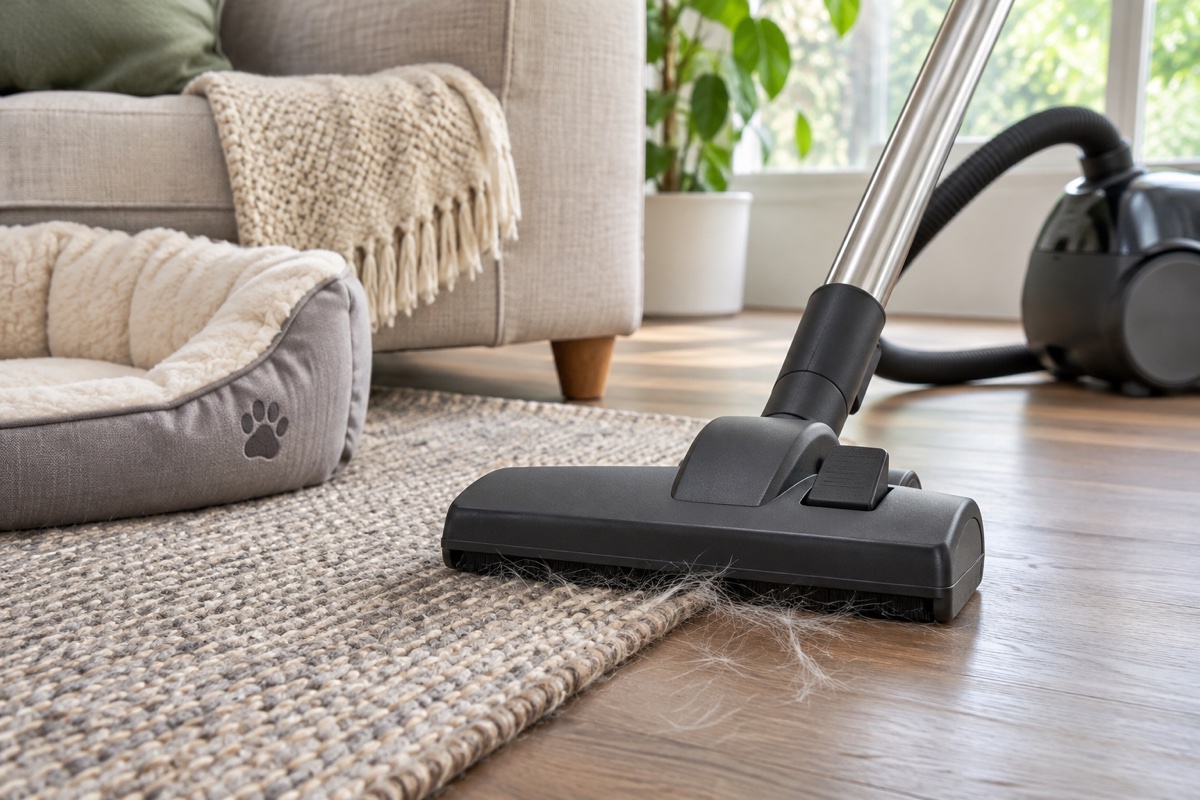
Carpets shelter immature fleas, so clearing an infestation means cleaning those sites while treating fleas on the pets. Use the seven-step plan below, then track whether flea numbers are falling. One pass with a vacuum or an overnight powder remedy will not reach every protected stage.
A seven-step carpet-control plan
- Inspect the area. Confirm live fleas or supporting evidence and identify where animals sleep. Move light furniture only when it’s safe to do so, and use attachments for accessible edges.
- Vacuum methodically. Cover carpeted resting sites, edges, beneath furniture where accessible and nearby upholstery. During active control, vacuum daily or every other day. After a premises treatment, follow its cleaning restrictions and ask the provider when vacuuming or wet cleaning can resume; do not remove a treatment prematurely.
- Empty the collected debris securely. Seal disposable bags or empty a bagless container outside following the machine instructions. Don’t put insecticide or a piece of flea collar inside the vacuum.
- Wash suitable textiles. Wash suitable pet bedding, throws and covers weekly with detergent, using the hottest wash and drying settings their care labels allow. Keep cleaned items away from material you’ve not yet cleaned.
- Treat your pets at the same time. Use a suitable product for each relevant pet on the veterinarian’s plan and its labelled schedule. Carpet cleaning alone doesn’t treat adults feeding on the animal.
- Consider compatible heat cleaning or targeted treatment. Steam or appropriate carpet cleaning can help where heat reaches flea stages, but check material-care instructions and allow full drying. If a pesticide is needed, use one labelled for fleas and that site, following all removal and re-entry directions.
- Keep checking and follow up. Record comparable sightings and flea-comb counts and review the trend after two weeks. This is not a clearance deadline: protected stages can emerge later. If counts do not fall, spread to new areas or persist despite the agreed plan, ask your vet or pest professional to reassess the source and treatment. Do not redose early.
Why salt and baking soda are not the plan
A carpet covered in kitchen powders is not a dependable all-stage flea treatment or automatically safe for babies and pets. Do not substitute salt and baking soda for the coordinated steps above. The natural-control guide explains physical measures and the limits of home remedies.
Humidity affects flea development, but a dehumidifier will not clear an infestation alone. Fix leaks and excess dampness, and let carpets dry fully after cleaning. Essential-oil sprays and homemade collars also are not dependable substitutes for suitable pet treatment; some ingredients can harm animals.
Sources
- UC IPM: vacuuming and laundering schedule
- CDC: Getting rid of fleas
- University of Minnesota Extension: Fleas
- FDA: Safe use of flea and tick products in pets
- EPA: carpet cleaning and integrated flea control
- National Pesticide Information Center: flea management

