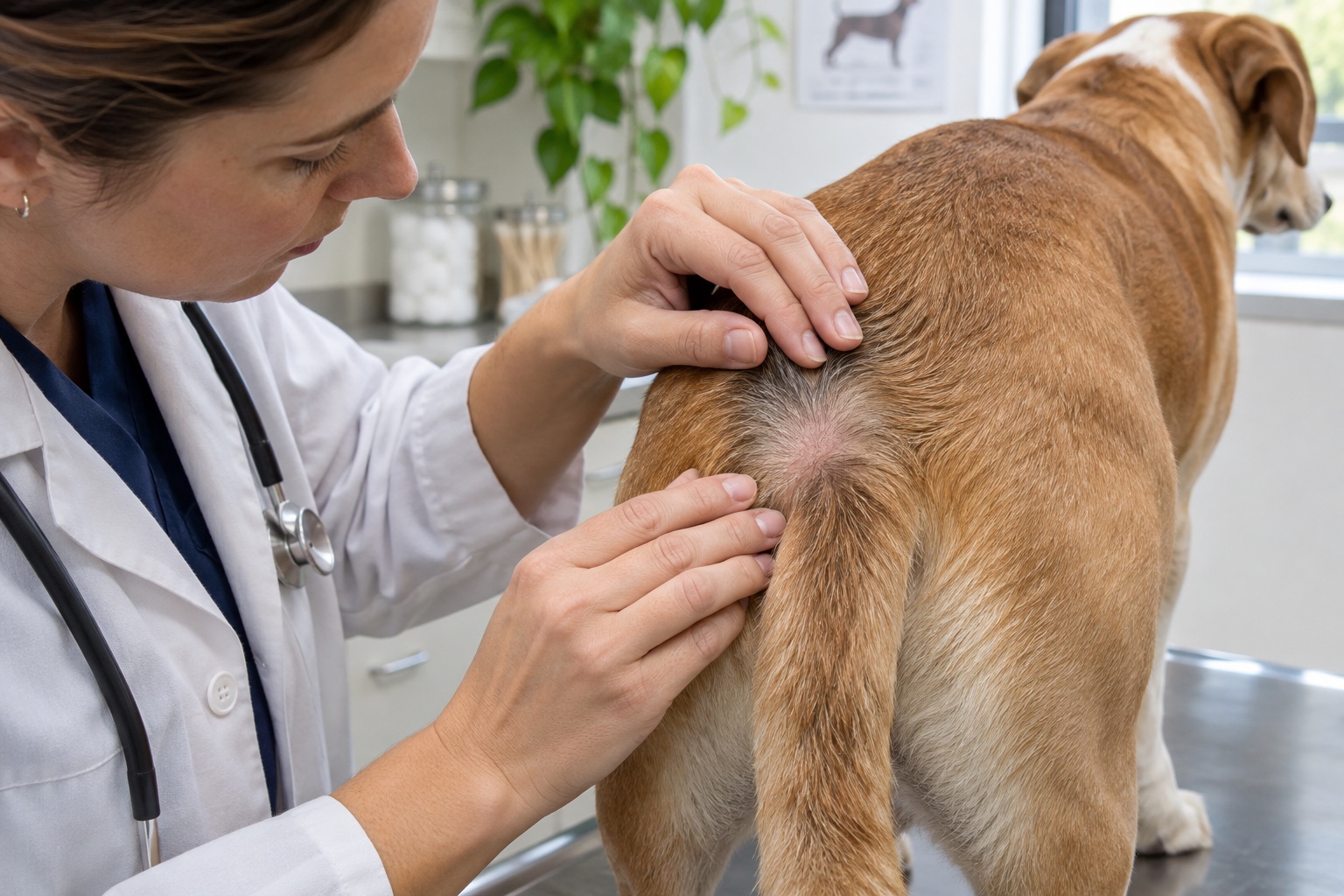
Flea allergy dermatitis is a skin reaction to proteins in flea saliva. It affects both dogs and cats, and a sensitive pet may itch badly after only a few bites. Scratching, licking or chewing can damage the skin and lead to secondary infection, so sore areas need care alongside flea control. You don’t have to see lots of fleas for it to be possible, but every itchy animal doesn’t have this allergy either. Below, you’ll find what to look for, how your vet can check it and what helps with day-to-day care.
Signs of flea bite dermatitis
- Marked scratching, licking or chewing can be a clue, although these signs also occur with other skin problems.
- Your pet may keep returning to one itchy spot, interrupting sleep or normal activities.
- Scratching and chewing can leave skin raw or oozing. Those areas need care, even though they don’t prove fleas are the cause.
- In dogs, the lower back, tail base and hindquarters are common areas of concern.
- Hair loss and crusting may develop where a dog chews or scratches.
- Cats may show overgrooming, hair loss or small scabs around the head, neck, back or tail area.
- Thickened or darkened skin, odour or discharge may accompany a longer-standing problem or secondary infection. Ask the vet to assess it.
Warmth and humidity affect flea development, but a heated home can keep exposure going outside summer too. Different breeds can be affected. Grooming—especially by cats—may remove adult fleas before you get a look, so your vet may still consider flea allergy even if there aren’t any fleas visible at the appointment. Explain what treatments you’ve used and where your pet rests or travels.
Treatment and Management
You need to deal with the fleas and the sore skin. Your vet can choose a suitable preventive or adult-flea treatment and check whether your pet also needs relief from the itch or treatment for an infection. That doesn’t mean putting several flea pesticides on the coat. If products are combined, the combination needs to suit both the animal and the medicines involved.
Stick with a plan you can follow, rather than switch products every time you spot another flea. Work through these parts together:
- Use the chosen animal treatment on its exact labelled schedule and record dates.
- Coordinate suitable treatment of the other pets; an untreated animal can sustain exposure.
- Vacuum important resting sites and launder suitable bedding and covers. Discarding bedding isn’t necessary when it can be cleaned effectively.
- Monitor live flea activity and the skin response, and arrange follow-up if either fails to improve.
Your vet may prescribe an antibiotic or antifungal if the examination points to an infection. They aren’t routine treatments for every bite. Anti-inflammatory or other itch relief may help your pet recover while you get the fleas under control. Give the prescribed dose for the prescribed time, and don’t substitute a human cream or leftover medicine.
Prevention

Reducing new bites is central to long-term control. Choose appropriate flea products with the veterinarian, and understand which stages they target. No single product necessarily kills every protected cocoon already in the surroundings. Ongoing cleaning and consistent prevention help deal with emerging adults.
Keep an eye on your pet’s skin even when the fleas seem to be gone. Continuing itching may have another cause or need more care; clearing fleas doesn’t guarantee a lifetime without skin problems. Notes on doses, sightings and skin changes will help your vet decide what to check next.
Sources
- FDA: Safe use of flea and tick products in pets
- Merck Veterinary Manual: Flea allergy dermatitis
- CDC: Getting rid of fleas
- VCA: flea allergy signs and treatment
- Cornell: fleas in dogs

