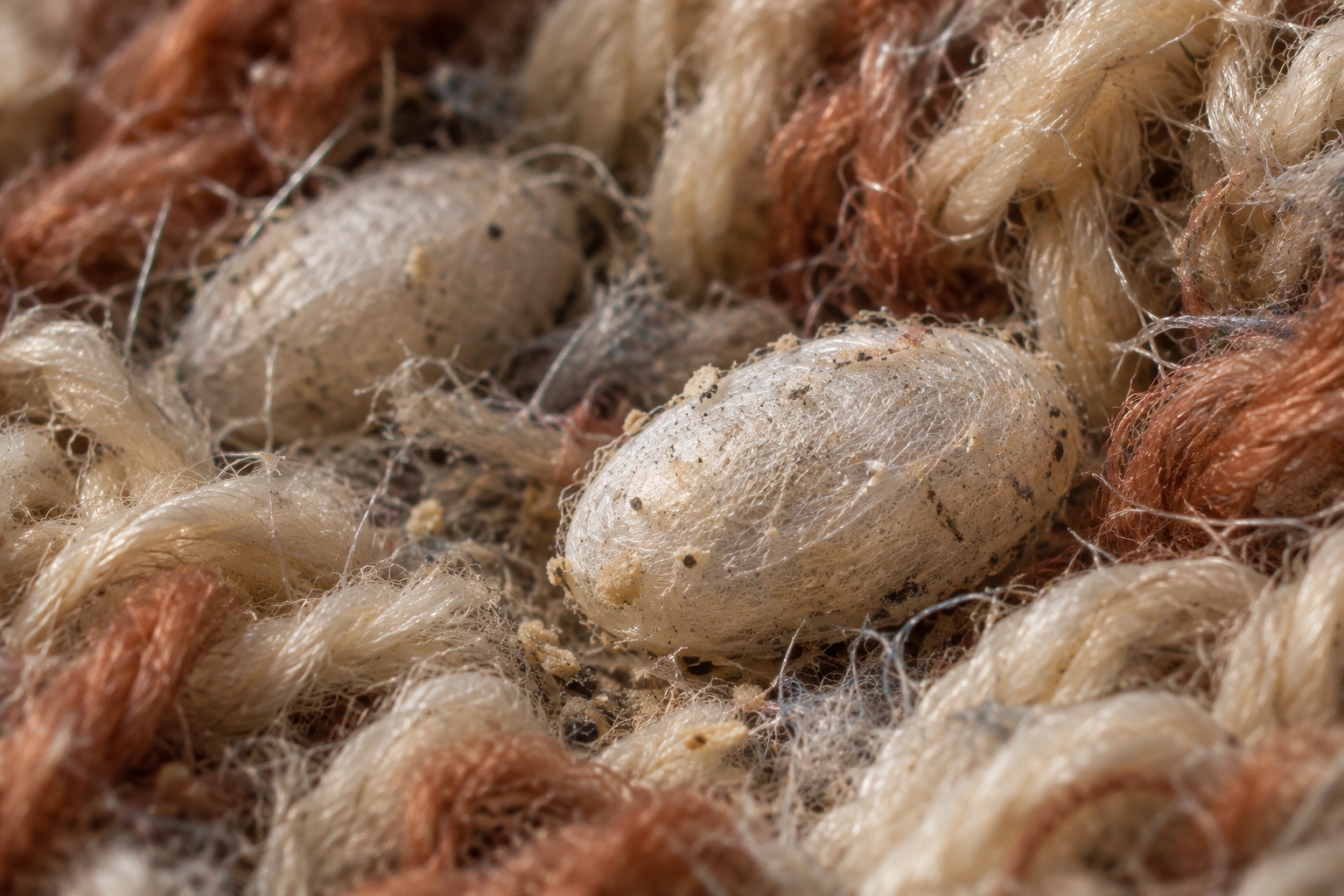
The pupal stage comes third in the flea life cycle: egg, larva, pupa and adult. The proportion in each stage changes with conditions. This protected part of the cycle is one reason fleas can be so stubborn to get rid of. Understanding what happens inside the cocoon helps explain why adults may keep appearing after you think you’ve finished the job.
Larval survival depends on the species and surroundings. Those that reach the pupal stage get protection from a cocoon. Even if your first cleanup or treatment dealt with some eggs and larvae, others may have progressed into this harder-to-reach stage. Many treatments won’t effectively reach the insect sheltered inside.
First the flea develops through the pupal stage. Then, even when the adult is fully formed, it can wait inside the cocoon before emerging—sometimes for months, and up to a year under cool conditions. So an adult waiting to come out isn’t the same as a pupa still developing. Temperature and humidity affect development, while signs of a nearby host can encourage emergence. These include:
- Vibration or mechanical pressure, such as walking across or vacuuming a carpet.
- Warmth associated with favorable conditions or a nearby host.
- Changes in carbon dioxide associated with a potential host.
The Flea Pupae
Before pupating, a mature flea larva spins a silken cocoon. Dust, hair, lint and fibers adhere to its surface, making the small, debris-covered cocoon difficult to distinguish from its surroundings.
- The cocoon is tiny and can look crusty or uneven.
- The cocoon protects the flea from many treatments. Adding spray again and again won’t reliably reach it and can expose people and animals unnecessarily.
- At this stage you’ll find them away from your pet, in protected material around carpets, furniture and other resting spots. Pupae and adults still waiting in cocoons aren’t taking blood meals there. Larvae fed earlier; adults start feeding on blood after they emerge.

There is no fixed countdown for every home: development and emergence depend on conditions and signs of a host. Continue suitable pet protection, vacuuming and monitoring as your plan directs, even after visible adults are gone. Newly emerged fleas can otherwise find an untreated animal and start laying eggs again.
Sources
- CDC DPDx: Fleas
- University of Minnesota Extension: Fleas
- CDC: Getting rid of fleas
- FDA: Safe use of flea and tick products in pets
- University of Florida IFAS: Cat flea pupae and adult emergence
- UC IPM: Cocoons and delayed emergence

